India's Women's Reservation Bill Fails Lok Sb
A historic legislative loss for Modi's government
Model Diplomat8 min readIndia
Modi's Women's Quota Bill Fails Lok Sabha 298–230 Vote
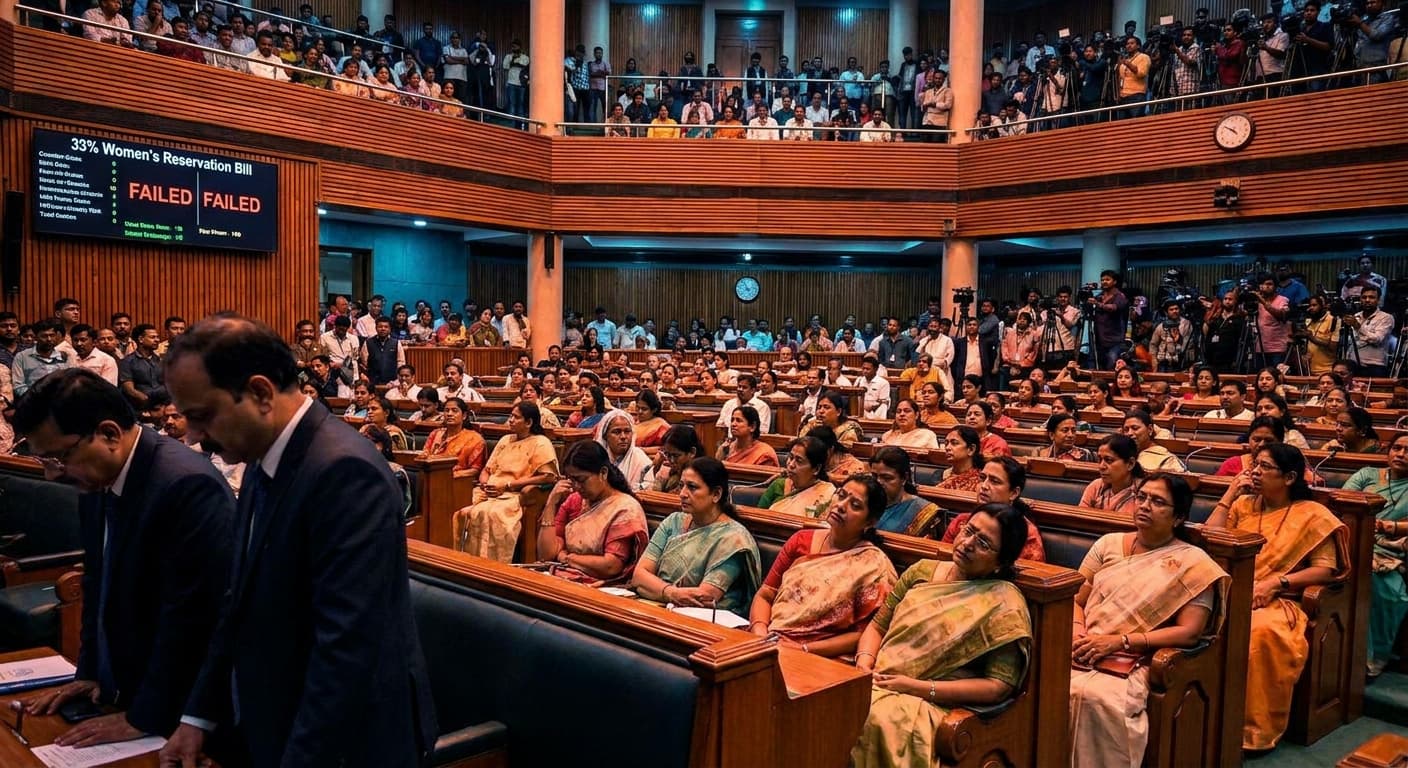
India's Constitution (131st Amendment) Bill was defeated 298–230 in the Lok Sabha on April 17, 2026 — the Modi government's first legislative loss since 2014, and a verdict on delimitation, not on women.
The Modi government lost a constitutional amendment vote for the first time in 12 years on April 17, 2026, when the Constitution (131st Amendment) Bill fell 54 votes short of the two-thirds majority needed to expand the Lok Sabha to 850 seats and operationalise the 33% women's quota. The defeat is misreported as a setback for women's representation — it is, more precisely, the opposition's veto on redistricting the country, using a bill nominally about women to remove the constitutional requirement that seat reapportionment follow a fresh census. The 2023 women's reservation law still stands. What died on the floor was the government's attempt to fast-track delimitation before the 2027 census results arrive.
Of the 528 members present, 298 voted in favour and 230 against, well short of the 352-vote threshold. Union Parliamentary Affairs Minister Kiren Rijiju then asked the Speaker not to move the two companion bills — the Delimitation Bill, 2026 and the Union Territories Laws (Amendment) Bill, 2026 — because they were, as
The Times of India reported, "intrinsically linked" to the defeated amendment. All three fell together.
What the arithmetic always said
The vote was foreseeable from the June 2024 general-election result. The BJP won 240 seats and the NDA 293, per Al Jazeera's mapping of the results — a majority for governance but 59 short of the 352-vote constitutional threshold. That gap, not opposition rhetoric, is the load-bearing fact. As Foreign Affairs put it after the election, Modi now "needs allies — principally two regional parties, the Janata Dal (United) from Bihar and the Telugu Desam Party from Andhra Pradesh —
to stay in power." Constitutional amendments require more than allies; they require defectors from the INDIA bloc. None came.
Home Minister Amit Shah made a floor offer that acknowledged the arithmetic: adjourn the House for an hour, and he would return with an amendment guaranteeing a 50% seat increase for every state. As The Times of India recorded, that concession — meant to answer southern-state fears of dilution — was refused. Modi's parallel appeal, posted on X hours before the vote, urged MPs that "crores of women are watching us — our intent and our decisions." The Indian Express reported that a senior BJP leader had already conceded to colleagues in Parliament:
"We don't have the numbers. Let the Opposition defeat the Bills. They will have to answer to the people." The government, in other words, chose defeat over withdrawal — turning a whip failure into a campaign artefact.
The bill was never really about women
The 33% women's quota already exists in law. The Constitution (106th Amendment) Act, 2023 — the Nari Shakti Vandan Adhiniyam — inserts new Articles 330A and 332A reserving one-third of Lok Sabha and state-assembly seats for women, per the enrolled Act published by PRS India. What blocks implementation is the sunset clause built into that same 2023 statute: the reservation activates only after "the first census taken after the commencement" of the Act and the subsequent delimitation.
Here the timeline becomes decisive. The reference date for India's ongoing census is March 1, 2027, according to a legislative brief from PRS Legislative Research. PRS notes bluntly: "Considering that the next Lok Sabha elections will be held in 2029, it is unlikely that delimitation exercise based on the 2027 census will be completed before the 2029 elections. This would imply that reservation for women will not apply to the 2029 Lok Sabha election."
That is the sequencing constraint the 131st Amendment was engineered to break. As the Carnegie Endowment concluded in its post-mortem, "The quota for women functioned as a vehicle to push through a broader reengineering of India's electoral design." The bill would have removed the constitutional requirement that reapportionment follow every census, handing Parliament a simple-majority power to decide which census governs the next redraw — in this case, the fifteen-year-old 2011 count.
Who benefits from waiting
The opposition's veto is a bet on southern demographic protection, executed with women's representation as collateral. Delimitation using 2011 data would concentrate new seats in the Hindi-belt states where population grew fastest — Uttar Pradesh, Bihar, Madhya Pradesh, Rajasthan — territories where the BJP dominates. Analysis by the Takshashila Institution, extrapolating from 2011 census figures, estimates that a fresh apportionment would give northern states as many as 22 additional seats while Tamil Nadu, Kerala, Andhra Pradesh and Telangana could lose 17 between them. Shah's counter-formula — a uniform 50% seat rise everywhere — held every state's share constant in percentage terms but, as Karnataka Chief Minister Siddaramaiah argued, still enlarges the absolute northern advantage inside the chamber.
Tamil Nadu Chief Minister M.K. Stalin, who burned copies of the bills at his party headquarters in Chennai and raised a black flag, framed the fight in explicit federal-survival terms. Congress leader Rahul Gandhi's line was similar: the bill "has no connection to women's reservation. It is merely an attempt to seize power through delimitation and gerrymandering." The BBC's constitutional analysis quoted Arghya Sengupta of the Vidhi Centre for Legal Policy noting that the 850 figure's
"basis for this number is unclear and does not appear to be proportionate to population growth" — a technical objection that let southern parties argue the government's own arithmetic did not justify its own bill.
The unusual mismatch inside the package deepened the doubt. As Sengupta pointed out to the BBC, the bill expanded the Lok Sabha but did not proportionally expand state assemblies — "creating a mismatch: fast-growing states could gain more MPs without a corresponding rise in MLAs." That asymmetry is hard to square with the government's stated purpose of empowering women in state legislatures.
The historical parallel that reframes everything
Between 1951 and 1971, India delimited three times. Since 1971, every government of every stripe has flinched. Parliament formally froze the process in 1976 and extended the freeze in 2002 through the 84th Amendment, keeping seat allocation tied to the 1971 census "until the first census conducted after 2026." The 2026 date was chosen precisely to defuse north-south tensions by delaying them into the future. Modi's government did not invent the delimitation problem; it inherited the deadline the Vajpayee government wrote in 2002.
What is new is the packaging. In 2023, the Nari Shakti Vandan Adhiniyam passed the Lok Sabha 454–2, one of the most lopsided constitutional votes in recent memory. The 2026 bill, containing the same 33% quota principle wrapped around delimitation, could not clear even 60%. That collapse in cross-party consensus — from 99.6% to 56.4% in less than three years — measures how completely the opposition now reads any Modi-era constitutional bill as a redistricting play first and a policy bill second.
The BJP's post-vote messaging strategy acknowledges the trap it walked into. As an NDA leader told the Indian Express before the division bell: "The Opposition appears united. They do not want to let the Bills pass. In such a situation, we have no option but to become martyrs… The defeat of the Bills can be weaponised politically against the Opposition." Within an hour of the loss, BJP women MPs staged a rain-soaked protest inside the Parliament complex. The party will run the "anti-women opposition" line into the 2026 Bihar and West Bengal cycles and into the 2029 general election.
Second-order effects
Three consequences follow from the April 17 defeat, and they will shape Indian politics through 2029.
First, delimitation is now genuinely tied to the 2027 census. Without the 131st Amendment, the government cannot substitute 2011 data. The census reference date is March 1, 2027; data processing historically takes two to three years; the last Delimitation Commission, constituted in 2002, took until 2008 to finalise its orders, according to PRS. That timeline effectively means no delimitation-linked women's reservation before the 2029 general election, and possibly not before 2034.
Second, the NDA's coalition management is now visibly constrained. Modi's arithmetic problem is not that Nitish Kumar's JD(U) or Chandrababu Naidu's TDP defected — there is no reporting that they did. It is that with 293 seats in a 543-seat house, as Al Jazeera's coverage of the coalition observed, the BJP cannot amend the Constitution without opposition help. Any future constitutional agenda item — a Uniform Civil Code, One Nation One Election, a fresh delimitation bill — will hit the same wall.
Third, the opposition INDIA bloc has, for the first time since it formed, held together on a full-throated constitutional test. As senior journalist Sharad Gupta told the BBC's Marathi service, the defeat is a jolt to the government "because their numbers are short," but the government still forced the vote to weaponise the loss for women-voter mobilisation. Whether that weaponisation works is the empirical question of the next two election cycles.
What to watch next
- 2027 Census reference date, March 1, 2027. Data begins to flow in late 2027; provisional apportionment estimates likely by 2028. This is when the delimitation debate returns, whether or not the BJP wins the arithmetic to legislate.
- Bihar Assembly election, late 2026. The first live test of whether "anti-women opposition" resonates against the caste-arithmetic pitch of the RJD-Congress bloc.
- INDIA-bloc chief ministers' meeting on delimitation, expected mid-2026. Stalin has already convened a joint-action committee; a formal opposition alternative — most likely a proposal to extend the 1971-based freeze for another 25 years — is the shape of the next legislative fight.
Diplomat View
The 131st Amendment defeat is not a story about women — it is the first hard evidence that the June 2024 mandate has actually constrained Modi's constitutional agenda. For a decade the BJP legislated as if 303 seats were a floor; on April 17, 2026 the Lok Sabha reminded it that 240 is a ceiling for any bill needing two-thirds. Watch two variables: whether any INDIA-bloc constituent breaks ranks on a future constitutional vote (a TDP or JD(U) whip failure would flip the analysis), and whether the 2027 census reference date is delayed further, which would push women's reservation past 2034 and force the government to try again with a cleaner bill. The forecast revises if either occurs. Otherwise, the constitutional map of India is now frozen until 2029 — and the opposition, not the government, is holding the key.
Related: India._
Discover more

India
INDIA Bloc's Delimitation Strategy
The INDIA bloc is using delimitation and women's reservation to challenge the BJP's federalism narrative, setting up a high-stakes fight over representation.
India
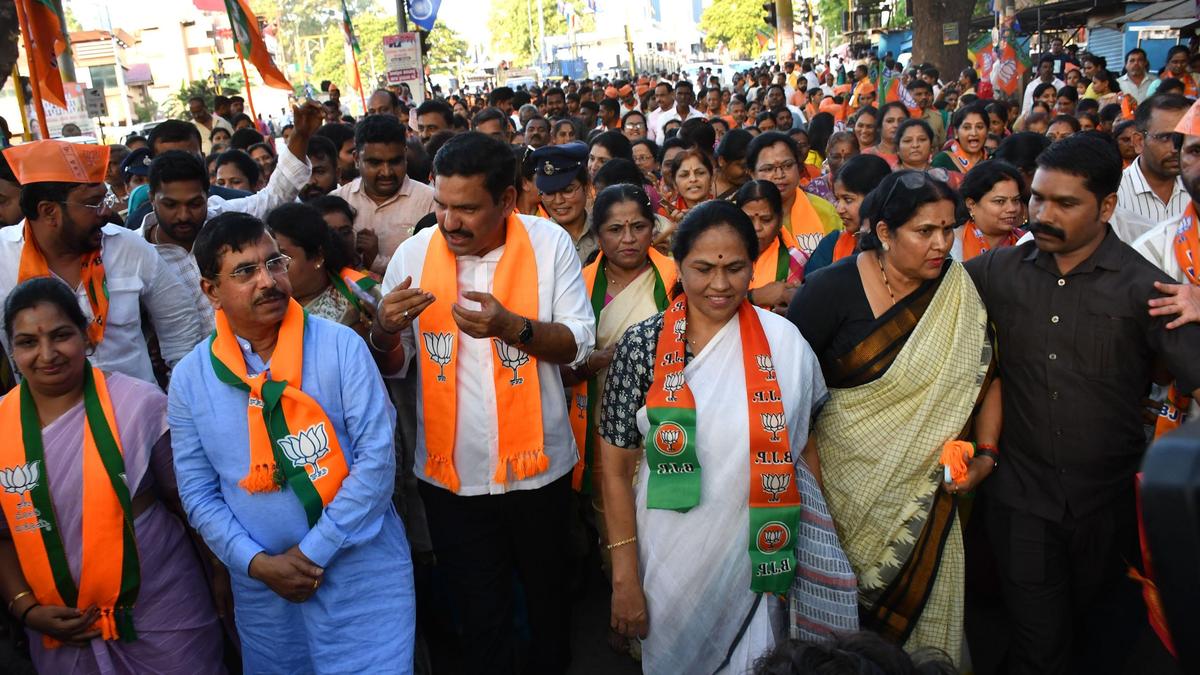
BJP Uses Hubballi Protests for Women's Quota
The BJP is using Hubballi protests to pin blame for delays on women's reservation onto Congress in Karnataka, sharpening its women's quota political offensive.
India
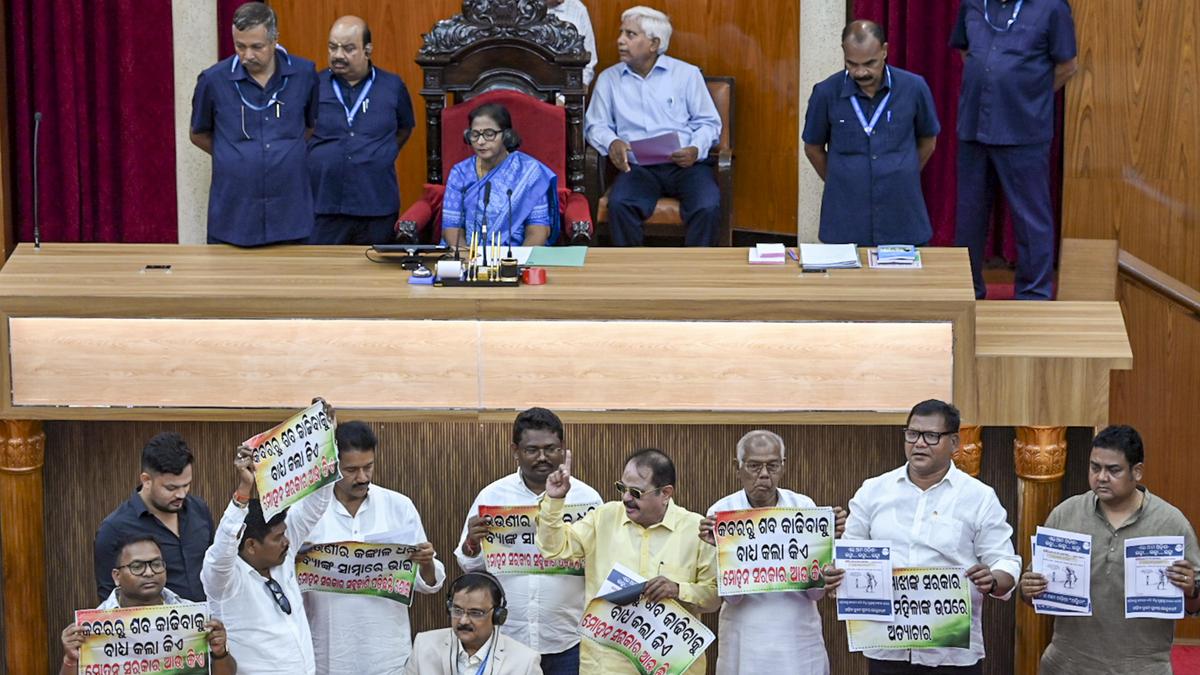
Odisha's Women's Reservation Debate
The fight over women's reservation in Odisha is shaping up as a calculated BJP and BJD strategy aimed squarely at gaining ground before the 2029 elections.
India
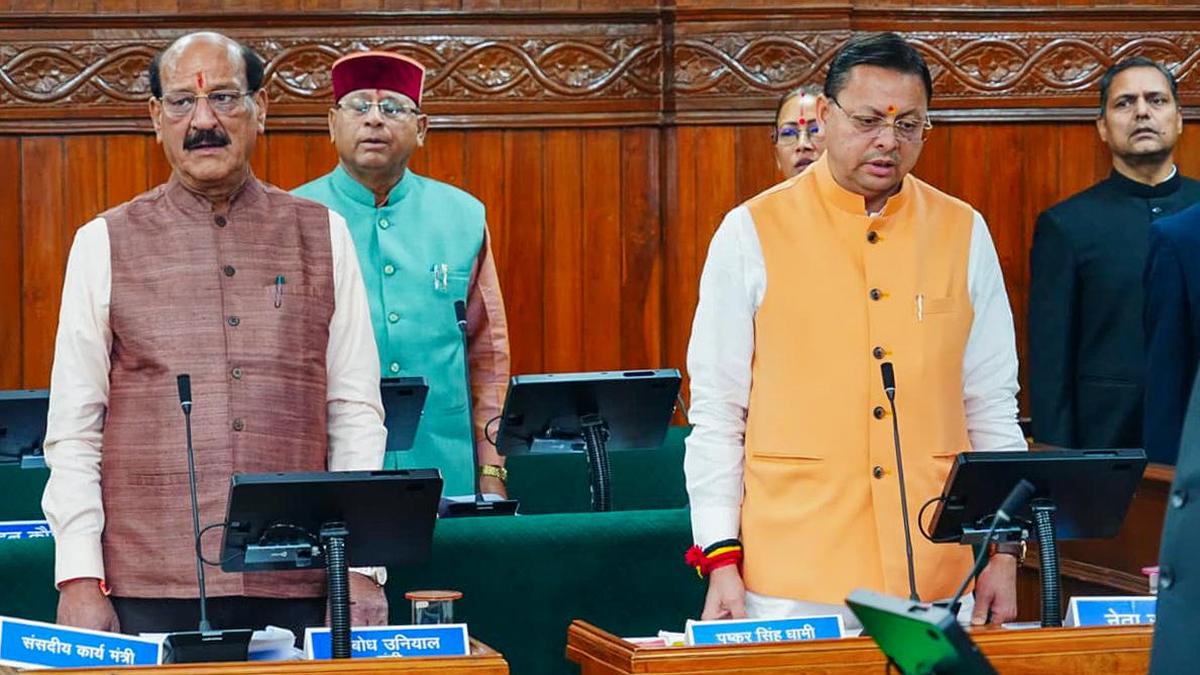
Uttarakhand's Push for Women's Reservation
Uttarakhand CM Dhami's push for women's reservation is a strategic political move that follows national defeat and aims to reclaim momentum for the BJP.