Supreme Court Blocks MP Wealth Probe in India
Court's ruling highlights issues of political accountability and equality.
Model Diplomat3 min readIndia
Good — I have enough context from the seed article and broader landscape searches. The Indian Express article clearly describes the core ruling; let me now write the analysis.
India's Top Court Blocks Selective MP Wealth Probe — And Why That's the Right Problem
The Supreme Court's refusal to single out legislators for undisclosed-assets scrutiny exposes the deeper tension between judicial accountability and constitutional equality.
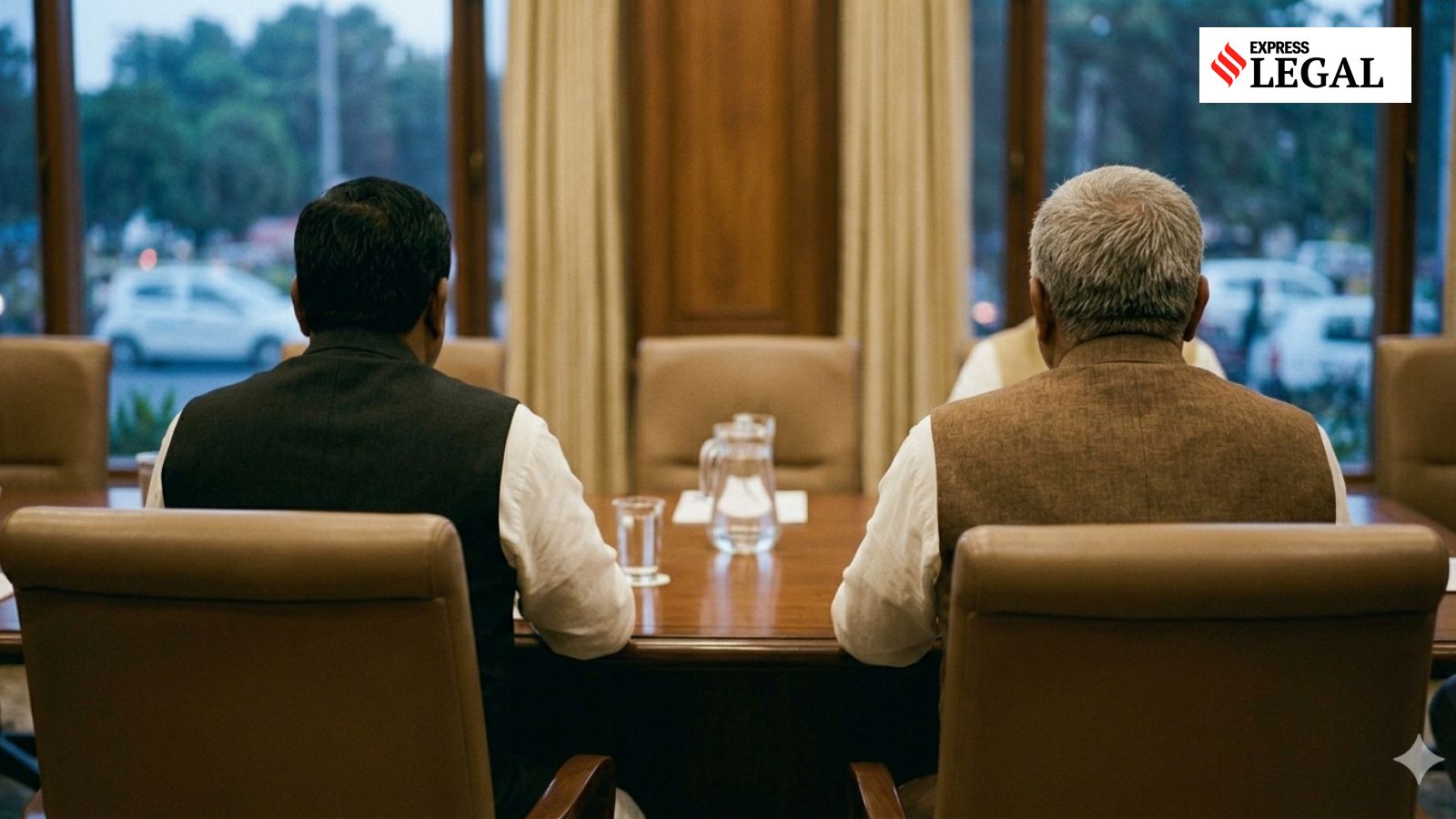
India's Supreme Court has declined to order a targeted investigation into undisclosed wealth held by Members of Parliament, warning that singling out legislators would amount to "political witch-hunting." The contempt proceedings stemmed from a 2015 Public Interest Litigation filed by an NGO seeking registration of cases against MPs and MLAs for disproportionate assets — a decade-old demand the Court has now effectively shut down in its current form.
The bench's reasoning is constitutionally significant: applying a probe selectively to one class of citizen — elected representatives — without equivalent scrutiny of comparable groups would violate the equal protection principle under Article 14 of the Constitution. In other words, the Court didn't say legislators shouldn't be investigated. It said they can't be uniquely targeted.
A Long-Running Accountability Gap
The PIL that triggered this ruling sits within a well-documented systemic failure. India's Election Commission affidavit regime, introduced after a landmark 2003 Supreme Court ruling, requires all candidates to declare assets before elections. Yet enforcement has remained skeletal. A 2024 analysis by the Association for Democratic Reforms found that the average declared wealth of sitting Lok Sabha MPs exceeded ₹38 crore — and that figure covers only disclosed assets. Prosecutions under the Prevention of Corruption Act for disproportionate assets against sitting legislators remain vanishingly rare.
The Madras High Court case of Tamil Nadu Minister Duraimurugan — where the Supreme Court recently stayed disproportionate-assets proceedings from a case dating to 2002 — illustrates how glacially such cases move even when they do exist. Meanwhile, the Karnataka High Court recently disqualified MLA S.N. Subba Reddy for declaring nil tax dues while owing over ₹1.3 crore, a signal that courts will act on specific, documented evidence. The problem is systemic investigation, not individual prosecution.
The Witch-Hunt Problem Is Real — and Cuts Both Ways
The Court's caution about political instrumentalisation deserves weight. India's central investigative agencies — the ED, CBI, and Income Tax Department — have faced sustained credible criticism from opposition parties and some courts for appearing to pursue cases disproportionately against political rivals of the ruling party at the Centre. A judicially mandated MP-specific sweep, absent a neutral, insulated mechanism, risks becoming exactly what petitioners claim to oppose: a tool of selective enforcement.
That is the bind. The NGO's grievance — that legislators enrich themselves in office with impunity — is well-evidenced. The Court's concern — that a targeted regime creates new vectors for political weaponisation — is equally legitimate. Neither cancels the other.
What to Watch
Three pressure points will determine whether this ruling closes the accountability debate or merely defers it:
- Legislative response: Whether Parliament moves to create an independent, all-encompassing assets-verification body that covers MPs alongside other high public officials, which would satisfy the Court's equality concern while addressing the NGO's original demand.
- Madras HC's April 20 deadline in the Udhayanidhi Stalin assets case — the Income Tax department's response could signal how aggressively central authorities pursue state-level opposition figures, testing the witch-hunt thesis directly.
- PIL re-filing: The NGO or similar petitioners could return with a broader petition covering all public servants, which would sidestep the selective-targeting objection entirely.
The Court didn't protect legislators from scrutiny. It demanded that scrutiny be built on equal, durable legal architecture — not ad hoc judicial mandates. Whether Indian politics has the appetite to build that architecture is the real question.
Sources: Indian Express ·
The Hindu — Duraimurugan stay ·
The Hindu — Udhayanidhi Stalin assets ·
The Hindu — Reddy MLA disqualification
Discover more
India
CPI(M) Calls to Decouple Quota from Delimita
CPI(M) advocates for a 33% women's quota in Lok Sabha by 2029, removing the need for delimitation and census linkage.
India
CPI MP Accuses PM Modi of MCC Violations
CPI MP P Sandosh Kumar alleges PM Modi breached the Model Code of Conduct in Tamil Nadu, raising election integrity concerns before the 2026 Assembly polls.

Conflict & Security
Drone Warfare Killing Aid Workers at Unprec
Over 1,000 humanitarian workers killed in three years as cheap armed drones collapse legal protections. Gaza, Sudan, Ukraine, and DRC see deliberate targeting of aid convoys and hospitals with zero prosecutions.

Global
World Normalises Taliban as Afghan Women Eras
UN data shows Afghan women erased from public life as Russia recognises the Taliban, EU hosts officials in Brussels, and ICC warrants for gender persecution go unenforced.