India's Strategic Shift
Modi's Indo-Pacific tour signals a new defense strategy.
Model Diplomat8 min readWest Asia
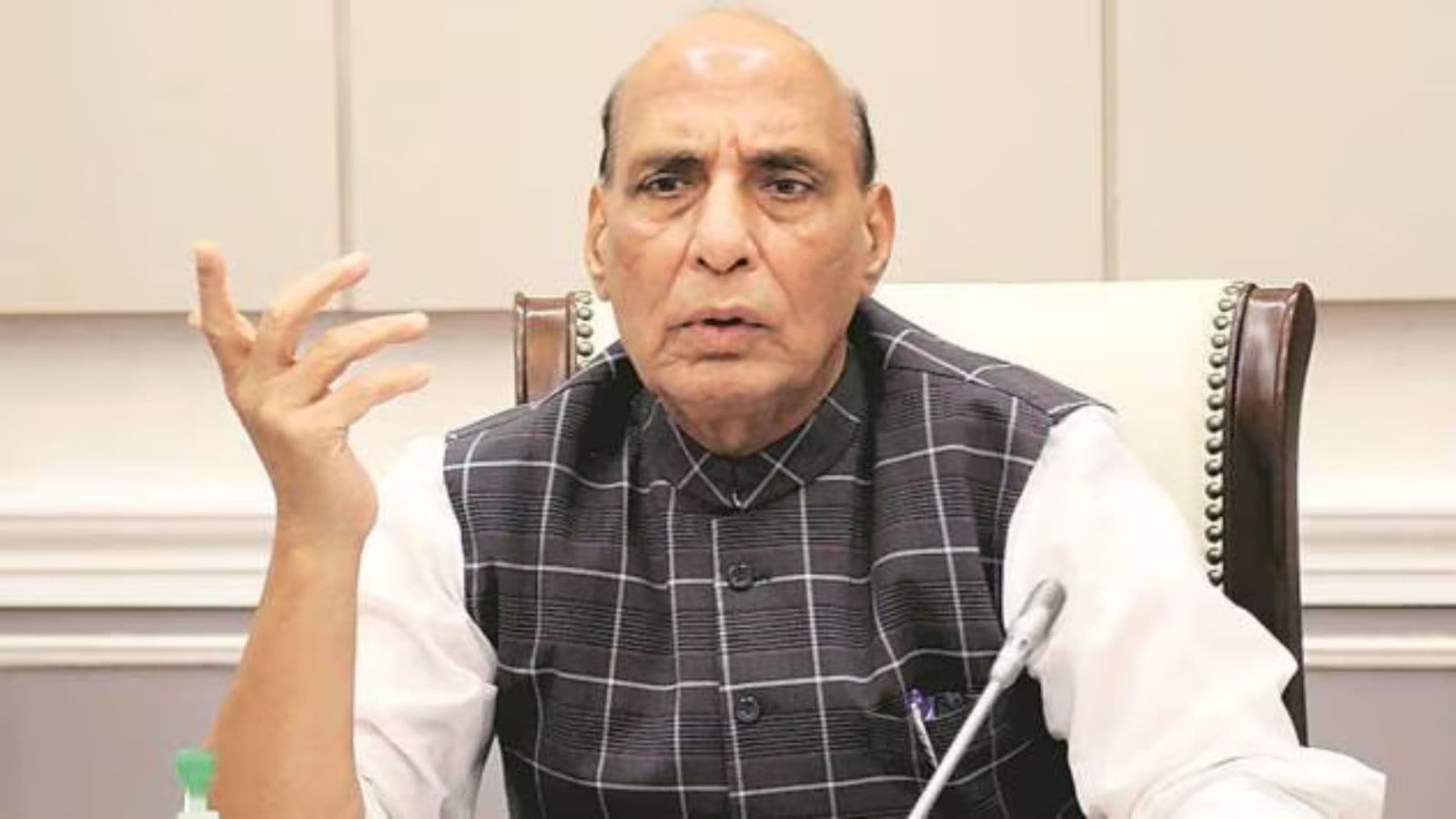
India's Strategic Shift: Modi Builds an Arc of Trust Around the Quad
India's strategic shift in 2026 — Modi's Indo-Pacific tour, a $40bn defence pivot to France, and a wider multialignment that quietly routes around Washington.
On July 7, 2026, Narendra Modi is midway through a five-day swing through Jakarta, Auckland and Melbourne — a trip conceived not as another summit ritual but as the operational launch of what Delhi insiders are calling an "arc of trust" that runs around, rather than through, the United States. India's strategic shift is no longer a hedge; it is an architecture. Battered by Donald Trump's 50% tariffs, blindsided by a Trump–Xi rapprochement, and unsettled by warming US–Pakistan ties, New Delhi is spending 2026 wiring middle powers — Indonesia, Australia, New Zealand, Japan, France, Brazil, the Gulf — into an independent security and supply-chain network. The result is a quieter, less US-anchored Indo-Pacific order in which the Quad still exists but is no longer the load-bearing wall.
The tour that redraws the map
The Ministry of External Affairs framed the trip in official briefings as a bilateral push across three "Indo-Pacific priority partners" — Indonesia, Australia and New Zealand — sequenced back-to-back for the first time in a decade, according to the MEA's special-briefing schedule. The geometry is the message: draw a line from India's Great Nicobar down through the Indonesian archipelago, across to Australia's critical-minerals belt, and up to New Zealand's Pacific exclusive economic zone, and you have a maritime perimeter that does not require an American guarantor to function.
Indonesia is the load-bearing pillar. India's southernmost tip lies roughly 145 kilometres from Banda Aceh, and Jakarta controls three of the four ingress choke points into the South China Sea — the Malacca, Sunda and Lombok–Ombai straits — as Hindustan Times noted in its briefing on the tour. New Delhi is reportedly finalising a roughly $100 million BrahMos coastal-battery sale to Indonesia, replicating the export template already used with the Philippines. Bilateral goods trade, at just under $30 billion a year, has now overtaken India–UK trade and rivals Indo-German flows, according to
Samir Saran, writing in the Indian Express.
Australia and New Zealand extend the arc without militarising it. Canberra offers critical minerals, a potential uranium supply and a route into Five Eyes intelligence sharing; Wellington offers advanced manufacturing, agri-tech and the world's fourth-largest EEZ. The unfinished Australia–India Comprehensive Economic Cooperation Agreement, layered on 2022's ECTA, is the deliverable Modi wants to bank in Melbourne. The Indian Express argues that, together with the ANZAC nations, Delhi now has the "delivery mechanism for development across the South Pacific" — a credible alternative to what smaller island states have long criticised as debt-heavy Chinese infrastructure and increasingly transactional US aid.
The soft underbelly of the Chatham House critique still applies: bilateral India–Indonesia trade remains stuck below the $50 billion target once set for 2025, and FTA talks have crawled since 2011, Chatham House warned in February 2025. If Modi and Prabowo Subianto do not convert this week's optics into a concluded ASEAN-plus FTA upgrade, the arc will look more decorative than structural.
The Trump shock, and what New Delhi learned from it
The proximate cause of the shift is not Beijing. It is Washington. In August 2025, Trump imposed an additional 25% tariff on Indian exports — doubling total duties to 50% — as punishment for continued Russian-oil purchases, according to Al Jazeera's reporting. Trump extracted a rhetorical concession from Modi at an October meeting, then pocketed it and pivoted: the White House brokered a May 10 India–Pakistan ceasefire that Trump publicly claimed credit for, resumed defence-industrial cooperation with Islamabad, and in early May 2026 held a lavish Beijing summit with Xi Jinping that produced few concrete deliverables — but plenty of anxiety in South Block.
The Foreign Affairs essay "The India Trump Made" captured the calculus bluntly: Trump's pressure campaign is producing "precisely the outcome it sought to prevent — a more multialigned India." Secretary of State Marco Rubio's four-day, four-city visit in May 2026 was, in the words of CFR's Sadanand Dhume, a "repair" mission. It has not repaired much. Milan Vaishnav of the Carnegie Endowment
told Al Jazeera that a "serious trust deficit" now defines the relationship, with New Delhi feeling "targeted and blindsided" on trade, immigration and Pakistan.
The Quad itself is the collateral damage. Its foreign-minister meeting on May 26 produced a modest "Ports of the Future" pilot in Fiji — with the Suva port agency reportedly discussing $181 million in immediate upgrades and a potential $1.82 billion relocation of the port, Al Jazeera reported — but analysts openly describe the grouping as attempting to "agree on a summit date before it slides into irrelevance,"
Al Jazeera wrote separately on the day of the ministerial. A leaders' summit long promised for New Delhi later this year remains uncertain, with no confirmation that Trump will attend, per the
BBC.
Follow the hardware: France in, America sidelined
The clearest evidence that the shift is real, not rhetorical, is the procurement ledger. In early July 2026 India's Defence Acquisition Council cleared roughly $40 billion in fresh arms procurements, including 114 additional Rafale fighters from Dassault Aviation, BBC Urdu reported, citing Reuters. Defence Secretary Rajesh Kumar told ANI that 40–50% of the airframes would be built in India — the first time Rafales will be assembled outside France. The package layers on top of a roughly $10 billion Rafale-M and Scorpene-submarine deal India green-lit in July 2023, as
Al Jazeera reported at the time, and on the elevation of the France–India relationship to a "Special Global Strategic Partnership" during Emmanuel Macron's February 2026 visit, when the two sides also amended a three-decade tax treaty to unlock French capital flows into India, per the
BBC.
The direction of travel is unmistakable. Russia's share of Indian defence imports has fallen from 72% in 2010–2015 to 36% in 2020–2024, according to SIPRI data cited by the BBC. But India has not defected to the American camp — Lockheed's F-21 pitch went nowhere; the Su-57 and S-500 are back in the conversation. It has diversified sideways toward France, upgraded Russian systems, and — via the Reciprocal Exchange of Logistics Support (RELOS) agreement Putin ratified on December 15, 2025 — quietly acquired the right to station Indian aircraft and warships at Russian Arctic and Far Eastern facilities,
Al Jazeera reported. Andrey Kortunov of the Russian International Affairs Council told the outlet that RELOS "is not directed against the United States — but it is a signal to Washington that America cannot take India for granted."
The historical parallel worth naming is 1971, when Indira Gandhi signed the Treaty of Peace, Friendship and Cooperation with Moscow after Washington tilted toward Islamabad during the Bangladesh crisis. The Modi–Putin RELOS agreement and the Modi–Macron Rafale expansion are the 2026 analogue: instruments of independence built at moments when American strategic reliability is in question. What is different is the number of pillars — India is not swapping one patron for another. It is refusing patrons.
The supply-chain second front
The other half of the shift runs through rare earths and critical minerals. India today imports 80–90% of its magnets and related materials from China, which controls more than 90% of global rare-earth processing, the BBC reported. That is a leverage point Beijing has already demonstrated it will pull.
In February 2026, Modi and Lula da Silva signed a critical-minerals and rare-earths pact in New Delhi — one of 10 agreements struck during the visit — with Modi calling it a "major step towards building resilient supply chains," Al Jazeera reported. The Council on Foreign Relations frames India's
multialignment as "rooted in self-interest rather than ideology" — and rare-earth diversification is the purest expression of that logic. Australia's uranium and lithium, Brazil's iron ore and niobium, Indonesia's nickel and Japanese processing capacity are being stitched into a single Indian supply map.
The quiet beneficiary is Europe. As the Italian Institute for International Political Studies noted in its analysis of Europe's de-risking clock, the "geometry through which European supply chains are exposed to Beijing increasingly runs through India." The Modi–Takaichi meeting in New Delhi in early July 2026, where the two sides signed an AI and energy pact, extends that logic north,
The Economist noted. Tokyo, Paris, Berlin and Brussels are quietly becoming India's most valuable partners precisely because they, too, need to route around both Washington's volatility and Beijing's coercion.
What to watch next
The immediate deliverables are three:
- The Jakarta joint statement (this week): Look for a concluded BrahMos deal, a firm ASEAN FTA upgrade timeline, and language on maritime domain awareness in the Malacca and Sunda straits. Anything less than all three, and the "arc of trust" remains a slogan.
- The Melbourne outcome (July 9–10): A signed CECA — not another "framework" — is the test of whether Australia and India can move from partnership to integration.
- The BRICS leaders' summit, September 2026, New Delhi: India chairs a bloc that could not agree on Iran in May, per
Al Jazeera's coverage of the BRICS FM meeting. If Modi's summit produces a joint statement covering Gaza, Ukraine and reformed multilateralism, India will have demonstrated it can convene the Global South. If it fails, the arc-of-trust strategy will look increasingly like a bilateral hedge in a multilateral disguise — and the "Quad summit" that Delhi wants Trump to attend will become the fallback narrative, not the flagship.
What would revise this forecast? Two things. First, a concrete US trade deal that reverses the 50% tariff and includes explicit language on Pakistan — that would pull India back toward Washington's orbit within a quarter. Second, a serious Chinese border incident on the Line of Actual Control, which would force Delhi back into the arms of whichever great power moves fastest. Absent either, the trajectory is set: India is building its own scaffolding, and the middle powers are the beams.
The Bottom Line
India's strategic shift in 2026 is the operationalisation of multialignment: an "arc of trust" through Indonesia, Australia, New Zealand, Japan, France, Brazil and the Gulf that lets New Delhi hedge simultaneously against Trump's unpredictability, Xi's coercion and Putin's diminished reliability. The $40 billion Rafale-heavy defence tranche, the RELOS pact with Moscow, the Brazil rare-earths deal and Modi's Jakarta–Auckland–Melbourne tour are not separate stories — they are a single design. If the September BRICS summit and a concluded Australia CECA land, India will have completed the shift from swing state to system-builder; if they do not, the Quad's slow drift toward irrelevance will still leave Delhi with more leverage than at any point since 1971. *
Discover more

India
India-South Korea $50B Trade Expansion Plan
India and South Korea target $50 billion in bilateral trade by 2030, focusing on industrial cooperation and strategic alignment amid US pressures.

International Relations
Pakistan's Key Role in US-Israel-Iran Meddle
Pakistan is seeking to mediate the US-Israel-Iran conflict, balancing high-stakes diplomacy against severe economic pressures and steep regional challenges.

Conflict & Security
Drone Warfare Killing Aid Workers at Unprec
Over 1,000 humanitarian workers killed in three years as cheap armed drones collapse legal protections. Gaza, Sudan, Ukraine, and DRC see deliberate targeting of aid convoys and hospitals with zero prosecutions.
Global
World Normalises Taliban as Afghan Women Eras
UN data shows Afghan women erased from public life as Russia recognises the Taliban, EU hosts officials in Brussels, and ICC warrants for gender persecution go unenforced.