India's Political Map Redrawn
Exploring the impact of proposed Lok Sabha seat expansion
Model Diplomat3 min readIndia
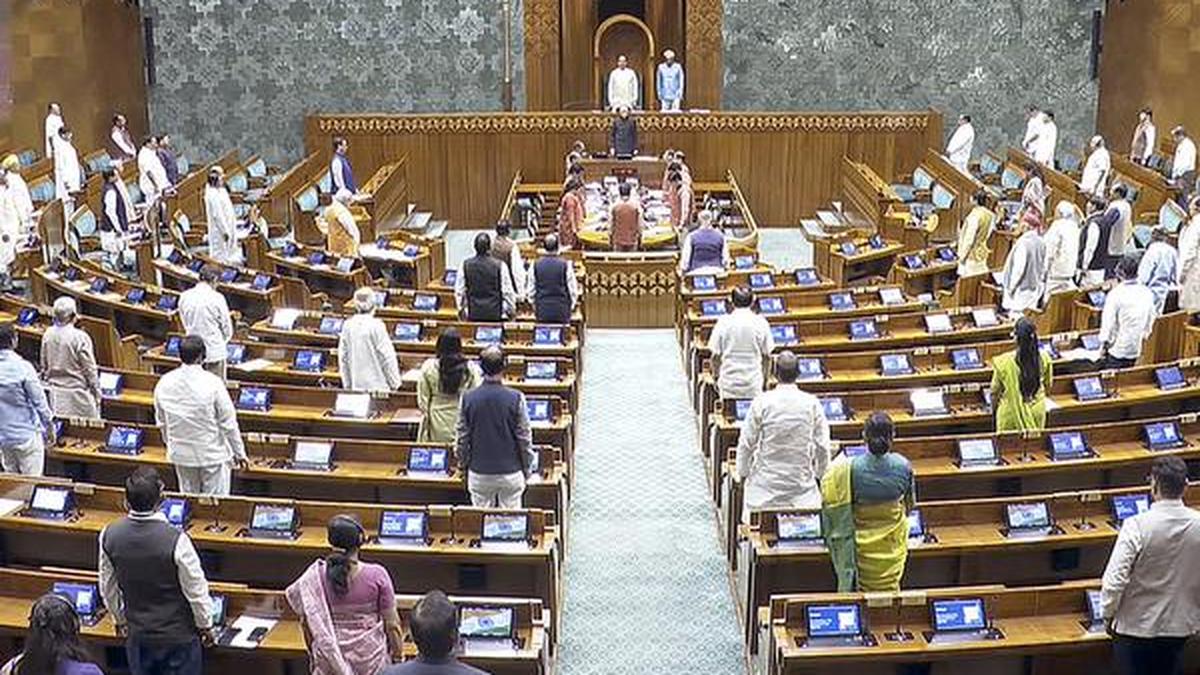
How Delimitation Based on 2011 Census Would Redraw India's Political Map
India is poised for its biggest parliamentary shake-up in decades with two bills aiming to expand Lok Sabha seats from 543 to 850, ending the 50-year freeze on seat redistribution.
Parliament is currently debating two landmark bills that would reshape India's political landscape by overhauling the allocation of Lok Sabha seats based on the 2011 Census. The proposals seek to increase the total number of seats from 543 to 850—dividing 815 among states and 35 among union territories (UTs)—while replacing the longstanding freeze on seat allocation, which has been in place since 1976 and based on the 1971 Census.
Why This Matters: The End of a 50-Year Freeze
The freeze on parliamentary seat distribution was put in place as a measure to encourage states to control population growth without fearing loss of representation. However, this moratorium has produced significant distortions. States like Uttar Pradesh and Bihar, with rapidly growing populations, have been underrepresented relative to states such as Kerala and Tamil Nadu, which managed lower population growth and thus 'kept' their share of seats.
This proposed delimitation based on the 2011 Census ends this anomaly by recalibrating seats to reflect current population realities. It will thus adjust political power towards states with higher population growth, primarily in the Hindi Belt and eastern India. For example, Uttar Pradesh’s representation would increase meaningfully, fortifying its already significant clout in the lower house. Conversely, southern states could see their relative share decline, potentially diluting their electoral influence despite continuing economic and social prominence.
More Seats, More Voices—Or More Complexity?
Boosting Lok Sabha seats to 850 promises broader representation for India’s growing population of nearly 1.4 billion. The increase provides a more granular reflection of demographics, allowing smaller or newly urbanized regions greater parliamentary voice. This could make India’s democracy more inclusive, particularly in rapidly expanding union territories like Jammu & Kashmir and Delhi.
However, an 850-seat Lok Sabha also poses challenges: it increases logistical complexity, raises costs of elections and governance, and requires adjustments to procedural rules. It may compel larger coalition governments and complicate consensus-building. Moreover, expanding seats without proportional reforms in state legislatures or local governance structures could create imbalances in political power dynamics.
What to Watch Next
The fate of these bills will reveal much about the future balance of power in Indian politics. Key questions include:
- Will states with slower population growth accept a relative dilution of their power without significant concessions?
- How will political parties recalibrate strategies in a larger and more demographically accurate Parliament?
- Could this trigger a rethinking of federal allocations and financing mechanisms to complement the political rebalancing?
This delimitation exercise marks a profound recalibration of India's electoral map that touches on fundamental questions of representation, federalism, and demographic change. As the proposals move through Parliament, they will reshape not just seats but the very architecture of Indian democracy in the coming decades.
For a deeper dive into how population shifts have shaped Indian politics, see our India country profile and for context on the broader implications for governance and electoral democracy, visit
Global Politics.
How delimitation based on 2011 Census would redraw India's political map
Discover more
India
Activists Push for Women's Quota in India
Activists demand immediate implementation of women's reservation in India's Parliament, criticizing government delays tied to pending delimitation plans.

Economics
Fed's Amex AML order puts correspondent banking on notice
Federal Reserve's Amex AML order requires board-level controls and a 90-day plan; OCC fined the bank $350 million over enterprise-wide deficiencies.
Conflict & Security
Guatemala: El Niño 2026–27 becomes regional security test
UNICEF: 25.8M children face El Niño risks in Latin America; Guatemala maps 188 municipalities for drought and food insecurity amid regional security test.

Economics
Fed's stress-test overhaul is a capital-smoothing exercise
Federal Reserve finalized stress-test overhaul: two-year averaging for bank capital buffers and public input, expected to halve volatility.