India's 12.5% Tariff Gamble with US
New Delhi challenges proposed forced-labor tariffs.
Model Diplomat8 min readAsia
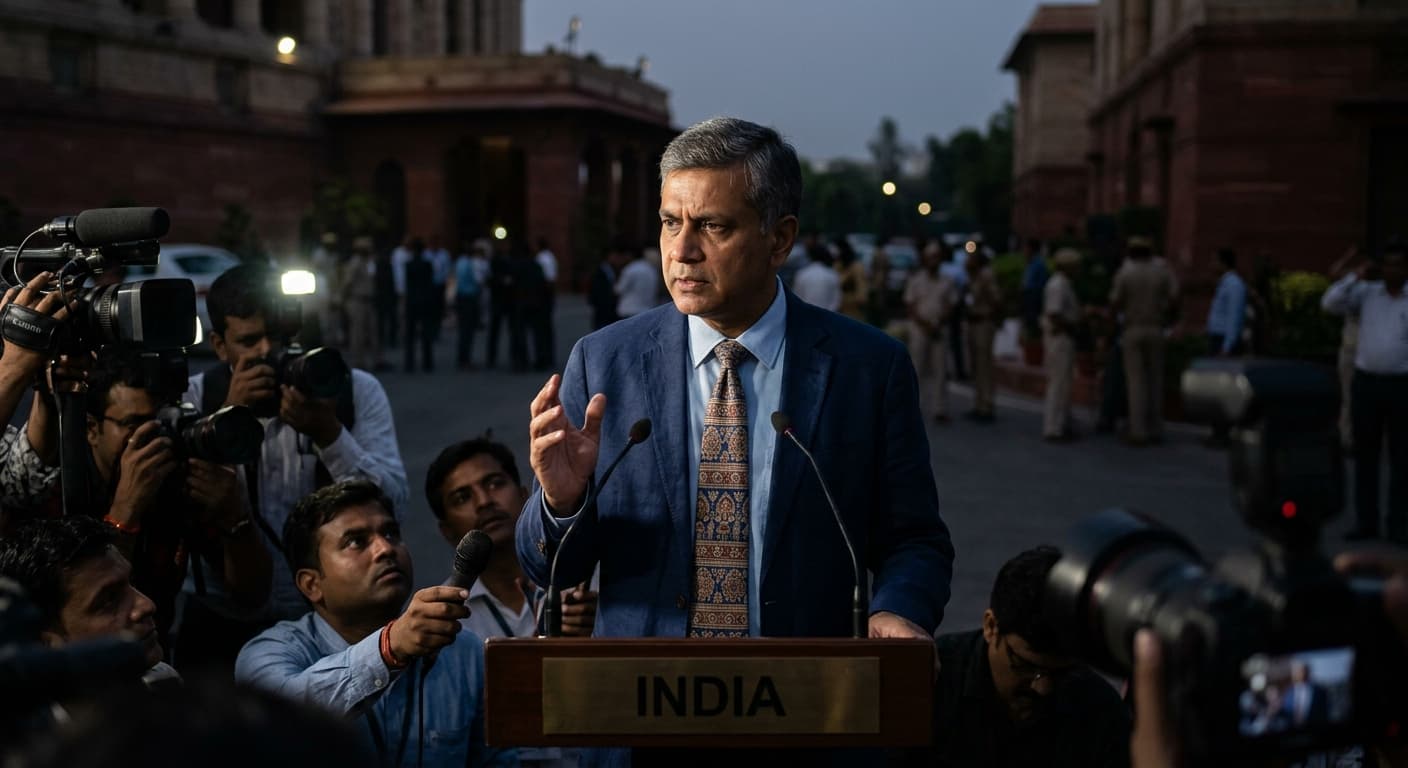
India Bets Washington Blinks on 12.5% Forced-Labor Tariff
USTR's Section 301 forced-labor probe proposes a 12.5% tariff on Indian goods. New Delhi filed its objection on July 6, 2026 — and is quietly betting Washington needs the deal more.
India's July 6 submission to the Office of the United States Trade Representative (USTR) — asking Washington to withdraw a proposed 12.5% tariff on Indian exports over "forced labour" enforcement — is not really a fight about forced labour. It is a fight over the legal scaffolding the Trump administration is building to replace the tariff regime the US Supreme Court struck down on February 20, 2026, before the Section 122 emergency duties expire on July 24. New Delhi's calculation, laid bare by Commerce Minister Piyush Goyal's public shrug, is that the US needs a functioning India relationship more than it needs to enforce a finding Indian negotiators consider legally hollow — and that the tariff arithmetic will be renegotiated inside the bilateral deal, not at the USTR hearing room.
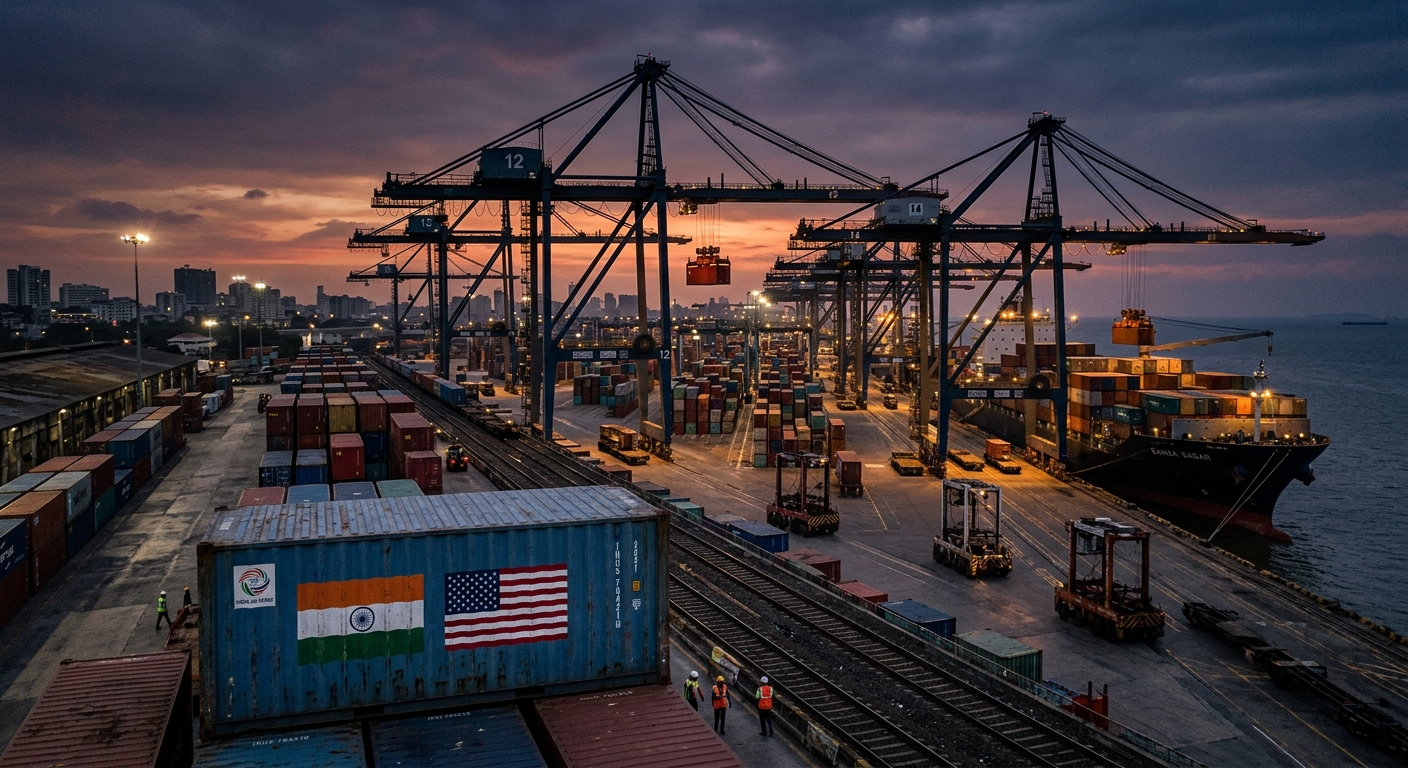
The mechanics: a workaround built to survive the courts
The forced-labour investigation is not free-standing. It is one leg of a two-track effort to reconstruct tariff authority after the Supreme Court invalidated the International Emergency Economic Powers Act (IEEPA) as a legal basis for across-the-board duties. According to the Council on Foreign Relations, the administration's immediate stopgap — a 15% blanket duty under Section 122 of the Trade Act of 1974 — automatically expires 150 days after imposition. That clock runs out on July 24, 2026.
Section 301, unlike Section 122 or IEEPA, requires "a formal investigative process — including written submissions and public hearings — before tariffs can be imposed," Brookings scholars Maricarmen Barron Esper and Christopher Sands wrote in March. That is the point. Ambassador Jamieson Greer opened 60 forced-labour probes on March 12, 2026, on what the
Congressional Research Service called "an accelerated timeframe," precisely so findings and tariffs could slot in before Section 122 lapses.
On June 2, 2026, USTR announced that all 60 economies had failed to enforce a prohibition on imports made with forced labour. Six — Canada, Ecuador, the European Union, Indonesia, Mexico, and Pakistan — were assessed a 10% "additional" duty; the other 54, including
India, China, Japan, South Korea, Australia, and Vietnam, were assigned 12.5%. The USTR's own
Federal Register notice sets the "Section 301 tariff rate" and opens the comment window that closed July 6.
The record is thin by design. In a June column titled "Half Right on Forced Labor Tariffs," CSIS trade fellow William Reinsch — a former Clinton-era Commerce official — noted the USTR's 98-page report devotes only "two or three paragraphs each" to individual country findings, "simply asserting that the country in question 'failed to impose and effectively enforce a forced labor import prohibition.' No evidence is presented for that conclusion." That is what India's July 6 filing seizes on.
India's filing: attacking the evidentiary record, not the premise
The Indian submission, reported by The Economic Times, argues that USTR failed to identify a "discrete" act, policy, or practice actionable under the Section 301 statute, and produced no economy-specific evidence linking the absence of an Indian import ban to any unfair advantage over US commerce.
That is a targeted legal argument, not a moral defence. Goyal has pointedly not contested the underlying allegation that goods produced with forced labour transit Indian supply chains — a stance the Eastern Herald called "tactical, not evidentiary." His public message: "I don't think we need to worry about Section 301," and, more revealingly, "They are trying to create a competitive edge for India" — a suggestion that the sweep is a China-containment tool that caught India as collateral.
Representatives from India's commerce ministry and the industry bodies APEDA, FICCI, CII, and ACMA are testifying at the USTR hearing that opens July 7, the Times of India reported. Their brief is to build the administrative record that plaintiffs will need in the "inevitable lawsuits" Reinsch predicts.
What is really being contested: the bilateral deal, not the tariff
To read this as a tariff dispute is to miss the leverage play. On February 6, 2026, the White House announced a framework Interim Agreement setting an 18% reciprocal tariff on Indian textiles, leather, footwear, plastics, organic chemicals, home décor, and certain machinery — down from the 50% rate that took effect in August 2025. According to India's
Press Information Bureau, tariffs on US$30.94 billion of Indian exports were cut from 50% to 18%, with another US$10.03 billion moving to zero.
That deal has never been fully implemented. Talks were deferred after the Supreme Court ruling, per the BBC, and the framework's tariff rates are legally in limbo — the White House told BBC that countries with negotiated deals would nonetheless face the Section 122 15% rate. Goyal told the India Global Forum in London last month that New Delhi will not activate the interim agreement without a "guaranteed tariff edge over Vietnam, Bangladesh, and other Asian competitors."
A 12.5% Section 301 tariff stacked on top of an 18% reciprocal rate would produce an effective 30.5% duty on Indian textiles, gems, and machinery — wiping out the price advantage the February deal was meant to deliver and putting India well above the 15% ceiling the EU insists is its negotiated cap. That is the negotiating trap Greer's team is setting for his own trip to New Delhi in the second half of July: absent an interim deal signed on Washington's terms, the Section 301 duties fill the gap.
The exposure is not academic. India shipped US$86.5 billion of goods to the US in 2025, according to the Observer Research Foundation — its largest bilateral relationship, with electrical machinery ($15.9bn), gems and jewellery ($10bn), and pharmaceuticals ($9.8bn) as the top three categories. The Global Trade Research Initiative warned last August, when the 50% rate briefly took effect, that Indian exports to the US could collapse to about US$50 billion in 2026,
per Al Jazeera — a scenario the interim deal was designed to avert and that a stacked 12.5% surcharge would partially reintroduce.
Who benefits, who loses
The forced-labour framing has three constituencies working in different directions.
The US administration gets a legally durable tariff instrument. Section 301 tariffs "cannot be raised, lowered or suspended overnight by executive order," Atlantic Council fellow Elizabeth Chalecki told Al Jazeera — that is the appeal after IEEPA. Treasury Secretary Scott Bessent told the
BBC that stacking Section 122, 232, and 301 authorities "will result in virtually unchanged tariff revenue in 2026."
China is the intended target, and China alone faces the 12.5% duty on top of pre-existing Section 232 and Uyghur Forced Labor Prevention Act enforcement — a punishment the framing was engineered to justify. The Uyghur Forced Labor Prevention Act, enacted in December 2021, already imposes a rebuttable presumption against any goods with Xinjiang inputs.
India, Vietnam, and Bangladesh are the collateral. Each is a China-plus-one destination for supply-chain relocation; each is being told to adopt US-style import bans or absorb a punitive duty. India's diplomatic bet is that Washington cannot afford, at this moment in the Indo-Pacific, to compress its most consequential emerging-market partnership over an enforcement gap it has never previously flagged in the annual State Department human-rights reporting or the Labor Department's List of Goods Produced by Child Labor or Forced Labor.
Indian textile, gems, and MSME exporters lose in every scenario short of a signed bilateral deal. ORF flags that MSME-dominated sectors have "limited financial buffers" and cannot absorb tariff shocks the way pharmaceutical majors can.
Diplomat View
The Section 301 forced-labour probe is best read as a legal instrument, not a labour-rights initiative. It exists because the Supreme Court took away IEEPA and the Section 122 clock runs out on July 24. Everything else — the 98-page report, the 60 findings, the July hearings — is administrative record-building to survive the court challenges Reinsch and other trade lawyers already see coming.
The defensible thesis: New Delhi will not sign the bilateral deal on Washington's July timetable, and the 12.5% Section 301 tariff will be finalized at close to the proposed rate — but its bite for Indian exporters will be smaller than headline numbers suggest, because the interim 18% reciprocal rate agreed in February is itself unlikely to enter force before the Section 301 duties land. In effect, Indian exporters trade the theoretical loss of a February tariff cut they never received for a Section 301 rate that primarily displaces, rather than stacks on, the expiring Section 122 duty. Goyal's confidence is calibrated to that arithmetic.
What would revise this call: a Court of International Trade ruling in July invalidating either the Section 301 procedural record or the Section 232 stacking rationale would collapse the stack. A signed India-US Bilateral Trade Agreement text before July 24 would supersede the Section 301 rate for covered goods. And if the administration adds a 100% "digital services tax" tariff to India — which the CSIS column flagged as a Trump threat — the calculus flips entirely.
What to watch
- July 7–9, 2026: USTR public hearings on the forced-labour tariff proposal. Indian delegation testifies; look for whether USTR modifies the country-specific findings India has attacked as evidence-free.
- Mid-July 2026: Ambassador Jamieson Greer's expected visit to New Delhi. If he arrives with a signed BTA text, the Section 301 tariff becomes leverage rather than policy.
- July 24, 2026: Section 122 tariffs expire. Either Congress extends (unlikely — both chambers have already voted disapproval of IEEPA duties), or the Section 301 forced-labour rates are finalized to backfill.
- Late July 2026: USTR findings on the parallel Section 301 "excess capacity" probes covering 16 economies including India, China, and the EU. A second 12.5% layer would push effective Indian rates above 40% for covered goods and break the EU's negotiated 15% cap.
The Bottom Line
The 12.5% forced-labour tariff is not really about forced labour — it is the Trump administration's legally-defensible instrument to rebuild the tariff wall the Supreme Court struck down, and India's calm response reflects a bet that the bilateral deal will absorb the shock before the surcharge bites. If Goyal is right, the Section 301 finding will be remembered as the paperwork New Delhi tolerated on the way to a better deal; if he is wrong, Indian textiles, gems, and light manufacturing will pay the price for a diplomatic wager placed before the hearing room opened.
Discover more
Global Politics
U.S. Maritime Pressure on Iran
Washington escalates maritime security operations and sanctions on Iran, disrupting Gulf shipping and reshaping global energy flows in a major strategy shift.
Global Politics
US-Iran Tensions Rise
Tensions escalate in the Strait of Hormuz as Iran and the US clash over maritime control, with a ceasefire hinging on a contested MoU paragraph.

Global Politics
U.S. Naval Blockade Heightens Iran Tensions
The U.S. naval blockade of Iran collapsed oil exports, creating a new maritime regime in Hormuz that favors Tehran.

Conflict & Security
Drone Warfare Killing Aid Workers at Unprec
Over 1,000 humanitarian workers killed in three years as cheap armed drones collapse legal protections. Gaza, Sudan, Ukraine, and DRC see deliberate targeting of aid convoys and hospitals with zero prosecutions.