India Resumes Tourist Visas for Bangladesh
Visa issuance resumes after 22-month halt, signaling diplomatic thaw.
Model Diplomat2 min readSouth Asia
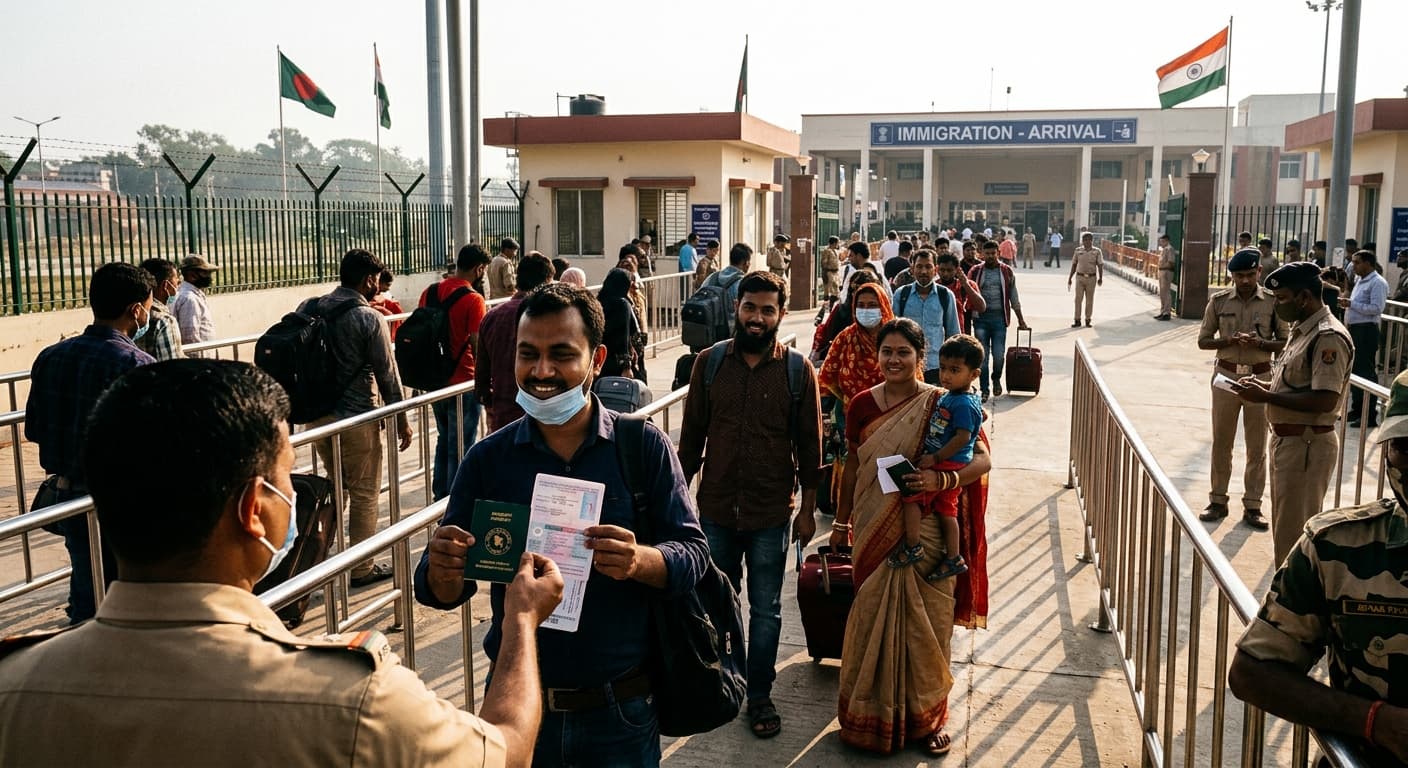
India Resumes Bangladeshi Tourist Visas, Signaling Policy Reset
New High Commissioner's first move signals New Delhi is willing to rebuild ties after political rupture.
The Indian Express reported Thursday that India's new High Commissioner to Bangladesh, Dinesh Trivedi, announced the resumption of tourist visas for Bangladeshi nationals, effective June 28 at five visa application centers including in Dhaka. The move ends a freeze imposed in August 2024 following Sheikh Hasina's ouster and the subsequent deterioration in bilateral relations.
The timing signals intent. Trivedi made this announcement his first act after presenting credentials to Bangladesh's president, underscoring that visa normalization is New Delhi's immediate priority. This is not incremental—it directly responds to Bangladesh Foreign Minister Khalilur Rahman's demand during an April visit to India that visa reciprocity follow Bangladesh's own resumption of services to Indian citizens in February. The Indian Express reported that India had been operating at roughly 15–20 percent of pre-2025 capacity, limiting tourist visas to medical and family categories.
The backdrop matters: DW reported that Bangladeshi tourist arrivals to India collapsed from 17.5 million in 2024 to 4.7 million in 2025—a 73 percent drop—driven by the visa freeze and resulting security concerns. That represents roughly $200 million in lost medical tourism revenue and billions in secondary economic activity. Bangladesh's new Prime Minister Tarique Rahman, sworn in February after elections that swept out the anti-India interim government, has promised a "forward-looking" relationship, creating political cover for both governments to move past the trauma of 2024–2025.
Yet the gap between announcement and actual resumption remains. The Times of India noted that Bangladesh had resumed tourist visas to Indian citizens on a "not formally announced" basis in February, avoiding political friction at home. India's June 28 date signals similar political calculation—a formal restart just as
BBC reporting indicates anti-India sentiment remains strong in parts of Bangladesh over the detention of Sheikh Hasina in India and persistent disputes over water sharing and border violence.
The next test is capacity. The Print reported that India issued roughly 1,500 visas daily as of September 2025, versus the pre-crisis norm of 6,000—suggesting infrastructure remains constrained. Reopening five centers addresses logistics but not the underlying staffing gap or consular bureaucracy that will bottleneck demand in the first weeks.
What to watch: Monitor whether India moves to full restoration by late July. Both governments have signaled that bus and train services, frozen since 2024, will also restart. Rahman's ability to absorb domestic political pressure—particularly from opposition parties still pushing for Hasina's extradition—will determine whether this thaw holds through year-end or stalls again.
Discover more

India
India-South Korea $50B Trade Expansion Plan
India and South Korea target $50 billion in bilateral trade by 2030, focusing on industrial cooperation and strategic alignment amid US pressures.
India
Modi's Women’s Convention in Varanasi
Modi's Varanasi rally frames women's reservation as a national mission, targeting the 2027 Uttar Pradesh elections with a strategic narrative.
India
UN Expert Albanese: India Violates Law
UN Rapporteur Francesca Albanese accuses India of breaching international law, spotlighting human rights concerns in Kashmir and prompting diplomatic pushback.

Conflict & Security
Drone Warfare Killing Aid Workers at Unprec
Over 1,000 humanitarian workers killed in three years as cheap armed drones collapse legal protections. Gaza, Sudan, Ukraine, and DRC see deliberate targeting of aid convoys and hospitals with zero prosecutions.