India Requests Bangladesh Verify Migrants
New Delhi seeks verification of 2,860 suspected Bangladeshi migrants.
Model Diplomat2 min readSouth Asia
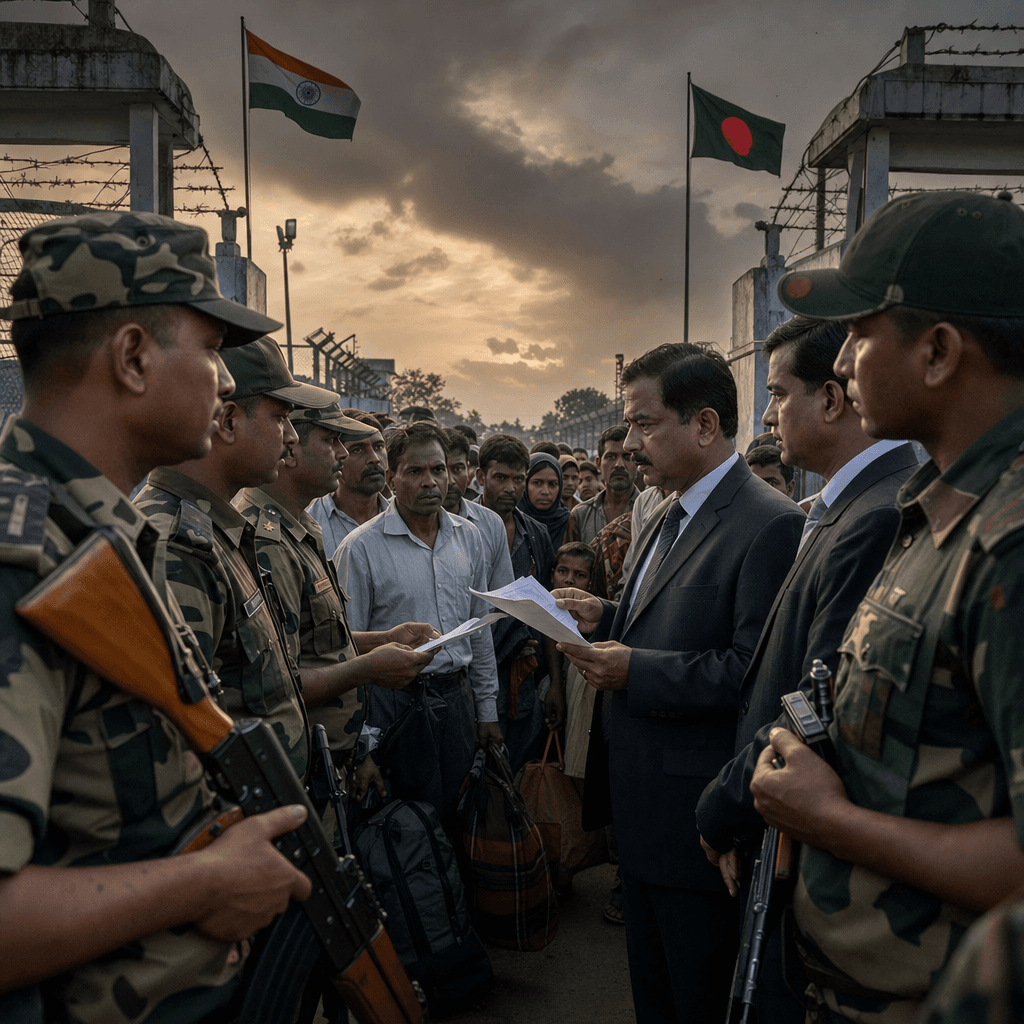
India Demands Dhaka Verify 2,860 Suspected Migrants
New Delhi’s request to Bangladesh to verify thousands of suspected migrants shifts a burning domestic issue into a complex diplomatic dispute.
India's Ministry of External Affairs has officially requested that Bangladesh verify the nationality of 2,860 individuals staying in India whom New Delhi identifies as Bangladeshi citizens, representing a transition to formal diplomatic channels after months of controversial unilateral border pushbacks. Speaking at a press briefing, MEA spokesperson Randhir Jaiswal stated that several such requests remain pending and urged Dhaka to expedite the process, as reported by The Indian Express. This move represents a strategic attempt by Prime Minister Narendra Modi's administration to institutionalize a deportation pipeline that has previously triggered intense regional and administrative collisions in
India.
Domestic Cracks and State Friction
The federal push to identify and deport undocumented migrants is heavily driven by BJP-led state administrations in Assam and Maharashtra, but it has hit significant internal resistance. State-level opposition leaders, particularly West Bengal Chief Minister Mamata Banerjee, have accused federal authorities of illegally profiling Bengali-speaking Indian Muslims as foreigners due to linguistic similarities. According to the BBC, several high-profile cases—such as the deportation of legal Indian residents from Delhi who were subsequently jailed in Bangladesh for illegal entry—have sparked fierce domestic backlash. This political friction shows how domestic electoral calculations in bordering Indian states continue to dictate national security and immigration policy, sometimes at the expense of legal due process.
The Battle of Bureaucratic Delay
By shifting to formal verification, New Delhi is attempting to leverage diplomatic protocols to bypass accusations of human rights violations. Earlier, top sources within the Bangladeshi administration told the BBC that Indian border security forces had "illegally pushed in" more than 1,200 people without notice, prompting Dhaka to issue a formal diplomatic note charging India with violating bilateral agreements. Now, the burden of proof has been transferred to Dhaka. However, Bangladesh holds the advantage of strategic delay, as its transitional government, heavily focused on navigating macroeconomic reforms and political stability, has little incentive to absorb thousands of suspected deportees when many cases are still pending before Indian courts.
What to Watch Next
The immediate pressure point will be the upcoming bilateral border talks between the Border Security Force (BSF) and the Border Guard Bangladesh (BGB). These technical negotiations will reveal whether Dhaka is willing to cooperate on establishing a joint verification protocol or if it will reject the list, forcing India's Supreme Court to intervene in setting stricter guidelines for domestic deportations.
Discover more
India
UN Expert Albanese: India Violates Law
UN Rapporteur Francesca Albanese accuses India of breaching international law, spotlighting human rights concerns in Kashmir and prompting diplomatic pushback.
India
CPI(M) Calls to Decouple Quota from Delimita
CPI(M) advocates for a 33% women's quota in Lok Sabha by 2029, removing the need for delimitation and census linkage.

Conflict & Security
Drone Warfare Killing Aid Workers at Unprec
Over 1,000 humanitarian workers killed in three years as cheap armed drones collapse legal protections. Gaza, Sudan, Ukraine, and DRC see deliberate targeting of aid convoys and hospitals with zero prosecutions.

Global
World Normalises Taliban as Afghan Women Eras
UN data shows Afghan women erased from public life as Russia recognises the Taliban, EU hosts officials in Brussels, and ICC warrants for gender persecution go unenforced.

