India Hardens Line on Water As Pakistan Warns
India rejects Pakistan's threats over water sanctions.
Model Diplomat2 min readSouth Asia
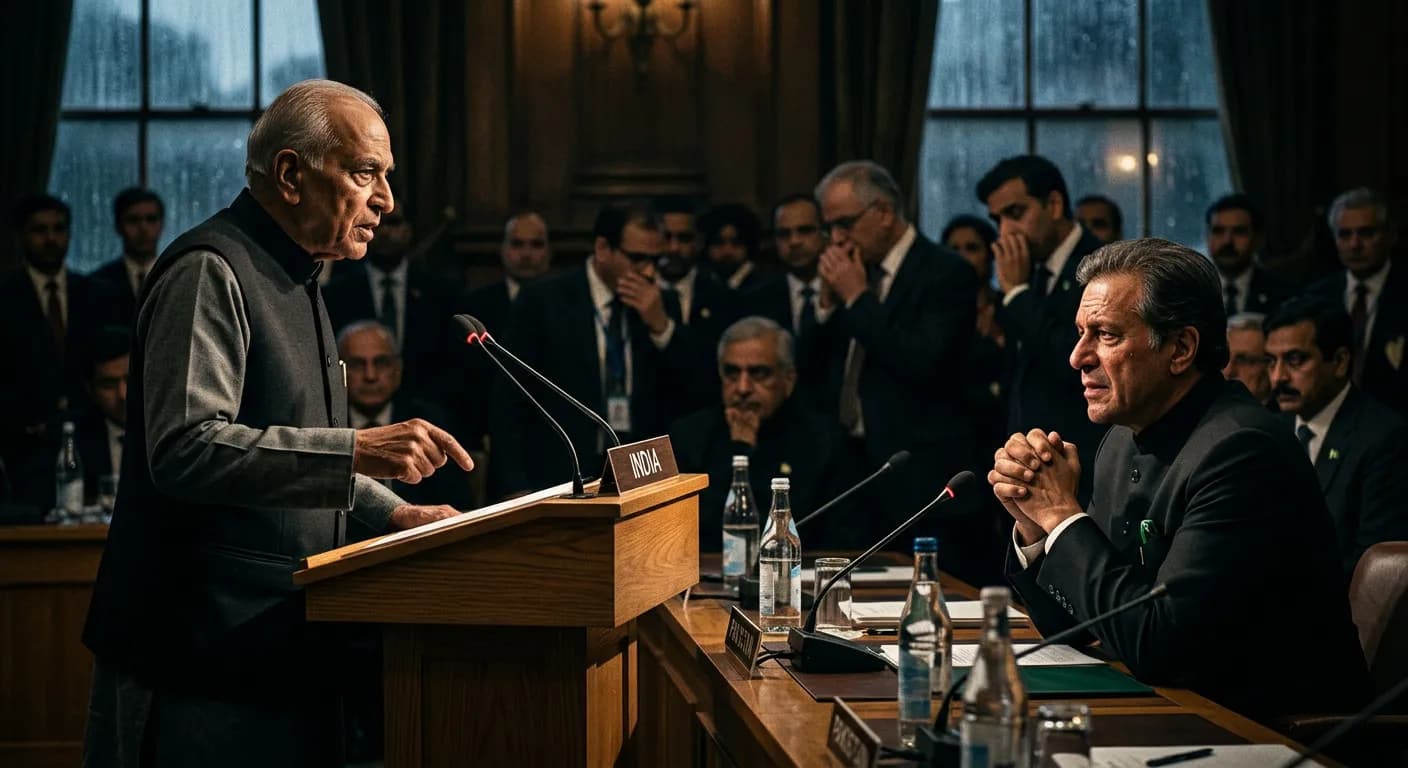
India Hardens Line on Water As Pakistan Threatens War
India rejects Pakistan's war threats over Indus treaty suspension, framing water sanctions as counter-terror policy.
NDTV reported that India's Ministry of External Affairs dismissed Pakistan Defence Minister Khawaja Asif's threat to wage war over water as a diversionary tactic. MEA spokesperson Randhir Jaiswal said Asif was attempting to divert attention from Pakistan's internal failures and alleged human rights abuses through "fabricated claims." The rebuke came after Asif told Pakistani media that "the moment we feel that our national security, and water is part of our national security, is being threatened, we will go to war against India."
The exchange marks the sharpest rhetoric yet over water control—the core leverage point in India's post-April escalation. In April 2025, after a terror attack in Pahalgam, Kashmir killed 26 people, India suspended the Indus Waters Treaty, a 65-year-old agreement that allocates water from six rivers between the two nations. Al Jazeera reported that India downgraded diplomatic ties and suspended the treaty for the first time in its history.
India's Home Minister Amit Shah subsequently declared the treaty would "never" be restored, vowing to divert water to India's Rajasthan desert and leave Pakistan "starved of water."
Why This Matters: Infrastructure Asymmetry and Real vs. Rhetorical Threat
Pakistan's war rhetoric conceals a more complex reality. NPR reported that India lacks the immediate capability to cut off the full water flow during high-flow seasons—it has not built the massive storage dams required. However, Pakistan's vulnerability is genuine and grows over time.
Al Jazeera analysis noted that the real danger emerges during winter and low-flow periods, when even modest Indian storage could devastate Pakistan's wheat crops and drinking water. Pakistan is building two major dams to increase storage by 2028–2029, setting up a race: India may gain chokepoint control before Pakistan can buffer itself against cuts.
India frames the suspension as counter-terrorism policy—a response to Pakistan's alleged role in cross-border attacks. Pakistan's counter-claim of "water terrorism" and threats of military response serve a dual purpose: rallying domestic support and signaling that any Indian attempt to divert water will trigger retaliation. Yet India, holding the upstream advantage, holds the timeline.
What to Watch
Two decision points matter: Pakistan's dam completion dates (Mohmand and Diamer-Bhasha, due 2028–2029) and India's next infrastructure move. The BBC reported that India can now modify existing infrastructure or build new diversion structures without advance notice to Pakistan under the suspended treaty. Any large-scale dam project announcement from New Delhi would be read in Islamabad as preparation for actual flow restrictions, likely triggering a military standoff. A ceasefire holds as of June 2026, but water infrastructure decisions—not rhetoric—will determine whether this remains a political standoff or accelerates toward conflict.
Discover more

Global Politics
US Seizes Iranian Ship, Tensions Surge
The US seizure of the Iranian ship Touska highlights a shift in control over the Strait of Hormuz, favoring Iran's strategic position.

International Relations
Pakistan's Key Role in US-Israel-Iran Meddle
Pakistan is seeking to mediate the US-Israel-Iran conflict, balancing high-stakes diplomacy against severe economic pressures and steep regional challenges.
India
UN Expert Albanese: India Violates Law
UN Rapporteur Francesca Albanese accuses India of breaching international law, spotlighting human rights concerns in Kashmir and prompting diplomatic pushback.

Conflict & Security
Drone Warfare Killing Aid Workers at Unprec
Over 1,000 humanitarian workers killed in three years as cheap armed drones collapse legal protections. Gaza, Sudan, Ukraine, and DRC see deliberate targeting of aid convoys and hospitals with zero prosecutions.