India Pushes for Global South in UNSC
India's push for Global South seats in UNSC reform
Model Diplomat8 min readGlobal
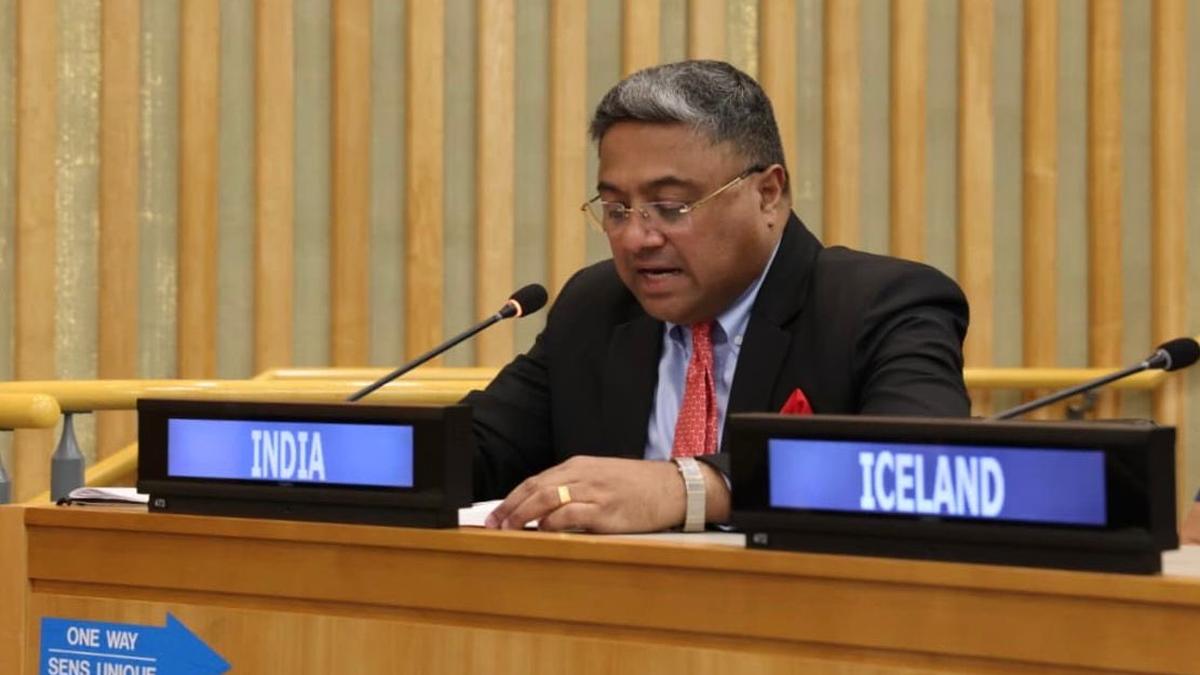
India Pushes for Global South in UNSC — Reform's Real Endgame
India's 2026 campaign for Global South seats on the UN Security Council is not sentiment — it's a bid to kill the "regional seats" model before it locks New Delhi out for good.
On June 16, 2026, India's Permanent Representative to the UN, Ambassador Parvathaneni Harish, told the Intergovernmental Negotiations (IGN) on Security Council reform that any deal expanding only the non-permanent category would "border on failure." Six days earlier, the IGN's Austrian and Kuwaiti co-chairs had circulated a Revised Elements Paper floating a rival design: "fixed regional seats" — long-term, renewable, reviewable, allocated to regions rather than to countries. That paper, not the African model, is the reason India is suddenly loud about the Global South. New Delhi's pitch for African and Latin American permanent seats is not charity; it is the price of building the coalition needed to bury a proposal that would give India, at best, a rotating chair it must share with Pakistan, Indonesia and Japan.
The subtext of the 2026 reform debate is who gets a nameplate on the Council and who gets a regional lease. India, having spent two decades chasing the first, now faces a co-chairs' text drifting toward the second.
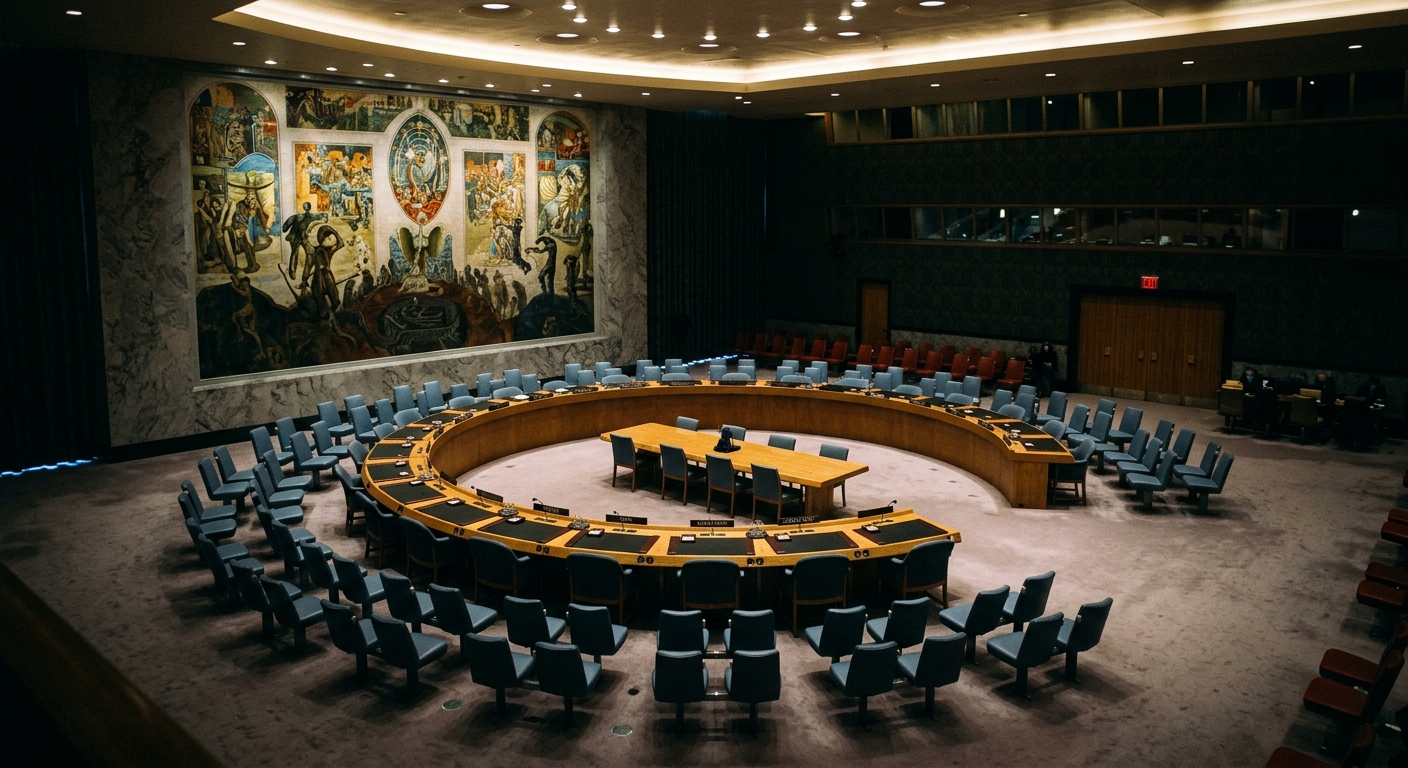
What India actually said, and to whom
Speaking at the IGN plenary on June 16, Harish argued that expansion of the permanent category with veto is "critical to real reform," and warned that stopping at non-permanent seats would "perpetuate existing imbalance and inequities," according to The Times of India. The
New Indian Express reported him going further: reform without permanent-category change would "border on failure."
Two months earlier, on April 20, 2026, India used its IGN turn to endorse the Common African Position — the Ezulwini Consensus that demands two permanent seats with full veto for Africa. The Ministry of External Affairs, in a statement posted on mea.gov.in, "whole-heartedly welcomed" the presentation of the African model. India's Secretary (West) Sibi George, delivering the national statement in New York, framed the demand explicitly around "greater representation of the Global South, particularly in the permanent category," per
The Economic Times.
Backing Africa's veto claim is a shift. India's own G4 proposal — six new permanent members, two for Africa — has for years suggested deferring the veto for 15 years, a compromise designed to lower P5 resistance. Endorsing Ezulwini as-is signals New Delhi is willing to swallow the harder African demand in exchange for a solid 54-vote African bloc against the alternative model now in play.
The alternative model, and why it terrifies New Delhi
The June 10, 2026 Revised Co-Chairs' Elements Paper — the operative negotiating text for the 80th session — is the document that changed the temperature. Ambassadors Alexander Marschik of Austria and Tareq Al-Bannai of Kuwait introduced what they called a "fixed regional seats" proposal: permanent seats "allocated on a regional basis," filled by member states "elected by the General Assembly for longer, renewable terms," subject to periodic review, "carrying the same privileges and responsibilities as current permanent members."
Read literally, this reads like a Global South win. Read strategically, it is the Uniting for Consensus (UfC) design in new packaging — the coalition of Italy, Pakistan, Argentina, Mexico, South Korea and Türkiye that has spent 20 years blocking individual G4 accession. As the Carnegie Endowment documented in its 2023 survey of member positions, UfC's core objective is to prevent Brazil, Germany, India and Japan from acquiring the specific prize they seek: a chair with a country's name on it.
A "fixed regional seat" for the Asia-Pacific group would force India to contest, on rotation, against Japan, Indonesia, South Korea — and Pakistan. India's ORF has long argued that Beijing's stated preference is precisely this: as ORF notes, China "proposes the inclusion of small and medium-sized countries" rather than named G4 aspirants. The regional-seats design achieves China's goal without China having to defend it.
The Global South is not one bloc — and India knows it
India's problem is that "the Global South" in UNSC politics is at least three coalitions, and they do not fully agree.
The African Group's Committee of Ten (C-10) demands two permanent seats with veto, per the Sirte Declaration. The L.69 Group — a cross-regional bloc of 40-plus developing states, of which India is a founding mover — wants expansion in both categories with veto for new permanent members. The G4 wants named permanent seats for its four members plus two for Africa.
On September 24, 2025, at the margins of UNGA's High-Level Week, L.69 foreign ministers met the AU's C-10 chair for a session titled "No one left behind: Global South's push for reform of the Security Council," according to an outcome document circulated to all UN missions. The ministers agreed to push for "text-based negotiations" — the procedural move India has demanded for years and UfC has blocked. They also warned that IGN discussions were "consistently falling below expectations of the Global South" and hinted at "carrying forward the discussions on UN Security Council reforms beyond the framework of the IGN process."
That last line matters. It is the first formal signal that Global South reformers might treat the IGN as expendable if the Co-Chairs' regional-seats framing gains traction.
Why 2026 is different: the Pact for the Future clock
The strategic backdrop is the Pact for the Future, adopted by consensus on September 22, 2024. Actions 39–41 of the Pact commit member states to reform the Security Council "as a matter of priority and without delay" — the first agreed parameters for Council reform since 1963, and the first political commitment ever to "redress the historical injustice against Africa as a priority."
The IGN Co-Chairs' June 2026 paper explicitly frames itself as delivering on that mandate, calling for "the development of a consolidated model" that would translate "years of deliberation into a path toward tangible outcomes." Once a consolidated model exists on paper, it becomes hard to reopen. This is why the composition of that model is now the fight — and why India cannot afford to let the regional-seats language become the default.
What India gains from the African embrace
The mathematics of a UN Charter amendment under Articles 108 and 109 require a two-thirds vote in the General Assembly plus ratification by two-thirds of member states, including all five permanent members. That gives China an effective veto over India's individual candidacy — a point the Vivekananda International Foundation and others have repeatedly stressed. As a VIF analysis documents, China has "constantly shown a negative attitude towards India in the UN" and has been "quite ambiguous" about supporting New Delhi's candidature.
India cannot outvote China. It can, however, box Beijing in politically by fusing its bid with the African cause. A P5 veto against a package that includes two African seats — 54 votes at stake — is far costlier for Beijing than a veto against India alone. This is the mechanical logic behind Modi's endorsement, at the Rio BRICS Summit in July 2025, of "fair representation of the global South" — and behind the joint L.69–C-10 push six weeks later.
The cost to India is real. Backing Ezulwini means backing full veto rights for African permanent members from day one, which is a harder ask of the P5 than the G4's own deferred-veto compromise. It also cedes some agenda-setting to a bloc India does not fully control. New Delhi is calculating that the alternative — a "fixed regional seats" model that leaves it queuing behind Tokyo and Islamabad — is worse.
The counter-argument: reform still won't happen
The realist case, argued by scholars including MP-IDSA's Rajeesh Kumar, is that the P5 will not consent to any expansion that dilutes their power, and that "additional seats with veto power is at best a distant possibility." The Valdai Club's Heramb Podar makes the harder case: since 2011, Russia and China have cast 28 vetoes; the United States has cast 14 since 2020, mostly on Israel-Palestine,
according to his tally. A Council this polarised has no bandwidth to renegotiate itself.
The counter to the counter-argument is bypass. If the Council cannot reform, the Global South builds parallels — BRICS+, the New Development Bank, AU Peace and Security Council mandates under UNSC resolution 2719. Every parallel structure raises the P5's cost of inaction. That is precisely the pressure India is trying to convert into leverage in 2026.
Diplomat View
India's 2026 push is not a re-run of Manmohan Singh's 2005 campaign or Modi's 2015 G4 revival. It is a procedural counter-strike against the Co-Chairs' regional-seats concept before it hardens into the consolidated model the Pact for the Future has mandated. Read that way, the "Global South" rhetoric is instrumental: it buys Africa's 54 votes to kill a Uniting for Consensus proposal that would otherwise achieve, through the back door, what China has failed to block at the front.
The forecast: India will get louder about Africa, quieter about the veto-deferral compromise it once championed, and will lean harder on Washington and Paris — both nominal supporters — to publicly disavow the regional-seats language. The bet does not require an actual expansion of the Council to succeed. It requires the co-chairs' text, when it converges into a consolidated model, to describe "individual permanent members" rather than "regional seats." What would revise this forecast: an explicit Chinese endorsement of the regional model, or a French or American cabinet-level signal that "differentiated permanency" (permanent seats without initial veto) is now the P5's preferred landing zone. Either would collapse India's African gambit.
What to watch
- September 2026, UNGA 81 High-Level Week: G4 foreign ministers' meeting on the sidelines; watch whether Germany and Japan explicitly back Ezulwini's full-veto demand, or hedge.
- Autumn 2026 IGN session: whether the Co-Chairs retain "fixed regional seats" in the next iteration of the Elements Paper, or drop it under Global South pressure.
- UN80 reform track: PGA Annalena Baerbock's Secretary-General succession process,
discussed with EAM Jaishankar in April 2026, will shape which reform proposals reach the floor before the Pact's momentum expires.
The Bottom Line
India's Global South campaign in the UNSC is a tactical trade: swallow Africa's harder veto demand to build a bloc large enough to bury the "regional seats" alternative that would otherwise become the reform consensus. The fight is no longer whether the Council expands — the Pact for the Future settled that — but whether new permanent members have names or postcodes. New Delhi has decided a nameplate is worth an African veto it does not control.
For related coverage, see India.
Discover more

India
India-South Korea $50B Trade Expansion Plan
India and South Korea target $50 billion in bilateral trade by 2030, focusing on industrial cooperation and strategic alignment amid US pressures.
India
CPI(M) Calls to Decouple Quota from Delimita
CPI(M) advocates for a 33% women's quota in Lok Sabha by 2029, removing the need for delimitation and census linkage.
India
UN Expert Albanese: India Violates Law
UN Rapporteur Francesca Albanese accuses India of breaching international law, spotlighting human rights concerns in Kashmir and prompting diplomatic pushback.

Conflict & Security
Drone Warfare Killing Aid Workers at Unprec
Over 1,000 humanitarian workers killed in three years as cheap armed drones collapse legal protections. Gaza, Sudan, Ukraine, and DRC see deliberate targeting of aid convoys and hospitals with zero prosecutions.