India Accepts Quasi-Alliance with Australia
Uranium deal and ANZUS-style defense pact mark strategic shift
Model Diplomat7 min readIndo-Pacific
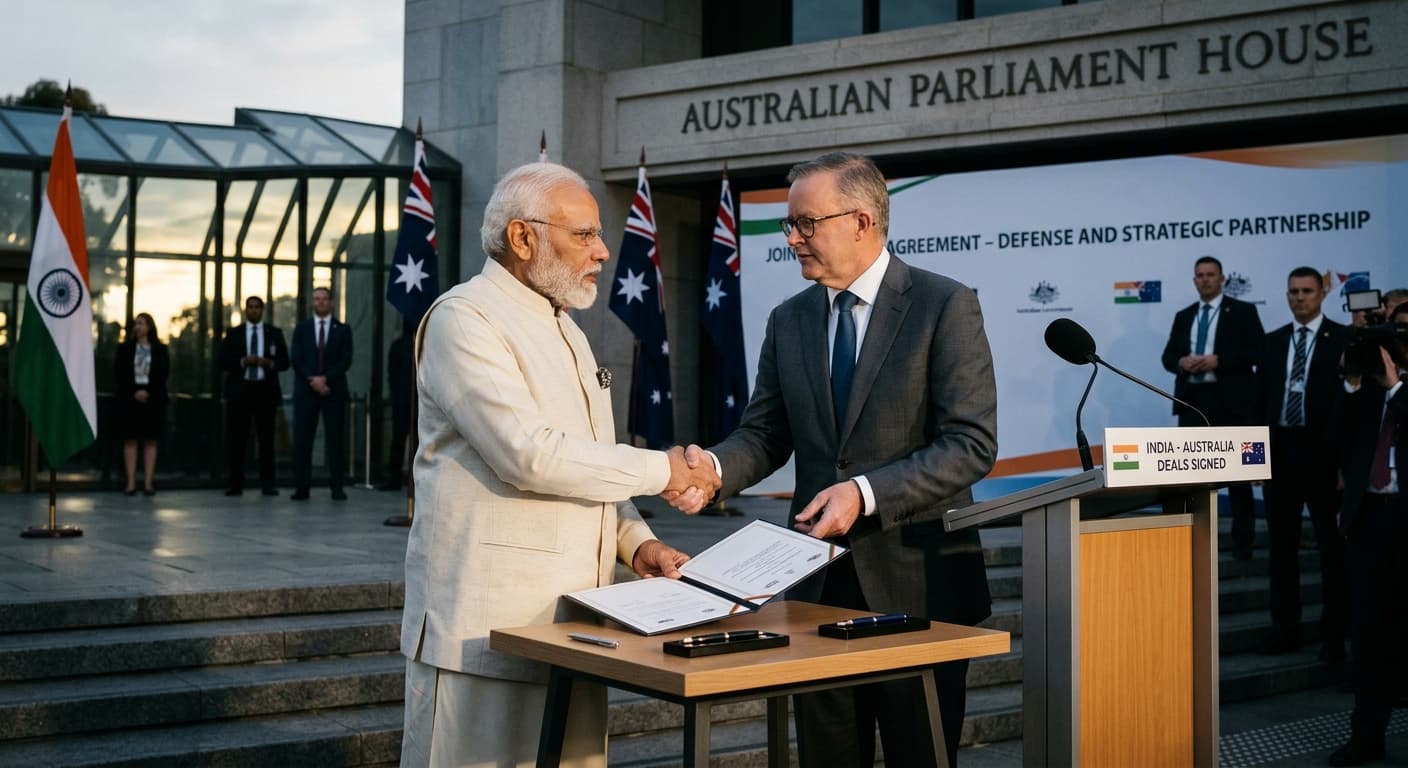
Modi's Melbourne Summit: India Accepts Quasi-Alliance Language Without Joining an Alliance
Modi's July 9, 2026 summit with Albanese operationalised a uranium deal and signed a defense declaration whose consultation clause mirrors ANZUS Article 3. India is accepting alliance-like obligations from middle powers, not from Washington, because Canberra, Tokyo and Delhi are building a China-countering mesh designed to work without US certainty.
Indian Prime Minister Narendra Modi's three-day visit to Australia, concluding a three-nation tour through Indonesia, Australia and New Zealand, delivered the most significant bilateral package in the relationship's history and the most strategically loaded language India has ever accepted from a non-treaty partner. On July 9, 2026, Modi and Australian Prime Minister Anthony Albanese finalised the Administrative Arrangement under the 2014 Civil Nuclear Cooperation Agreement, enabling long-term Australian uranium exports to India under International Atomic Energy Agency safeguards, and signed a Joint Declaration on Defense whose consultation clause echoes language India has spent decades avoiding.
The decisive development is not the uranium — it is the defense declaration's undertaking "to consult on defense-related developments in the Indo-Pacific that affect shared interests." As The Diplomat reported, Griffith University professor Ian Hall noted this language is "almost alliance-like," drawing a direct parallel to ANZUS Treaty Article 3. The ANZUS text, signed in 1951 and held at the
U.S. Office of the Historian, reads: "The Parties will consult together whenever in the opinion of any of them the territorial integrity, political independence or security of any of the Parties is threatened in the Pacific." India, which has never joined a military alliance and which for decades cited strategic autonomy as the reason to avoid such entanglements, has now accepted functionally equivalent language from Australia.
This happened not because Washington pressured Delhi but because Australia and India are building a China-countering architecture that works whether or not the United States is reliably present. The visit followed Japanese Prime Minister Sanae Takaichi's summit with Modi in Delhi on July 2, 2026, where the two sides signed approximately 120 business agreements worth ¥2 trillion ($12 billion) and deepened cooperation on security, energy and investment, as The Economist reported. The sequence — Tokyo first, then Canberra — is not coincidental.
From Pokhran sanctions to uranium fuel
The uranium deal closes a 28-year arc. In May 1998, Australia suspended defence cooperation with India after the Pokhran nuclear tests, freezing military exchanges and sending Indian officers home from Australian defence colleges. This week, Canberra announced it would invite an Indian military instructor to serve at the Australian Defence College — a reversal Al Jazeera columnist Amitabh Mattoo called "one of the most remarkable bilateral transformations in contemporary history."
The Administrative Arrangement operationalises a civil nuclear agreement signed in September 2014 that entered into force in November 2015 but was held up for over a decade by Australian parliamentary politics. The delay reflected domestic opposition to uranium exports to a non-NPT state. According to India's Press Information Bureau, the arrangement enables long-term exports of Australian uranium to India for exclusively peaceful purposes under IAEA safeguards, and provides "a stable, long-term framework for cooperation between both governments and industry."
The stakes are concrete. India's Nuclear Energy Mission targets 100 gigawatts of nuclear power capacity by 2047. The SHANTI Act — the Sustainable Harnessing and Advancement of Nuclear Energy for Transforming India — enacted in December 2025, enables Indian private companies and joint ventures to build, own and operate nuclear power plants for the first time. Australia, holding more than one-third of global uranium resources, now becomes a primary fuel supplier for that expansion. The PIB backgrounder noted that "assured long-term uranium supplies provide greater confidence to developers, investors and industry, supporting timely project implementation."
The non-proliferation objection that blocked this deal for years, India's refusal to sign the Nuclear Non-Proliferation Treaty, has been quietly overridden by strategic necessity. Australia previously sold uranium to China despite Beijing's NPT and Nuclear Suppliers Group violations, a double standard that frustrated Delhi for years. The decision to supply India now reflects Canberra's assessment that India's non-proliferation record is reliable enough and that the strategic cost of excluding India is no longer affordable.
The Cocos Islands chokepoint
The summit's quietest deliverable may be its most consequential. The two nations agreed to build a "temporary space tracking terminal" on Australia's Cocos (Keeling) Islands in the Indian Ocean, supporting Indian space flight projects, as Al Jazeera reported.
The Cocos Islands are an Australian external territory sitting south of Sumatra, overlooking the Sunda, Lombok, Ombai and Wetar straits — the alternative routes for Chinese naval vessels, particularly submarines, transiting from the Pacific to the Indian Ocean. As the Asia Maritime Transparency Initiative at CSIS has documented, "the strategic value of these islands is closely related to their ability to monitor the Indonesian as well as the Malacca Straits." An Indian facility on Cocos gives Delhi persistent maritime domain awareness in waters where its operational reach has historically been thin.
This fits a broader pattern. India already has logistics agreements with all Quad members — the United States (2016), Australia and Japan (2020) — allowing reciprocal access to military bases. The Congressional Research Service noted that Australia characterises the Quad as "a diplomatic partnership committed to supporting a peaceful, stable and prosperous Indo-Pacific." But the Cocos arrangement is bilateral, not multilateral, and it is infrastructure, not just access. India is planting a flag — literally — on Australian territory at one of the Indian Ocean's most critical chokepoints.
The AMTI analysis also identified a specific interoperability opportunity. India, Australia and the United States all operate variants of the Boeing P-8 maritime patrol aircraft. Coordinated P-8 operations between India's Andaman and Nicobar Islands and Australia's Cocos Islands could generate continuous maritime domain awareness across the entire eastern Indian Ocean — a capability that did not exist before and that directly constrains Chinese submarine access.
The Takaichi context: a mesh, not a hub
Modi's Australia visit did not happen in isolation. It followed Takaichi Sanae's Delhi summit one week earlier, where Japan and India agreed to deepen cooperation under their shared "Free and Open Indo-Pacific" framework. According to Al Jazeera, the two sides unveiled around 120 business agreements worth ¥2 trillion ($12 billion), covering security, energy and investment.
Takaichi, who became Japan's prime minister in October 2025, has moved aggressively on defense. She raised Japan's defense spending to 2 percent of GDP two years ahead of schedule, publicly raised the possibility of Japanese military involvement in a Taiwan contingency, and in April 2026 eliminated restrictions on exports of lethal weapons to 17 partner countries — a list that includes Australia and India, as CSIS documented. As the
BBC reported, Defense Minister Shinjiro Koizumi confirmed that Australia has selected Japanese warships and that discussions are underway with the Philippines for used destroyers.
The geometry matters. India is not joining a US-led alliance system. It is building a mesh of bilateral and minilateral ties with middle powers (Australia, Japan, Indonesia, New Zealand) that share its assessment of the China threat but do not require Delhi to subordinate its autonomy to Washington's agenda. Modi's three-nation itinerary traced this network: Indonesia anchors Southeast Asia at the junction of the Indian and Pacific Oceans; Australia provides the southern Indian Ocean platform; New Zealand extends reach into the South Pacific.
What is missing: the trade pillar
The gap in this architecture is economic. The Comprehensive Economic Cooperation Agreement (CECA) between India and Australia has been under negotiation since 2011. An interim deal, the Economic Cooperation and Trade Agreement (ECTA), entered force in December 2022 — the first free trade agreement India signed with a developed country in a decade. But the full CECA remains elusive, with negotiations stuck on digital trade, intellectual property and agricultural market access, as CSIS analysis has detailed.
The CFR noted that the India-Australia ECTA notably excluded a digital trade chapter — an anomaly given Australia's position as a digital trade champion and a pattern in India's agreements with advanced economies.
The Diplomat's own analysis made the sharpest point: China's asymmetric trade advantage "exists only in bilateral dealings, which is why Beijing is so keen to keep dealings bilateral." Indo-Pacific partners have not yet developed a format for joint response to Chinese trade coercion. Australia experienced this directly when Beijing imposed tariffs of up to 218 percent on Australian wine and restricted coal, barley and other imports during 2020-2023. India faced similar pressure after the 2020 Galwan Valley clash. Neither country has a mechanism to respond collectively when China targets one of them.
Diplomat View
The bottom line: Modi's Melbourne summit marks the point where India stopped treating strategic autonomy as the absence of commitments and started treating it as the capacity to choose which commitments to make. The defense declaration's ANZUS-style consultation clause is the clearest signal yet that Delhi accepts quasi-alliance obligations when they come from middle powers on terms India sets, rather than from Washington on terms Washington demands. The uranium deal and Cocos Islands terminal add the fuel and the geography to make that commitment operational.
The forecast holds if three conditions are met: the CECA negotiations produce a full trade agreement by late 2026 or early 2027; the Cocos terminal is built and operationalised within the planned timeline; and the Takaichi-Modi security cooperation translates into defense-industrial cooperation, not just business deals. If any of these falter, the mesh remains aspirational.
What would change the forecast: a Chinese move against a Quad member that triggers the new consultation mechanism — the first real test of whether "consult on defense-related developments" produces coordinated action or merely coordinated concern.
What to watch:
- Q3-Q4 2026: CECA negotiation rounds and whether the digital trade and agriculture gaps close
- December 2026: Japan's revised National Security Strategy release and whether India is named as a defense-industrial partner
- 2027-2028: Cocos Islands terminal construction timeline and first Indian space tracking operations
Discover more
International Relations
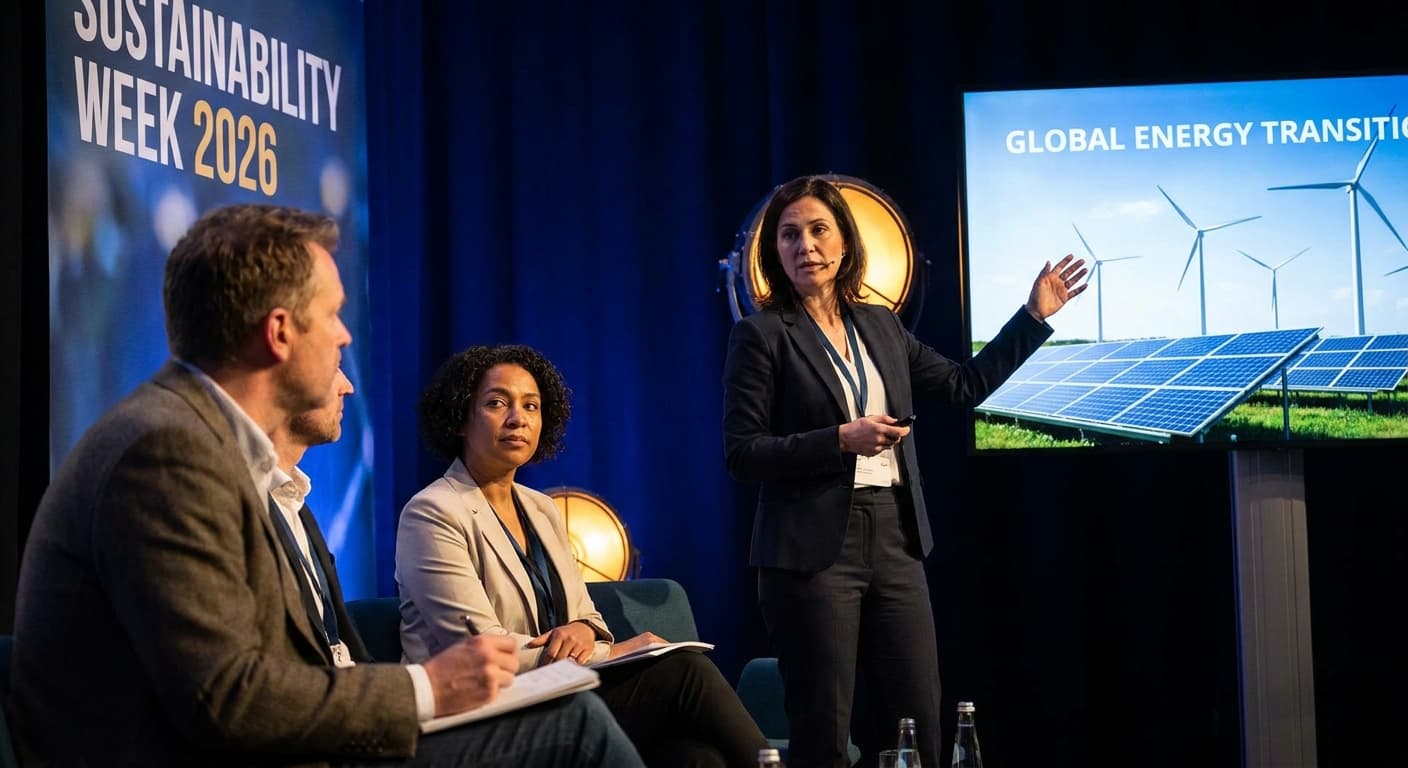
Economist Impact Sustainability Week 2026
Economist Impact Sustainability Week 2026 spotlights the energy transition, AI in clean technology, and supply chain resilience as themes for global leaders.

US Politics
SNAP Food Assistance Faces Legal Challenges
In 2026, SNAP faces stricter eligibility rules and mounting legal challenges, threatening food assistance for the millions of Americans who rely on the program.
India
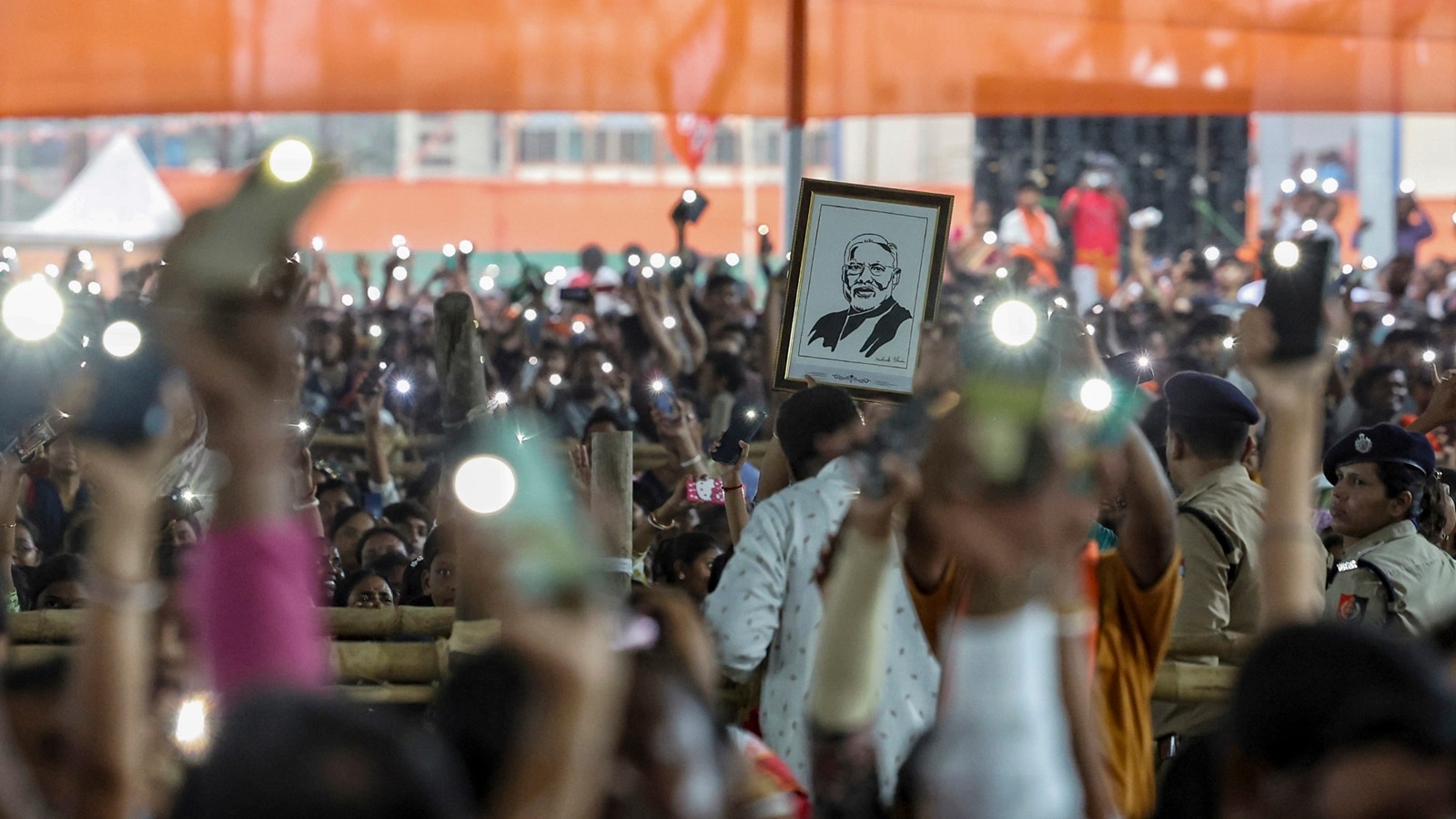
Modi's Women’s Convention in Varanasi
Modi's Varanasi rally frames women's reservation as a national mission, targeting the 2027 Uttar Pradesh elections with a strategic narrative.

Economics
Fed's Amex AML order puts correspondent banking on notice
Federal Reserve's Amex AML order requires board-level controls and a 90-day plan; OCC fined the bank $350 million over enterprise-wide deficiencies.