Illinois AI Safety Law Sets Compliance Floor
New law mandates audits for AI developers in Illinois.
Model Diplomat7 min readNorth America
Illinois AI Safety Law Sets the Compliance Floor Every State Will Copy
Illinois SB 315 makes annual third-party audits mandatory for frontier AI, joining California and New York in a coalition covering 40% of the U.S. market.
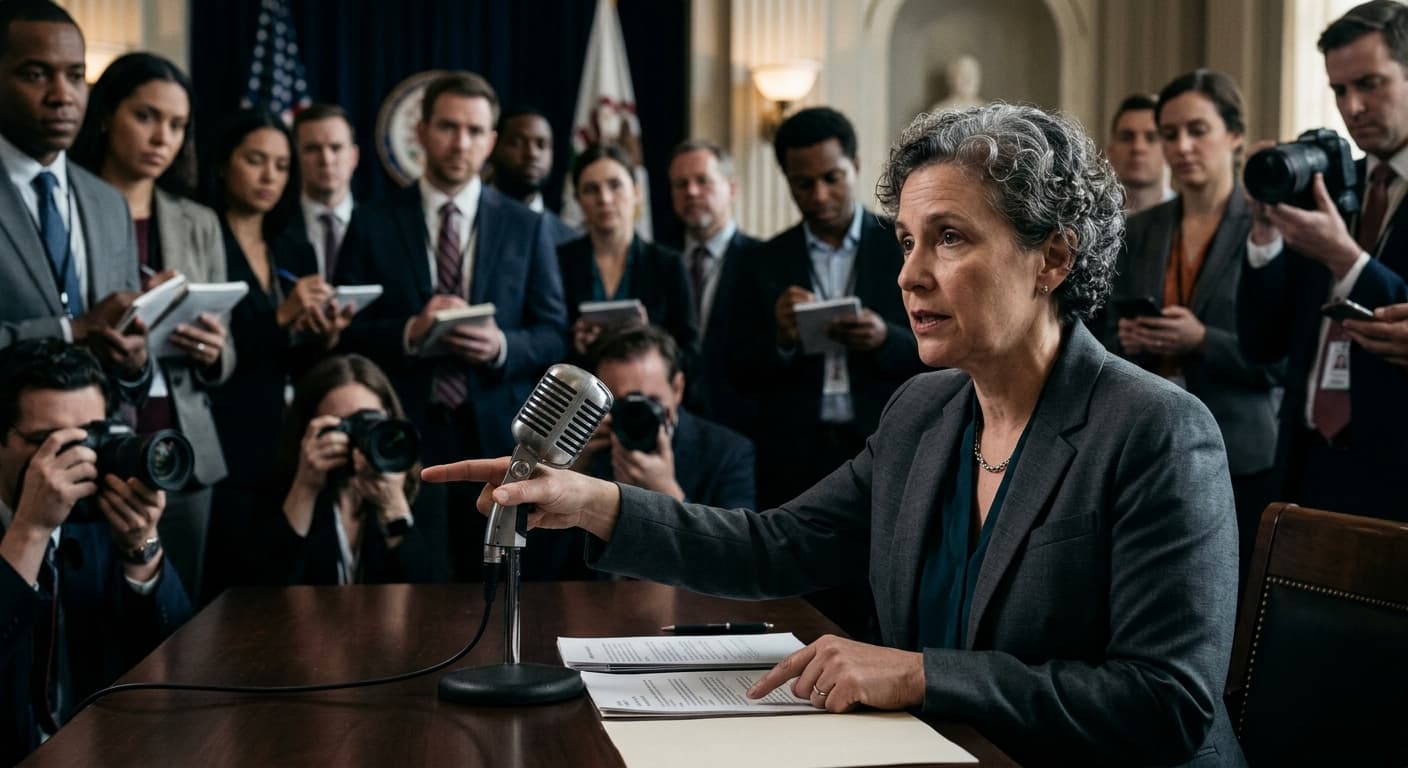
Illinois Governor JB Pritzker signed Senate Bill 315 into law on July 6, 2026, making his state the third — and, in one crucial respect, the strictest — American jurisdiction to impose binding safety obligations on the world's largest AI developers. The law's first-in-the-nation requirement of a mandatory annual third-party audit is what matters. It converts the fragile California-New York transparency template into a compliance floor, and it hands the Trump administration's newly created AI Litigation Task Force a direct target ahead of Illinois's January 1, 2027 effective date. The bet is that three blue-state statutes covering roughly 40% of the U.S. AI market will harden into a de facto national rulebook before Washington can write its own.
What the law actually does
SB 315, formally the Artificial Intelligence Safety Measures Act and now Illinois Public Act 104-0538, applies only to "large frontier developers" — companies with more than $500 million in annual revenue that train models using massive compute, per the Illinois General Assembly bill record. In practice that is a shortlist: OpenAI, Anthropic, Google DeepMind, Meta, Microsoft, and perhaps two or three others.
Covered developers must publish a "frontier AI framework" describing how they identify, assess, and mitigate catastrophic risk; publish transparency reports before deploying new or substantially modified models; commission annual independent third-party audits with statutory access, retention, and publication requirements; and report critical safety incidents to the Illinois Emergency Management Agency within 72 hours — 24 hours if there is an imminent risk of death or serious injury. Whistleblower protections are stitched into the Illinois Whistleblower Act, per the bill's amendatory text.
The catastrophic-risk threshold matters. According to NPR Illinois, the statute defines catastrophic risk as incidents that could cause death or serious injury to more than 50 people or more than $1 million in property damage — a materially lower floor than California's $1 billion damages trigger under SB 53, as analyzed by
Brookings. That is not a drafting quirk. It expands the universe of reportable events by orders of magnitude.
The audit is the whole point
The most important sentence in SB 315 is not about incident reporting. It is about auditors.
California's SB 53, signed by Governor Gavin Newsom on September 29, 2025, requires only that developers disclose whether third-party testing was conducted. New York's RAISE Act, signed in late 2025, requires a one-time audit when a company first crosses the coverage threshold. Michigan's pending bill would require annual audits but is not yet law. Illinois is the first jurisdiction anywhere in the world to write mandatory, recurring, third-party AI safety audits into a general-purpose statute.
Industry knew what this meant. TechNet's Ninia Linero told an Illinois committee on May 20 that Illinois "would effectively be requiring private actors to make highly subjective determinations requiring AI safety compliance without established national standards, certifications, or clear regulatory guardrails," according to Capitol News Illinois. She lost. The bill passed the Illinois Senate with only five Republicans opposed and cleared the House unanimously.
The audit fight is not theoretical. A December 2025 arXiv assessment of frontier developers' own safety frameworks by Homewood and colleagues found that only Anthropic and OpenAI reference any process for external verification of critical containment measures — and both hedge. Meta, xAI, and G42 score effectively zero on independent third-party validation. The paper concluded that "without independent auditing, external parties cannot distinguish" between real and paper compliance. SB 315 is that mechanism, imposed by statute.
Miles Brundage and co-authors made the same argument in their January 2026 paper Frontier AI Auditing, recommending a minimum "AI Assurance Level 1" of independent verification as baseline for the industry. Illinois has now legislated it — and structured it so audit reports flow to the Illinois Attorney General and Emergency Management Agency, not to a captured federal regulator.
Why this is now a national standard
Pritzker's political read is explicit. "Congress and the president ought to be passing similar legislation, but they've so far been unwilling, because many are captive to special interests that profit from the industry having no regulation," he said at the Chicago signing, per Capitol News Illinois. Senate sponsor Sen. Mary Edly-Allen put it more bluntly: "We are not willing to wait for Congress to act."
The math backs the posture. California, New York, and Illinois together hold about 20% of the U.S. population but account for roughly 40% of U.S. AI-sector activity, according to estimates cited by the bill's sponsors on the floor. Every major frontier developer already complies with California's rules, which means the marginal cost of complying with Illinois is a legal review and an audit engagement — not a product redesign. Once three states converge on frontier AI frameworks, transparency reports, and incident reporting, the "50 discordant regimes" the White House warns about collapses into one.
That is why OpenAI and Anthropic supported SB 315. Anthropic sent representatives to the signing. This is the same industry pattern that emerged after California's SB 53: a fragile peace between developers and safety advocates that trades federal preemption for state-level rules the leading labs can live with. As the Carnegie Endowment warned in December 2025, breaking that peace threatens to "leave companies worse off."
House sponsor Rep. Daniel Didech reminded lawmakers the harms are not hypothetical: he cited "the first AI-inspired mass shooting" and an AI-enabled attack on a municipal water and drainage utility, and Anthropic's decision to withhold its Mythos model as too powerful a cyberweapon to release. Those are the concrete referents behind the statute's catastrophic-risk language.
The Trump collision course
Illinois signed SB 315 exactly 207 days after President Trump's December 11, 2025 executive order "Ensuring a National Policy Framework for Artificial Intelligence," which created an AI Litigation Task Force at the Department of Justice with the "sole responsibility" of challenging state AI laws on interstate-commerce, preemption, or First Amendment grounds. The White House
fact sheet singled out state disclosure and reporting requirements as candidates for legal challenge, and directed the Secretary of Commerce to withhold non-deployment Broadband Equity Access and Deployment funding from states with "onerous" AI laws.
In March 2026, the administration escalated with a national AI legislative framework explicitly calling on Congress to preempt state laws. Sen. Marsha Blackburn's TRUMP AMERICA AI Act and companion
H.R. 5388 would impose a five-year moratorium on any state law "limiting, restricting, or otherwise regulating artificial intelligence models" in interstate commerce — a provision that would gut SB 315, SB 53, and the RAISE Act on day one.
Congress has, so far, refused. A moratorium was struck 99-1 from the reconciliation bill in July 2025; a second attempt was killed in the FY2026 National Defense Authorization Act in December 2025. The executive order is the fallback. Most legal analysts, including Public Knowledge's John Bergmayer speaking to NPR, argue an EO cannot preempt state legislation without a federal statute — and cite the Supreme Court's 2023 National Pork Producers decision affirming states' authority to regulate products in interstate commerce.
The Illinois attorney general enforces SB 315. The Illinois Emergency Management Agency administers incident reporting. Audit reports flow to state officials with subpoena power. If DOJ sues, it sues Illinois — a state whose Democratic governor has already publicly framed the fight as one against "special interests." That is not a political trap the administration walks into cleanly.
The international backdrop the White House is ignoring
On the same day Pritzker signed SB 315, UN Secretary-General António Guterres opened the first Global Dialogue on AI Governance in Geneva. His argument was near-identical to Pritzker's: "When countries align on how to test systems, measure risk and assign responsibility, safety travels with the technology. When they do not, a patchwork of incompatible rules raises costs, divides the world — and protects no one."
Five days earlier, the UN Independent International Scientific Panel on AI, co-chaired by Yoshua Bengio, released its preliminary report warning that "AI capabilities are outpacing both scientific understanding and governments' ability to adapt" and that current safeguards cannot keep pace with capability growth. The EU AI Act's obligations for providers of general-purpose AI models with systemic risk take full effect on August 2, 2027 — seven months after Illinois's law kicks in.
That is the alignment the White House framework fights against, and the alignment the three-state coalition builds toward. Illinois has slotted its statute between the EU's compliance regime and California's — with a stricter audit backbone than either.
Diplomat View
The Illinois AI Safety Measures Act is not a copy of California's SB 53. It is the ratchet — the state that took the transparency template, added the enforcement mechanism the labs feared most, and dared Washington to sue. Our forecast: within 18 months, the three-state coalition will have set the operative U.S. compliance floor for frontier AI, because the marginal cost of extending California-tier compliance to Illinois and New York is trivial for OpenAI, Anthropic, Google, Meta, and Microsoft — and because Congress will not pass a preemption bill in an election year. The DOJ AI Litigation Task Force will file at least one suit before January 1, 2027, most likely targeting the audit provision as an unconstitutional burden on interstate commerce; expect it to lose on the initial motion, citing National Pork Producers. What would revise this forecast: a Supreme Court cert grant on state-AI-preemption before Q3 2026; a federal frontier AI statute with an explicit preemption clause clearing the Senate; or an Illinois-defined critical safety incident that generates a $1-billion-plus liability event, forcing an emergency amendment. Absent those triggers, the U.S. AI regulatory center of gravity now sits in Springfield, Sacramento, and Albany — not Washington.
What to watch
- January 1, 2027: SB 315 takes effect. First transparency reports and framework publications due.
- Q4 2026: Deadline for Trump's AI Litigation Task Force to identify state targets under the December 2025 executive order.
- August 2, 2027: EU AI Act obligations for general-purpose AI models with systemic risk take full effect — the international benchmark against which SB 315's audit regime will be measured.
Discover more
US Politics
SNAP Food Assistance Faces Legal Challenges
In 2026, SNAP faces stricter eligibility rules and mounting legal challenges, threatening food assistance for the millions of Americans who rely on the program.

Global Politics
US Seizes Iranian Ship, Tensions Surge
The US seizure of the Iranian ship Touska highlights a shift in control over the Strait of Hormuz, favoring Iran's strategic position.

India
Delhi CM Rekha Gupta Blasts Opposition's Delm
Delhi CM Rekha Gupta's remarks on women's quota defeat reveal BJP's strategy for the 2029 Lok Sabha elections, focusing on delimitation.

Economics
Fed's Amex AML order puts correspondent banking on notice
Federal Reserve's Amex AML order requires board-level controls and a 90-day plan; OCC fined the bank $350 million over enterprise-wide deficiencies.