IEA's 2026 Demand Playbook for Oil Crisis
IEA urges remote work, flight caps to curb oil demand.
Model Diplomat7 min readGlobal
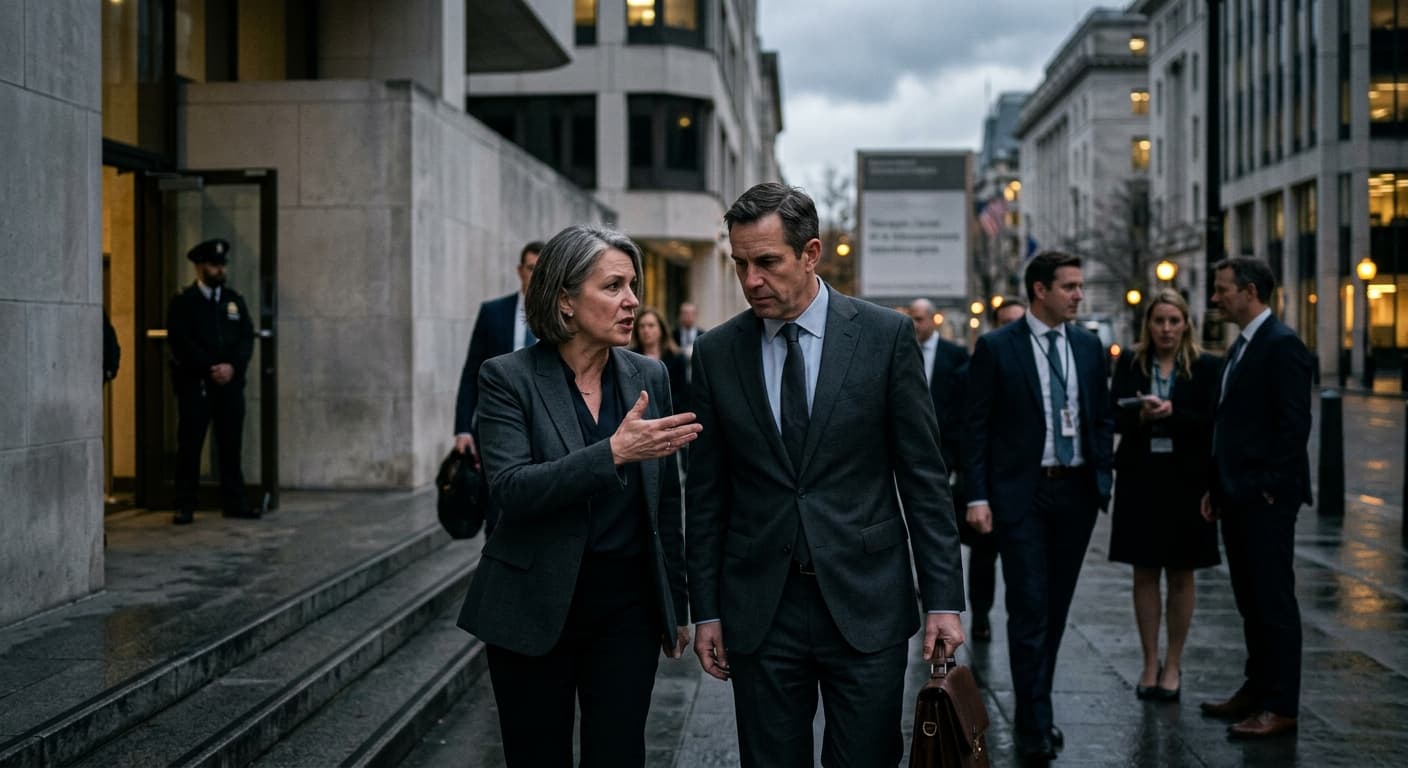
IEA's 2026 Demand Playbook: Work From Home to Beat the Oil Crisis
The IEA is telling governments to mandate remote work, cap flights and slow highways — a demand-side pivot after the Hormuz shock exposed the limits of strategic reserves.
The International Energy Agency is asking 32 governments to legislate what OPEC cannot deliver: 2 to 3 million barrels a day of oil demand simply not consumed. Its new 10-point plan — released in mid-April 2026 and dusted off from the 2022 template — pushes work-from-home mandates, a 10 km/h cut in motorway speeds, alternate-day city access for private cars, and an explicit call to avoid business air travel. The agency's own record 400-million-barrel stock release covers barely a quarter of the shortfall from the closure of the Strait of Hormuz, meaning the IEA is now betting energy security on behavioural change — a bet governments in Manila, Islamabad, Bangkok and Brussels have already placed, and one that quietly reshapes what "energy security" means after 2026.
The BBC reported IEA Executive Director Fatih Birol calling this "the greatest global energy security threat in history" and urging governments to become "more vocal" about how citizens use fuel. That is a striking sentence from an agency built in 1974 to manage oil crises through supply — coordinated stock releases, not lifestyle guidance.
The supply cushion is thinner than it looks
The scale problem is unforgiving. Iran's effective closure of the Strait of Hormuz after the US–Israeli strikes on February 28, 2026, removed roughly 10.1 million barrels per day from the market in March, according to the IEA's April Oil Market Report, which the agency called "the largest oil supply disruption in history." Saudi Arabia's East–West pipeline to Yanbu and the UAE's Habshan–Fujairah line can bypass roughly 9 million barrels a day combined — but Brookings analyst Kari Heerman calculated that outputs from affected countries were still down more than 14 mb/d despite full pipeline utilisation, in an
analysis published June 8.
The IEA's coordinated 400-million-barrel drawdown, agreed on March 11, is the largest in the agency's 52-year history — more than double the 182 million barrels released after Russia's 2022 invasion of Ukraine. The UK's Department for Energy Security and Net Zero, in an 11 March release, pledged 13.5 million barrels and noted this was only the fifth coordinated action in 30 years. Yet Birol told the Atlantic Council in
an April interview that the release adds roughly 2.5 to 3 mb/d to the market — a stream Brookings estimates will be exhausted by July or August. Global observable inventories were falling sharply by early May,
Al Jazeera reported, even after Brent had touched $126.03 on April 30.
That is the arithmetic behind Birol's second lever. Supply management alone cannot close the gap. If Hormuz stays impaired into the second half of 2026, the only politically deployable tool left is demand compression — and the fastest way to compress transport demand is to keep commuters and business travellers off the roads and out of the skies.
The 10-point plan is the "Playing My Part" sequel — with teeth
The 2026 measures rhyme with the 2022 plan the IEA co-authored with the European Commission after Russia invaded Ukraine. That earlier campaign, called "Playing My Part", asked citizens to work from home three days a week, drive more slowly, and skip flights where trains would do — projecting savings of 2.7 million barrels a day within four months, roughly equal to the oil demand of every car in China at the time.
Four differences make the 2026 iteration harder-edged. First, uptake is no longer voluntary. Pakistan has imposed a four-day workweek on federal employees, with 50% of staff on rotation, and the Philippines followed suit after declaring a national energy emergency on March 24 — the first country to do so, BBC reported. Thailand has ordered all government agencies to work from home and set air conditioning at 26–27°C; Bangladesh capped office cooling at 25°C. Egypt cut government vehicle fuel allowances by nearly a third and mandated one work-from-home day for non-essential public workers.
Second, aviation is now an explicit target rather than a rhetorical one. Middle Eastern refineries — the Al-Zour complex in Kuwait alone supplies about 10% of Europe's jet fuel — have been strangled by the strait closure. The BBC reported European jet-fuel stocks had fallen from 37 days to about 30, with the IEA warning that reserves would reach critical levels by June and that "physical shortages may emerge at select airports." Air France-KLM, Air Canada, SAS and Lufthansa — which alone canceled 20,000 flights through October — have already trimmed schedules. The 10-point plan effectively institutionalises that retreat.
Third, the tool is being mainstreamed inside the EU's regulatory machine. The European Commission has formally asked member states to encourage remote working, lower speed limits and shift to public transport, according to the Institute for Government's April analysis, citing Commission statements to Politico. In the European Parliament, Italian MEPs Dario Tamburrano, Danilo Della Valle and Pasquale Tridico filed
priority question P-001186/2026 asking whether Brussels is evaluating "structural remote working measures" to reduce oil consumption, citing evidence that teleworking saves an average of 8.6 GJ of fuel per worker per year. The Jacques Delors Institute has proposed a legally binding EU-wide oil demand-reduction target, modelled on the 2022 gas rule,
in a March policy brief.
Fourth, the fiscal frame has flipped. The Centre for European Reform's June "Energy shock 2.0" brief argued that untargeted price caps — the €540 billion Europe spent in 2022–23 — actively worsened supply tightness by encouraging consumption. This time, the Commission and the IEA are pushing governments toward demand restraint plus targeted cash transfers, not blanket rebates. That is a quiet doctrinal shift: in 2022, sobriety was a virtue; in 2026, it is policy.
The angle: demand-side security is now on the P&L
The non-obvious winner from this is not the IEA. It is the industrial constituency that has spent a decade arguing electrification and remote work are climate goods. Both are now reclassified as national-security tools.
The International Renewable Energy Agency published its own April 2026 advisory explicitly reframing renewables as "a national security imperative," with Director-General Francesco La Camera arguing the crisis creates an opening to lock in electrification of transport and heat. The Institute for Government reports UK solar-panel enquiries at Octopus Energy have jumped and March EV sales were the strongest on record. Cornell energy-systems professor Fengqi You told
Al Jazeera that work-from-home "is useful for short-term crises and long-term energy planning" — but only as part of a package with electrified transport and building efficiency.
The corollary loser is the airline industry's mass-market model. Benchmark European jet fuel touched $1,838 per tonne, up from $831 pre-war, per the BBC. Korean Air, Asiana and Busan Air entered formal "emergency management" mode. Delta announced a 3.5% capacity cut targeting red-eye and midweek routes. India's aviation authority forecasts a 10% cut in domestic flying between March and October. When the IEA tells finance ministries to "avoid business air travel where possible," it is codifying a market signal airlines are already living with.
There is a historical parallel that reframes the moment. The Council on Foreign Relations' Joshua Kurlantzick argued in an IEA Iran War analysis that Asia now faces a "double shock" reminiscent of 1973 — but with an inverted geography. In 1973, Arab producers targeted Western economies; in 2026,
Al Jazeera's comparative analysis noted that 80% of the oil transiting Hormuz goes to Asia, and Vietnam holds fewer than 20 days of reserves. The 1974 embargo built the IEA's supply-side architecture (the 90-day stock rule, the coordinated release). The 2026 shock is building the demand-side one — and it is being written by non-IEA members like Pakistan, Vietnam and the Philippines as much as by Paris.
What to watch
Brent had, by July 2, 2026, fallen back to $70.82 — below the February 27 pre-war level — after the Trump–Pezeshkian memorandum of understanding on June 17 nudged Hormuz traffic up to roughly 40 transits a day, versus 130 before the war. OPEC+
announced expanded July quotas on July 6 as Saudi Arabia more than doubled shipments and Iran pushed nearly 50 million barrels to market since the naval blockade lifted. The immediate scarcity story is fading fast.
That is precisely why the demand-side test comes now. If governments unwind mandatory work-from-home and speed limits the moment Brent stabilises below $80, the 10-point plan is a footnote. If they codify pieces of it — as the Delors Institute is proposing at EU level, and as IRENA's advisory urges — then the Hormuz crisis will have done for oil demand what 2022 did for European gas storage: converted an emergency into a rule.
- July–August 2026: IEA emergency stock releases run out on Brookings' timeline; second-round release decision required.
- September 2026: European Commission's revision of the EU Regulation on security of gas supply is scheduled — the Delors Institute has flagged this as the vehicle for a binding EU-wide oil demand-reduction framework.
- Q4 2026: IEA Oil Market Reports will show whether Asian demand destruction (Q2 was down 1.5 mb/d, the steepest since COVID) has reversed or hardened into structural loss.
Diplomat View
The IEA's 10-point plan looks like a public information campaign. It is not. It is the operational admission that the supply-side security architecture built in 1974 cannot cover a Hormuz-scale shock, and that the marginal barrel of security now comes from a commuter who did not drive and a manager who took the train. Our call: at least three IEA member governments — likely including the UK, Germany and Japan — will retain formal demand-restraint frameworks after Brent normalises, and the EU will fold an oil demand-reduction clause into its autumn gas-security revision. The forecast changes if Hormuz traffic returns to 100+ daily transits by August and OPEC+ delivers on its July quota expansion; in that scenario, the political appetite for behavioural mandates collapses and the 10-point plan reverts to a shelf document, as Playing My Part largely did in 2023. The signal to watch is not price — it is whether Berlin and Tokyo publish national "sobriety" plans by year-end. If they do, energy security has quietly acquired a demand-side pillar. If they do not, 2026 will be remembered as the year the IEA warned, and governments listened only until the tanks refilled.
Related coverage: Global Politics.
Discover more
India
Congress Accuses Modi of Stalling Women's Law
Congress accuses Modi of stalling women's reservation law by linking it to delimitation, revealing a deeper electoral strategy.

India
Delhi CM Rekha Gupta Blasts Opposition's Delm
Delhi CM Rekha Gupta's remarks on women's quota defeat reveal BJP's strategy for the 2029 Lok Sabha elections, focusing on delimitation.

US Politics
House Ethics Committee Pushes Sexual Miscond.
The House Ethics Committee has shifted responsibility for sexual harassment settlement records to the Office of Congressional Workplace Rights, complicating disclosure efforts.

Economics
Fed's Amex AML order puts correspondent banking on notice
Federal Reserve's Amex AML order requires board-level controls and a 90-day plan; OCC fined the bank $350 million over enterprise-wide deficiencies.