Hormuz Oil Shock's Impact on New Zealand
Analyzing the economic implications of the Hormuz crisis
Model Diplomat5 min readOceania

The Hormuz shock — and why it matters for a country 12,000 km away
To understand why this hike lands as good news rather than bad, look at the commodity backdrop. The World Bank's Commodity Markets Outlook, published April 28, described attacks on Gulf infrastructure and shipping through the Strait of Hormuz — which handles roughly 35% of seaborne crude oil trade — as "the largest oil supply shock on record," with an initial reduction of about 10 million barrels a day. Brent averaged more than 50% higher in mid-April than at the start of the year, and the Bank's baseline pencils in US$86 a barrel for 2026 versus US$69 in 2025.
Brookings, in a June analysis by Kari Heerman and David Wessel, described the strait as "effectively closed" for most commercial traffic after February 28, with a small number of vessels paying a "toll" to the IRGC for safe passage. New Zealand — which has imported 100% of its refined fuel since Marsden Point stopped refining in 2022 — carries roughly 52 days of total cover and less than 33 days of petrol on hand, according to the
New Zealand Institute of International Affairs. Retail petrol briefly touched NZ$3 a litre in Auckland in March.
That is the shock the RBNZ was easing into as recently as its May 27 meeting, when it held at 2.25%. The July 8 statement acknowledges "progress towards conflict resolution in the Middle East" and a "recent fall in energy prices" — but flags that "the effects of the shock will linger" through medium-term expectations. Petrochemical pass-through into non-tradables inflation is the risk the committee is now insuring against.
The IMF just told them to do exactly this
The most important primary document sitting behind today's decision is not the RBNZ's own — it is the IMF's 2026 Article IV Concluding Statement, released June 30. Fund staff wrote that "monetary accommodation should be gradually withdrawn, with the policy rate converging to a broadly neutral stance by end-2026," warning that in a risk scenario where inflation proves stickier, "monetary policy should tighten into restrictive territory." Fund staff argued that this would balance recovery support with keeping expectations "well anchored."
That is close to verbatim what Breman's committee just did. In central-banking terms, the RBNZ is following the IMF's playbook — and doing so in a way that lets it argue the framework has held even after the oil shock forced a policy U-turn.
The IMF also praised the new MPC Charter — the framework that stripped the dual mandate and returned the RBNZ to a single-target regime under the 2021 Act — for improving voting-record transparency and communication. That legal architecture matters. Weshah Razzak's June 2025 review of 35 years of RBNZ statements argues that institutional credibility, not the real interest rate itself, is what has kept New Zealand inflation inside the 1–3% band on average. Breman is trading on that inheritance.
What actually changes at the household level
Pass-through is quick but shallow. RBNZ Analytical Note AN2021/07 estimated that a 100 bp change in the OCR moves mortgage rates by only about 34 bps within a month, with the full effect taking roughly six months. On a 25 bp hike, expect variable and short-fixed mortgage rates to lift 8–15 bps into the September RBNZ meeting — enough to sting on rollovers, not enough to derail the housing recovery that has quietly rebuilt through 2026.
House-price transmission is even more attenuated. RBNZ AN2022/09 found that an unanticipated OCR increase reduces real house prices by up to 1.6% and mortgage credit growth by 0.6% over 2.5 years — modest, cyclical, and swamped by supply and migration dynamics. That is why property analysts have shrugged. As
propertynoise.co.nz put it, the market has been pricing in "more interest rate increases likely before the end of 2026" for months.
The FT, in today's coverage, quoted Breman describing the growth outlook as a "rebound" — a marked shift from her May communications, which emphasised downside risks.
Who wins, who loses
Winners. Prime Minister Christopher Luxon's National-led coalition, which faces a general election that must be held by December 2026. As the NZIIA noted, Finance Minister Nicola Willis has been leaning on Q1 2025 GDP growth of 0.8% and 11.4% export-value growth in the year to June as evidence the economy is turning. A recovery narrative endorsed by the central bank — even in the form of a rate hike — is worth more politically than another cut framed as insurance. NZD holders also win: rate differentials against the AUD narrow only slightly, and a credible RBNZ supports the currency against further Hormuz-driven oil imports priced in USD.
Losers. Recent fixed-rate mortgage borrowers rolling in the second half of 2026; export-exposed manufacturers that had been counting on a weaker kiwi; and the Labour opposition, whose critique that the recovery was hollow just lost its most authoritative outside endorser. The BNZ and Westpac economists who forecast a hold are now recalibrating: BusinessDesk reported the NZX fell modestly after the decision as banking-sector names re-priced net interest margin outlooks.
What to watch next
- July 21, 2026 — Stats NZ Q2 CPI release. The number that will either validate or shred the RBNZ's forecast of inflation back at 2% within twelve months. A print above 3.5% pulls forward the next hike.
- September 2, 2026 — next Monetary Policy Statement. The first full forecast round under the new hiking bias; the OCR track and neutral-rate estimate will be redrawn.
- October 28, 2026 — Monetary Policy Review. Timing of the second hike; if oil prices re-accelerate, a second 25 bp move is the base case.
- By December 2026 — general election. The economic-management contest between Luxon/Willis and Labour is now being fought on the RBNZ's terms.
Diplomat View
The RBNZ's July 8 hike is not a hawkish pivot. It is a growth signal disguised as one — and that is precisely why ANZ, the country's largest bank, sounds upbeat. Breman has done something subtle: she has used a supply shock (Hormuz) to justify a move that is really about a demand recovery (households and firms responding to eased financial conditions), and in doing so has quietly ratified the argument that New Zealand's neutral rate has drifted higher. If that structural read is right, the OCR terminal for this cycle is closer to 3.25% than to 2.75%, and the market curve is still under-pricing it.
The forecast that would revise this view: a Q2 CPI print below 3.0%, a resolution of the Strait of Hormuz that pulls Brent under US$70 within eight weeks, or clear evidence in the September MPS that non-tradables inflation is decelerating faster than the RBNZ's own model expects. Any of those three, and the July hike will look like an insurance move that did not need to be made. Absent them, expect a second 25 bp increase before year-end, and a Wellington election fought on whose recovery this actually is.
The bottom line: the RBNZ raised the OCR to 2.50% because New Zealand's economy is strong enough to take it — not because inflation is out of control. The upbeat ANZ read is the correct one, and the market curve is still under-pricing where this cycle ends.
Discover more

US Politics
SNAP Food Assistance Faces Legal Challenges
In 2026, SNAP faces stricter eligibility rules and mounting legal challenges, threatening food assistance for the millions of Americans who rely on the program.
India
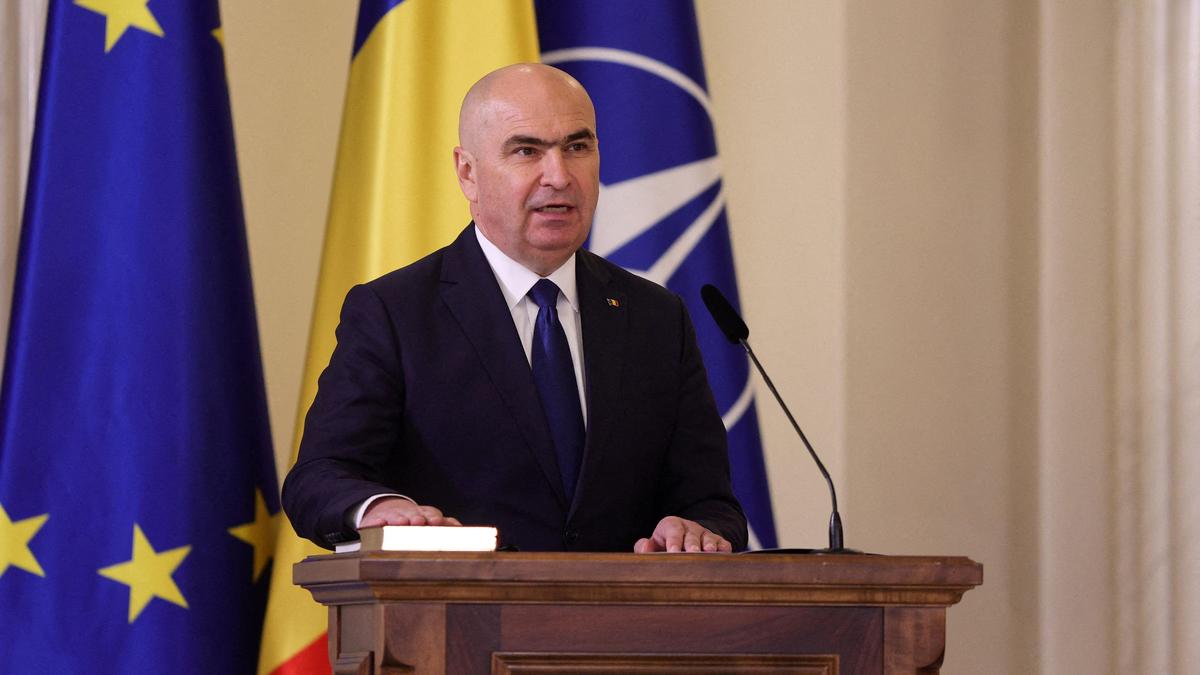
Romanian Coalition Party Demands PM Resign
Romania's Social Democrats withdrew from coalition, joining far-right AUR to topple PM Bolojan, risking €10 billion in EU funds by August 2026.
Global Politics
Trump's Conflicting Messages on Iran War
Trump's mixed messages on Iran reflect a strategy of audience management, benefiting Tehran amid a complex geopolitical landscape.

Conflict & Security
Drone Warfare Killing Aid Workers at Unprec
Over 1,000 humanitarian workers killed in three years as cheap armed drones collapse legal protections. Gaza, Sudan, Ukraine, and DRC see deliberate targeting of aid convoys and hospitals with zero prosecutions.