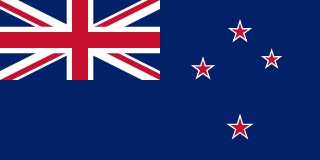
Inside New Zealand’s foreign policy.
Oceania · UN voting record, treaty positions, and alliances — every claim primary-sourced.
In short
New Zealand is a small, trade-dependent parliamentary monarchy that is moving toward a harder-edged foreign and security policy under Prime Minister Christopher Luxon’s National-led coalition, while still trying to preserve its brand as an independent, rules-focused Pacific actor…
Capital
WellingtonResearch New Zealand on your topic
Start a Quick answer framed for your committee — official statements, UN votes, and bloc context.
New Zealand's government & politics
Leadership, governance, and democratic trajectory.


Head of government
Christopher Luxon
Head of Government
New Zealand's UN voting record
How New Zealand votes at the UN General Assembly — ideological trajectory, voting partners, topic patterns, and key recent roll calls.
Ideological trajectory
Top voting partners
Topic-level voting
Source: Erik Voeten, “United Nations General Assembly Voting Data”, Harvard Dataverse (CC0). Aggregated by Model Diplomat. Last refresh tracked in profile freshness.
New Zealand's foreign policy
Bilateral posture, key relationships, and live diplomatic statements.
Foreign Policy
New Zealand’s foreign policy is liberal-internationalist in method and increasingly hard-edged in threat assessment. The current government under Prime Minister Christopher Luxon, in office since November 2023, has kept the traditional pillars of support for the UN system, trade openness, and Pacific regionalism, but it now describes the external environment less as rules-based by default and more as contested by coercion and power politics New Zealand Government, New Zealand Ministry of Foreign Affairs and Trade, Global Government Forum. Decision-making is cabinet-led through the prime minister, foreign minister, and defence minister, but MFAT still shapes the diplomatic line and gives New Zealand more policy continuity than many allies between governments New Zealand Parliament, MFAT.
Its interests rank clearly. Survival and strategic security center on a stable South Pacific, secure sea lanes, and protection against coercion by larger powers; that is why Wellington has elevated defence spending and warned that New Zealand can no longer assume distance guarantees safety CNA, New Zealand Defence Force. Economic interests sit just below that: New Zealand is a trade-dependent economy, and the government treats open markets and functioning trade rules as core national interests, especially for agriculture and services exports New Zealand Treasury, Speech To The New Zealand Institute Of International Affairs – International Trade In Troubled Times. Status matters too, but mostly as a tool rather than an end: New Zealand seeks influence as a credible small state, a Pacific actor, and a defender of international law rather than as a military power MFAT.
The bilateral map is asymmetric but coherent. Australia is the indispensable partner across defence, migration, trade, and Pacific policy, formalized through Closer Economic Relations and dense trans-Tasman coordination Australian Department of Foreign Affairs and Trade, New Zealand Government. The United States relationship has deepened substantially since the Wellington and Washington Declarations, especially on defence interoperability and Indo-Pacific strategy, even though New Zealand remains outside formal alliance structures like NATO and keeps its nuclear-free identity intact U.S. Department of State, New Zealand Ministry of Defence. China is simultaneously New Zealand’s largest goods trading partner and its hardest strategic problem: Wellington has criticized coercive behavior, human rights abuses in Xinjiang, and pressure in the Taiwan Strait, while still trying to preserve a workable economic relationship Stats NZ, MFAT, Reuters. In the Pacific, New Zealand treats Fiji, Samoa, Tonga, and other island partners as a first-order strategic priority because regional influence there is tied directly to national security, climate diplomacy, and competition with Beijing Pacific Islands Forum, MFAT.
Institutionally, New Zealand works through the UN, Commonwealth, Pacific Islands Forum, Five Eyes, APEC, CPTPP, and the WTO, preferring coalition-building through rules and technical credibility rather than bloc rhetoric United Nations, Pacific Islands Forum, World Trade Organization. In UN voting, it usually aligns with Western democracies on Ukraine, maritime law, and many human rights questions, including support for resolutions reaffirming Ukraine’s territorial integrity after Russia’s invasion UN Digital Library, New Zealand Permanent Mission to the United Nations. But it does not vote as a reflex Atlantic ally. On Israel-Palestine, nuclear disarmament, and some decolonization issues, New Zealand is often more willing than the United States to back UN resolutions framed around humanitarian law, occupation, or disarmament norms UN Digital Library, New Zealand Disarmament and Arms Control. That pattern reflects a durable split between its security alignment with the Anglosphere and its diplomatic self-image as an independent small state.
That divergence is the key to reading Wellington correctly. New Zealand is moving closer to Australia, the United States, and other Indo-Pacific security partners because the threat environment has changed, but it still resists being folded fully into a great-power camp. It breaks from its bloc when legal principle, nuclear policy, Pacific sensitivities, or trade exposure make automatic alignment too


New Zealand's treaties & memberships
UN multilateral treaty positions and IGO memberships.
International Organizations
Society & economy
Macro-economic snapshot and demographic context.
GDP (nominal)
$260.2B
#52/250GDP per capita
$49,205
#32/250HDI
0.939
#13/250GDP (nominal USD)
GDP per capita (USD)
Top trading partners


In the news
Coverage from New Zealand’s authoritative outlets and headline events from the last 30 days.
Diplomatic calendar
Upcoming key dates
- Nov 7, 2026Electionin 13d
2026 New Zealand general election
Explore New Zealand in depth
Frequently asked questions about New Zealand
Quick answers to the most common questions about New Zealand.
What type of government does New Zealand have?
New Zealand is governed as a unitary parliamentary constitutional monarchy, with its capital at Wellington.
Who is the head of state of New Zealand?
Charles III is the head of state of New Zealand, in office since 2022-09-08.
Who leads the government of New Zealand?
Christopher Luxon serves as the head of government of New Zealand, since 2023-11-27.
What is the population of New Zealand?
New Zealand has a population of approximately 5.3 million people, making it the 124th most populous country.
What is the economy of New Zealand like?
New Zealand has a nominal GDP of about $260 billion, or roughly $49,205 per capita.
What languages are spoken in New Zealand?
The official languages of New Zealand are English, Māori, and New Zealand Sign Language.
When did New Zealand join the United Nations?
New Zealand has been a member of the United Nations since 1945.
Who are New Zealand's closest allies?
New Zealand's key allies include Australia, United States, United Kingdom, Canada, and Fiji.
More about New Zealand
New Zealand is a small, trade-dependent parliamentary monarchy that is moving toward a harder-edged foreign and security policy under Prime Minister Christopher Luxon’s National-led coalition, while still trying to preserve its brand as an independent, rules-focused Pacific actor New Zealand Parliament, New Zealand Government, New Zealand Foreign Affairs and Trade. It is a unitary parliamentary constitutional monarchy, with King Charles III as head of state and executive government led from Parliament by the prime minister and cabinet under the Westminster system New Zealand Parliament, Governor-General of New Zealand.
The current government took office after the October 2023 election and is led by the center-right National Party in coalition with ACT New Zealand and New Zealand First, with Luxon as prime minister and Winston Peters as deputy prime minister and foreign minister Electoral Commission New Zealand, Department of the Prime Minister and Cabinet, New Zealand Government. That matters because Peters and Defence Minister Judith Collins have both pushed a sharper external posture, arguing that New Zealand faces a less permissive strategic environment and can no longer assume distance equals safety New Zealand Government, Reuters.
In the world today, New Zealand sits in an uncomfortable but useful middle position: it is deeply embedded in the Western intelligence and security architecture through Five Eyes and close defense links with Australia, the United States, and the United Kingdom, but its prosperity still depends heavily on open trade with Asia, especially China New Zealand Security Intelligence Service, New Zealand Ministry of Defence, Statistics New Zealand. China remained New Zealand’s largest two-way goods trading partner in the year ended March 2024, while Australia and the United States remained central security and economic partners, forcing Wellington to hedge rather than align blindly Statistics New Zealand, New Zealand Foreign Affairs and Trade, U.S. Department of State.
Economically, New Zealand is a high-income but narrow-based economy whose external earnings rely on agriculture, food exports, tourism, education, and services, making market access and shipping stability foreign-policy issues, not just commercial ones World Bank, New Zealand Treasury, New Zealand Foreign Affairs and Trade. Dairy, meat, wood, fruit, and related food products remain major export pillars, and the government treats free-trade agreements and Indo-Pacific market diversification as strategic insurance against overdependence on any single buyer New Zealand Foreign Affairs and Trade, Statistics New Zealand. Its nominal GDP was about NZ$415 billion in the year ended March 2024, with a population just above 5.3 million, so New Zealand has diplomatic reach larger than its material weight but limited coercive capacity on its own Statistics New Zealand, Statistics New Zealand.
Three issues define New Zealand’s current trajectory. The first is strategic repositioning: the government is lifting defense spending and speaking more openly about regional coercion, maritime security, and the risks of a world “ordered by power,” which marks a real tonal shift from the softer language common a decade ago New Zealand Ministry of Defence, Global Government Forum. The second is China risk management: Wellington still avoids the most confrontational rhetoric used by some partners, but Beijing-related pressure, including reported retaliation over Taiwan-linked political activity, is making the old separation between economics and security harder to sustain Reuters, New Zealand Foreign Affairs and Trade. The third is Pacific competition, where New Zealand sees influence in Polynesia and the wider Pacific Islands region as a direct national interest and a test of whether it can still act as a first-responder partner rather than a distant donor New Zealand Foreign Affairs and Trade