Hormuz Closure Disrupts China's EV Supply
The Strait of Hormuz impacts China's electric vehicle industry.
Model Diplomat3 min readAsia
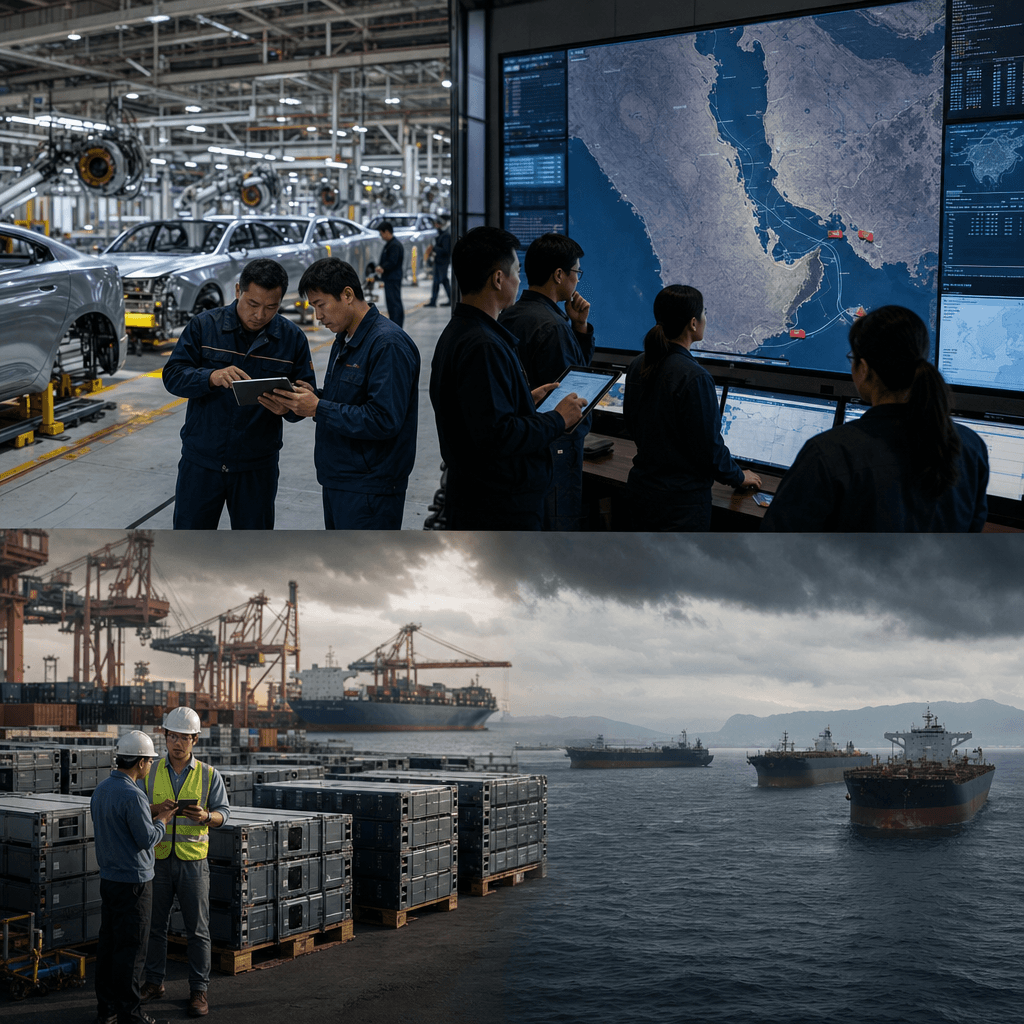
Hormuz Closure Turns China’s EV Supply Chain Into a Hostage
The Strait of Hormuz is no longer just an oil chokepoint. Reuters says the closure is now squeezing sulfur and battery inputs that Chinese EV makers cannot easily replace.
Iran is using the Strait of Hormuz as a broader economic pressure point, and China’s electric-vehicle industry is caught in the blast radius. Reuters reports that the closure is driving up sulfur prices — a key feedstock for battery chemicals — and exposing Chinese EV and battery-storage producers that rely on imported nickel and lithium inputs routed through the Gulf and Asia-facing supply chains (Reuters).
The leverage is no longer just about crude
The obvious weapon in Hormuz is oil. The less obvious one is industrial chemistry. Reuters notes that batteries depend on sulfuric acid, which is used in processing metals such as nickel and lithium; delivered sulfur prices to Asia have risen as high as $880 a ton, up 50% since the war began (Reuters). That matters because China’s EV champions do not just assemble cars; they sit on top of a highly interdependent materials chain.
The immediate losers are Chinese EV makers, battery-storage firms, and the logistics networks feeding them. The second-order loser is any government that assumed “energy security” meant only crude oil. Hormuz shows that once a maritime chokepoint breaks, the shock spreads into chemicals, metals, freight, and manufacturing lead times.
China is exposed even if it has buffers
Beijing has been able to cushion oil shocks better than most buyers, thanks to stockpiles and alternative supplies. But that does not make it immune. The Center for Strategic and International Studies notes that China imports as much as 40% of its oil and 30% of its LNG through Hormuz, and that Chinese-flagged shipping through the strait has collapsed since the fighting began (CSIS). That is the strategic point: China cannot fully insulate its manufacturing system from a Persian Gulf shutdown, even if it can ration fuel at home.
There is a paradox here. China is the world’s leading EV exporter and a dominant player in batteries, but that advantage depends on a deep, globally dispersed input base. The Council on Foreign Relations argues that China’s clean-tech advantage rests on commanding positions in batteries, solar, and critical mineral refining — precisely the sort of industrial structure that benefits in the long run from global electrification, but remains vulnerable to disruptions in upstream materials and shipping (CFR). In other words, Beijing may win the energy transition story, while still losing a round on supply security.
Who benefits, and what to watch
The near-term beneficiaries are non-Gulf sulfur producers, alternative shipping hubs, and exporters able to redirect flows to Asia. But the bigger gain goes to any state that can sell itself as a reliable supplier of battery and grid materials while Hormuz is shut. That is where Chinese industrial policy could run into a harder reality: if materials move slower or cost more, Beijing’s EV price edge narrows.
Watch two things next: whether Tehran offers Chinese-flagged vessels special passage, and whether sulfur and battery-material prices keep climbing into the next shipping cycle. If they do, this stops being a temporary oil shock and becomes a manufacturing constraint for China’s EV sector.
Discover more

Global Politics
US Seizes Iranian Ship, Tensions Surge
The US seizure of the Iranian ship Touska highlights a shift in control over the Strait of Hormuz, favoring Iran's strategic position.

Conflict & Security
Drone Warfare Killing Aid Workers at Unprec
Over 1,000 humanitarian workers killed in three years as cheap armed drones collapse legal protections. Gaza, Sudan, Ukraine, and DRC see deliberate targeting of aid convoys and hospitals with zero prosecutions.

Global
World Normalises Taliban as Afghan Women Eras
UN data shows Afghan women erased from public life as Russia recognises the Taliban, EU hosts officials in Brussels, and ICC warrants for gender persecution go unenforced.
Conflict & Security
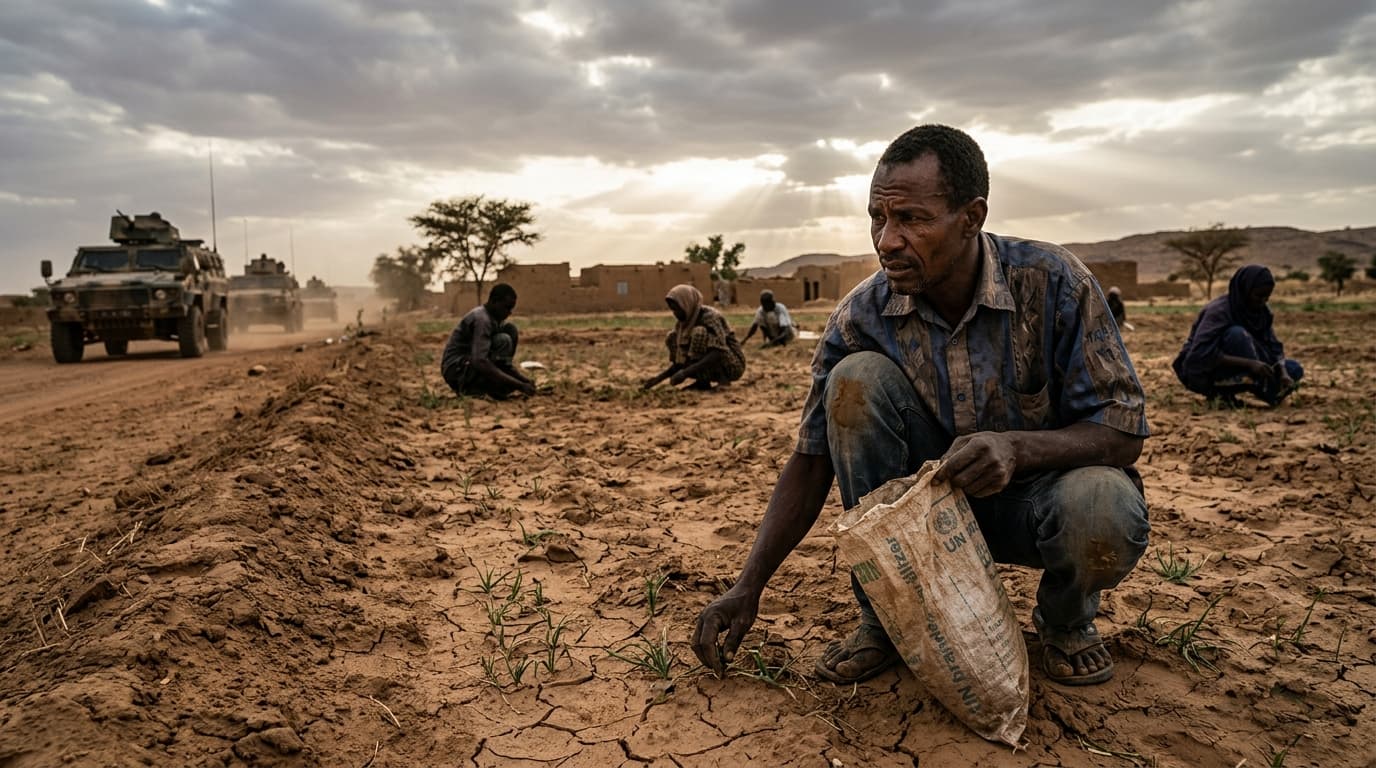
West Africa Food Crisis: Three Shocks in 2026
Conflict, climate extremes, and the Strait of Hormuz closure drive a severe food crisis in West and Central Africa, with fertilizer prices surging 80% and millions displaced.