Hezbollah's Financial Network Survives San
Exploring Hezbollah's resilience against sanctions
Model Diplomat7 min readMiddle East
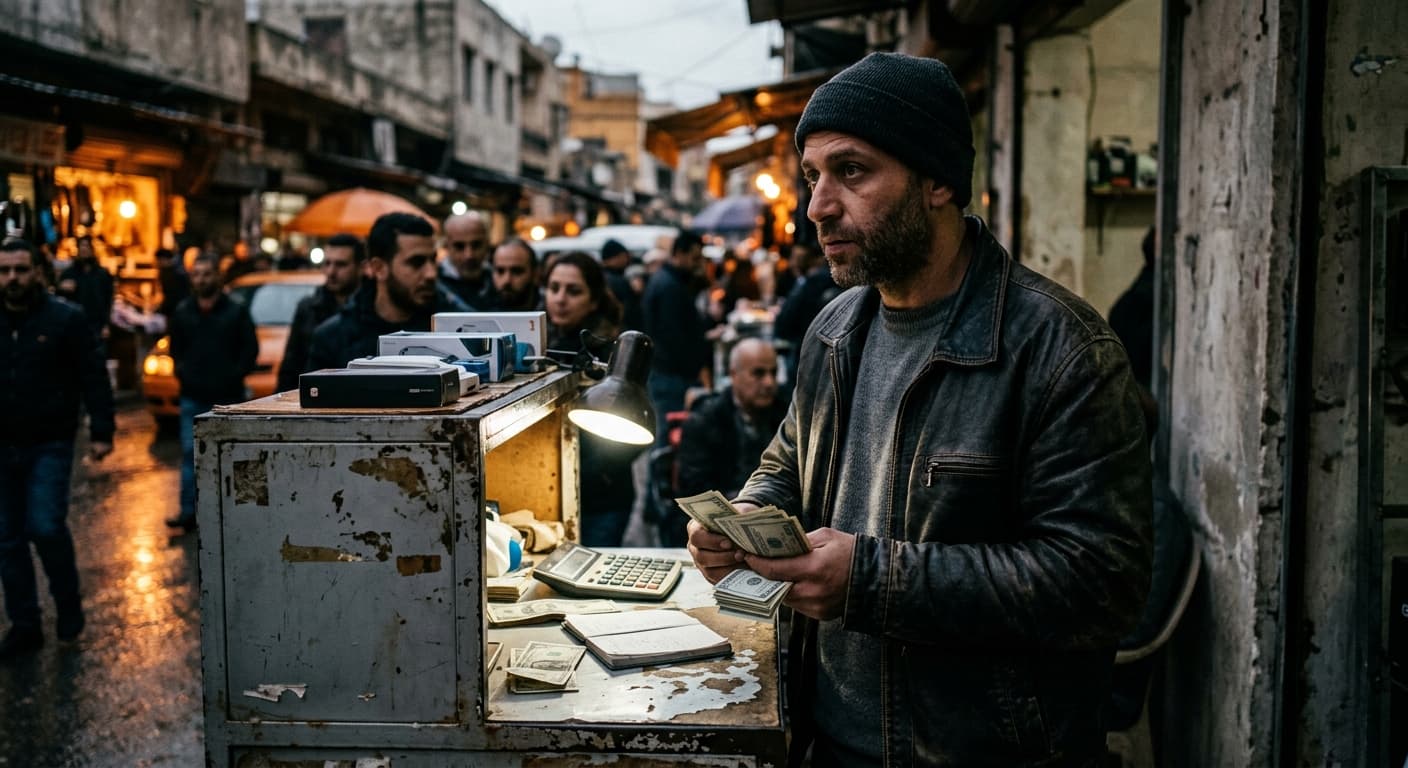
Hezbollah's Financial Network Survives Sanctions Wall
Behind Hezbollah's finances: how Al-Qard Al-Hassan, Bayt al-Mal and Unit 104 keep the group liquid despite a June 30, 2026 joint US–Gulf sanctions designation.
On June 30, 2026, the seven-nation Terrorist Financing Targeting Center re-designated five entities and 16 individuals at the core of Hezbollah's finances — every one of them already blacklisted by the U.S. Treasury. The joint action, mapped in a July 9 report from the Alma Research and Education Center, reveals the real story of this beat: Hezbollah has built a parallel financial state — a quasi-bank, a treasury, an audit shop and a gold desk — that has absorbed nearly two decades of designations and continues to move hundreds of millions of dollars. Sanctions have not shrunk the network. They have documented it.
The angle for policymakers reading today's Economics & Markets brief is uncomfortable: the U.S.–Gulf coalition is now recycling names, not adding pressure. The lever left on the table is not sanctions. It is the Lebanese banking sector's decision on whether to keep hosting the nominee accounts that make the whole system work.
The architecture: a bank, a treasury, and a nerve center
At the base of Hezbollah's financial state sits Al-Qard Al-Hassan (AQAH), a "charitable" microfinance institution registered under a 1983 Lebanese permit. It runs more than 30 branches, custodies gold against loans, and — since the 2019 collapse of the Lebanese banking system — serves as the de facto retail bank for much of the Shia south. The U.S. Treasury first designated AQAH in 2007 as a Hezbollah cover institution; sanctions were tightened in 2021, and again in February 2026. Al Jazeera, citing Carnegie Middle East Center director Maha Yahya, describes it as
"modeled after the Nobel Peace Prize–winning Grameen Bank" — a comparison that captures why blunt-force strikes on its branches have not translated into political isolation.
Parallel to AQAH runs Bayt al-Mal ("house of money"), Hezbollah's unofficial treasury. It does not advertise. It manages the group's investments, sits under the direct supervision of the Secretary-General, and was itself sanctioned under U.S. Executive Order 13224 back in 2006. After the Second Lebanon War, much of Bayt al-Mal's day-to-day cash movement was pushed into AQAH, according to Alma — a deliberate migration of function from a covert node to one wearing civilian clothing.
The nerve center is the Central Finance Unit — Unit 104, headed by Ibrahim Ali Daher ("Hajj Jihad"), who consolidates revenue, sets the budget, allocates funds across the military, welfare, propaganda and reconstruction arms, and pays operatives. Daher sits on Hezbollah's Executive Council and reports to the Secretary-General, per Alma. The U.S. Department of State designated Daher on May 11, 2021, naming him and six associates for moving roughly $500 million through personal Lebanese bank accounts — including at the now-shuttered Jammal Trust Bank — using "evasive 'shadow' banking" methods.
The evasion is the point
The most useful intelligence in the June 30 joint action is not the list of names — those were already on the SDN List. It is the operational map of how the evasion actually works. Alma's Zoe Levornik identifies four instruments:
Nominee and "shadow" accounts. Senior AQAH officials Ahmad Yazbeck, Abbas Gharib, Mustafa Harb, Izzat Akar and Hasan Othman held personal accounts at Lebanese commercial banks for more than a decade, moving over half a billion dollars through the formal system despite AQAH's sanctioned status. That figure comes from Treasury's own May 2021 designation, corroborated by
Al Jazeera's contemporaneous reporting.
Civilian professional-services companies. Alma names three: Al-Khobara, which provided accounting services and operated inside the AQAH building; Tashilat SARL, the loan-issuance arm for both AQAH and Bayt al-Mal; and Auditors for Accounting and Auditing, a firm controlled by Daher himself and servicing Unit 104. These are the shadow big-four of Hezbollah finance.
A gold desk. On February 10, 2026, OFAC blacklisted Jood SARL, a Chiyah-based jewelry wholesaler registered on June 3, 2025, that Treasury said was set up by "senior Al-Qard Al-Hassan officials" to convert Hezbollah's gold reserves "into usable funds." The department stated bluntly that "after facing challenges throughout early 2025 to secure funding, Hezbollah directed AQAH … to ensure the terrorist group's continued access to cash flow," in the words carried by
Al Jazeera.
Hawala and the diaspora. The Institute for National Security Studies' Noam Binstok, in a March 2026 INSS assessment, warns that AQAH is only the visible node: "Hezbollah's financial activity does not depend on a single institution … but rather on a network of interchangeable financial nodes — companies, money changers, and intermediaries — that can be rapidly reconstituted."
The pressure campaign: what has and hasn't worked
Three sources of income determine whether this architecture survives.
The first is Iran. The U.S. State Department's Country Reports on Terrorism estimated Iranian transfers to Hezbollah at roughly $700 million per year — about 70 percent of the group's ~$1 billion budget, according to figures compiled by Brookings' Daniel Byman in a 2022 assessment. That pipeline is now under acute stress. The February 14, 2025 closure of Rafic Hariri International Airport to Iranian carriers — after Israeli intelligence alleged Quds Force cash-smuggling on Mahan Air flights, per
Al Jazeera — closed one physical channel. The fall of the Assad regime severed the Syrian land bridge. CSIS's Mohanad Hage Ali confirmed in a
May 2025 interview that "Lebanon has no direct flights to Iran anymore, and that's related to the Hezbollah weapons."
The second is the illicit economy: captagon flows, oil smuggling, and diaspora criminal networks in South America and West Africa. The Congressional Research Service noted in early 2025 that Treasury regards Hezbollah as running "an array of large-scale criminal schemes, including sophisticated money laundering, smuggling, and trafficking networks that have involved the U.S. financial system." Those flows have proven more resilient than Iranian transfers because they are already extralegal.
The third — and this is the piece the July 9 Alma report puts under the microscope — is domestic Lebanese liquidity. AQAH does not just hold Hezbollah money. It holds ordinary Shia savings, jewelry collateral, and remittances, precisely because the country's mainstream banks are functionally insolvent. That is the leverage Hezbollah trades on with Beirut's regulators, and the reason the Banque du Liban has repeatedly declined to shut AQAH branches even when U.S. correspondent-banking risk under the Hizballah International Financing Prevention Act of 2015 suggests it must.
Why the joint re-designation is a tell, not a strike
Read the June 30 TFTC action carefully and the diplomatic subtext becomes obvious. As lowdown.today reported, the U.S. Treasury confirmed every target was already on the SDN list. Bahrain, Kuwait, Oman, Qatar, Saudi Arabia and the UAE lent their names — not new intelligence.
That has two implications. The coalition is signaling political alignment, not marginal enforcement gain. With the U.S.–Iran memorandum of understanding of June 2026 in effect and Gulf capitals openly relieved that the war is over — Al Jazeera documented the GCC's shift toward "pragmatic" engagement with Tehran — the TFTC re-list is Washington's way of preserving hard-line optics on Hezbollah while allowing broader détente. It is a controlled compromise.
Second, it exposes the limit of what unilateral U.S. designation can still deliver. Treasury has issued more than 90 Hezbollah-related actions since 2017, per Treasury's own record. The May 21, 2026 sanctions on four Hezbollah MPs and Lebanese security officers — with a $10 million reward for information on "the disruption of the financial mechanisms of the group," according to
Al Jazeera — indicate Washington is now pivoting from banks to bagmen. That is a tacit acknowledgement that the institutional layer has been mapped as far as blacklists can map it.
The people who benefit are, paradoxically, Hezbollah's institutional accountants. Every new designation freezes assets that the group had long since moved. Every new name confirms the architecture Alma has described for two years. The people who lose are Lebanese depositors — an estimated hundreds of thousands of AQAH customers, per NPR, the majority of whom used the institution because Lebanon's real banks froze their savings in 2019.
Diplomat View
The Alma report reads as a triumphalist mapping of a network under siege. The evidence points the other way. Six governments now co-sign designations that add no new names, Israel's kinetic campaign against AQAH branches has produced "war crimes" findings from Human Rights Watch but no visible degradation of Hezbollah's payroll capacity, and the group's most exposed pipeline — Iranian cash via Beirut airport — has been closed by Lebanese, not American, decree. Our call: the next 12 months of Hezbollah financial pressure will be decided in Beirut's Council of Ministers, not in Washington's OFAC building. If the Aoun–Salam government forces Banque du Liban to sever AQAH's residual access to correspondent settlement, the network contracts sharply. If it does not — and disarmament talks stall past the end-2025 deadline — the June 30 re-designation will look, in hindsight, like the moment the sanctions instrument reached its ceiling. We would revise this forecast if the Gulf coalition adds any new AQAH-linked front companies before year-end, or if Lebanon prosecutes a single AQAH executive domestically.
What to watch next
- Late 2025 disarmament deadline: Prime Minister Nawaf Salam's cabinet committed on August 7, 2025 to bringing all weapons under state authority by end-2025, per
Al Jazeera. Financial disarmament is the harder half.
- Banque du Liban's stance on AQAH: Any BdL circular restricting correspondent transactions with AQAH-linked nominee accounts would be the first genuinely new pressure point in five years.
- Next TFTC action: If the coalition designates a previously unlisted entity — not a re-list — Washington still believes there is intelligence to burn. If the next round is another re-designation, the sanctions instrument is exhausted.
For the wider Middle East file, the Hezbollah finance question is now the clearest test of whether coalition sanctions can outrun a decentralized adversary. On the evidence of June 30, they cannot — not without Beirut's cooperation.
Discover more
Global Politics
US-Iran Tensions Rise
Tensions escalate in the Strait of Hormuz as Iran and the US clash over maritime control, with a ceasefire hinging on a contested MoU paragraph.
Global Politics
Xi Jinping Calls China-Russia Ties 'Precious'
Xi Jinping's description of China-Russia ties as 'precious' reflects a strategic imbalance, with Beijing dictating terms in the partnership.

US Politics
House Ethics Committee Pushes Sexual Miscond.
The House Ethics Committee has shifted responsibility for sexual harassment settlement records to the Office of Congressional Workplace Rights, complicating disclosure efforts.

Conflict & Security
Drone Warfare Killing Aid Workers at Unprec
Over 1,000 humanitarian workers killed in three years as cheap armed drones collapse legal protections. Gaza, Sudan, Ukraine, and DRC see deliberate targeting of aid convoys and hospitals with zero prosecutions.