Hezbollah-Free Zone Talks in Southern Lebanon
U.S.-mediated negotiations redefine Israel's withdrawal terms.
Model Diplomat8 min readMiddle East
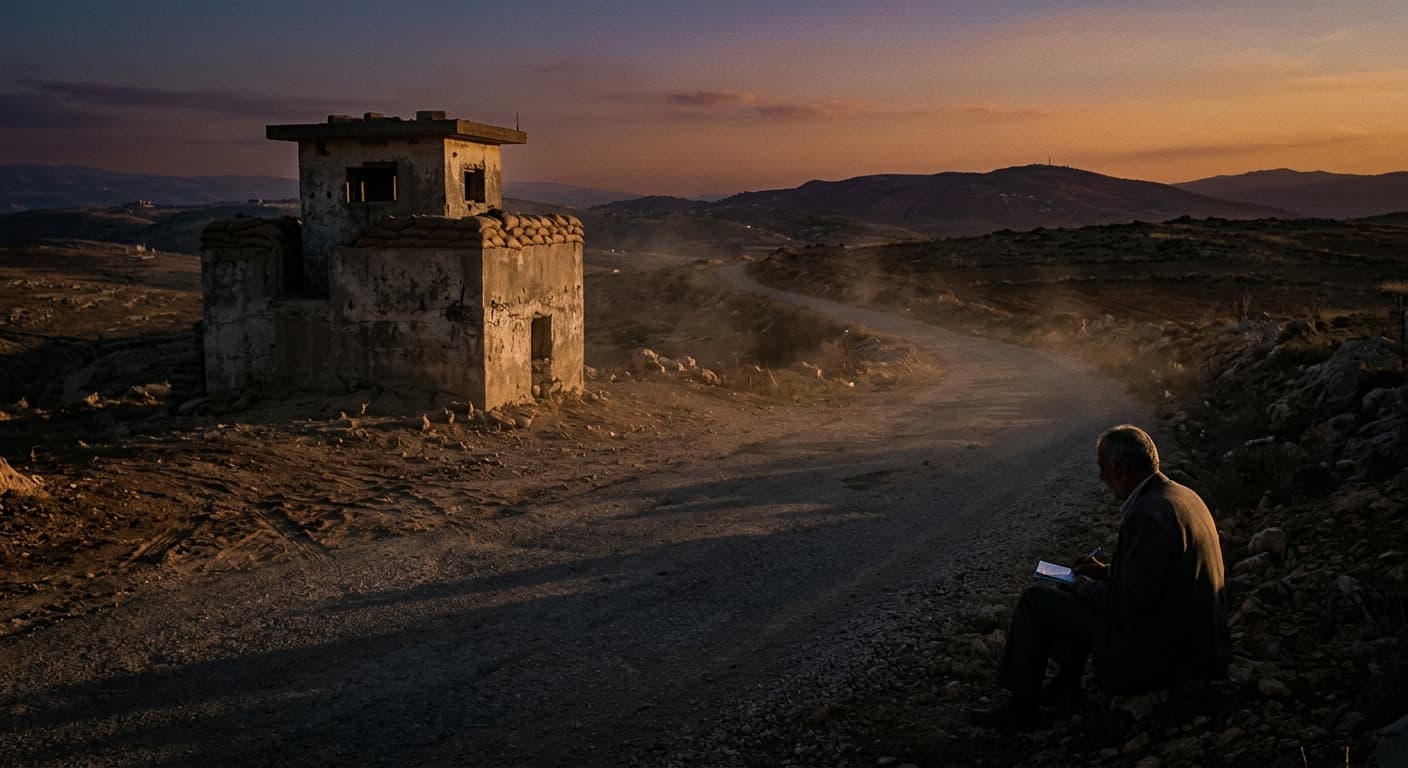
Inside the "Hezbollah-Free Zone" Talks Redrawing Southern Lebanon
U.S.-mediated IDF–LAF negotiations to define a "Hezbollah-free zone" hand Israel a veto over its own withdrawal — and hand Beirut a stress test it may fail.
The IDF and Lebanese Armed Forces opened a direct, U.S.-mediated channel this week to write the technical definition of a "Hezbollah-free zone" — a set of on-the-ground criteria that will determine whether Israel actually withdraws from two southern villages under the June 26 framework agreement. That definition matters more than the agreement itself: whoever writes the checklist writes the timetable, and by demanding the removal of specific Lebanese officers it suspects of leaking to Hezbollah, Israel has quietly seized both. The pilot is dressed as a confidence-building measure. It functions as a mechanism to institutionalize an open-ended Israeli presence on roughly one-fifth of Lebanese territory, while outsourcing the political cost of confronting Hezbollah to Beirut's army.
What just changed
According to Kan News as reported by The Yeshiva World, the new channel is meant to settle "longstanding ambiguity" over what an area free of Hezbollah presence actually looks like. Israel has handed the Lebanese side a list of LAF officers — "some of them relatively senior" — previously suspected of feeding intelligence to Hezbollah, with a demand they be excluded from the mechanism. Prime Minister Benjamin Netanyahu convened a small security meeting Sunday night on Lebanon, and an Israeli source told Kan that Jerusalem is now waiting on written confirmation from the LAF and U.S. Central Command that Lebanese troops are ready to enter and hold the pilot areas — reported to be the villages of Zawtar and Froun.
The channel operates under the trilateral framework signed in Washington on June 26, 2026. As the BBC reported, the 14-point document commits the LAF to restoring "effective sovereign authority over all Lebanese territory, pending the verified disarmament of non-state armed groups and dismantlement of associated infrastructure." The
U.S. State Department text, summarised by Al Jazeera, describes a "sequenced process" and designates two pilot zones — one south of the Litani River, one north — where the LAF will "gradually assume full and effective security responsibility." Only after that is verified does Israel commit to "progressively redeploy."
That sequencing is the entire game. The framework, as Al Jazeera's explainer notes, "does not specifically call for the withdrawal of the Israeli forces and instead ties it to the disarmament of Hezbollah — a condition repeatedly rejected by the Iran-backed armed group." The
June 2026 Congressional Research Service report confirms the same architecture: Israel and Lebanon "designated two initial pilot zones and agreed to designate future zones by mutual consent," with any expansion of U.S. military assistance to the LAF "strictly conditioned on verifiable milestones, full transparency, demonstrated results, and ongoing oversight."
Who benefits, who loses
Israel wins the definitional fight. By demanding the LAF criteria before ceding an inch, Netanyahu has converted a framework that appeared to concede pilot withdrawals into one that gives Israel a permanent verification veto. The BBC's Jerusalem coverage captures the political logic: Netanyahu told reporters, "Lebanon — we created a buffer zone and will remain there as long as necessary." A day before the Kan report, Defence Minister Israel Katz said the IDF would not withdraw "a millimetre" until Hezbollah is disarmed, according to
Al Jazeera. With Israeli elections due by end-October 2026 and Likud polling in a first-ever tie with Gadi Eisenkot's Yashar list at 23 seats, the prime minister has strong incentives to look like he is giving nothing away.
President Joseph Aoun and Prime Minister Nawaf Salam are the second-tier winners — but the win is contingent. The framework gives them a formal U.S. commitment, a $100 million humanitarian pledge and a $30 million LAF reimbursement, as Al Jazeera reported from the signing. It also gives Aoun the political cover to say, as he did after the signing, that the deal "does not legitimise the continued Israeli occupation of Lebanon" but empowers the LAF to extend state authority. The cost is that any pilot failure — an ambush on returning troops, an intelligence leak, a stray rocket — hands Israel a documented reason to freeze the process.
Hezbollah is the designated loser, and knows it. Secretary-General Naim Qassem called the Washington deal "null and void" and "a surrender of sovereignty," as Al Jazeera reported, warning that linking Israel's withdrawal to disarmament crossed "all red lines." Hezbollah's parliamentary bloc has demanded that the government refuse any pilot zone north of the Litani — precisely where Israel wants one. The group nonetheless did not obstruct the LAF's phase-one operations south of the river, which by January 2026 had cleared nearly 10,000 rockets and 400 missiles, according to a
CNAS field assessment. North of the Litani,
Al Jazeera reported, Hezbollah has said flatly there will be no disarmament — and that is the terrain the pilot is designed to test.
Iran is the quieter loser. Tehran extracted from the June 17 Islamabad MoU a first-clause commitment to "the immediate and permanent termination of military operations on all fronts, including in Lebanon," per the CRS report. The Israel–Lebanon framework signed nine days later gutted that clause by tying any withdrawal to Hezbollah's disarmament. Ronnie Chatah, host of The Beirut Banyan, told
Al Jazeera that in the days since both agreements were signed, "there's been no serious push by Iran to make Lebanon a priority" — a striking indicator of how depleted Tehran's regional bandwidth is after the February–June war.
The intelligence purge is the real story
The most consequential detail in the Kan report is not the villages or the timeline — it is the officer list. Israel has previously leaked Hezbollah-related intelligence to the LAF through the tripartite mechanism, and that intelligence has, in Kan's account, ended up with the target. By naming officers it wants excluded from the new channel, Israel is doing three things at once: forcing a personnel purge inside the LAF as a precondition for withdrawal; establishing that verification runs on Israeli intelligence, not Lebanese self-certification; and setting a precedent that any future pilot zone can be blocked by a single suspected mole. Nicholas Blanford of the Atlantic Council told Al Jazeera in June that a parallel U.S. plan to train dedicated LAF units to fight Hezbollah is "a non-starter." The officer-list demand is a lower-friction version of the same idea — an institutional loyalty test inside the army itself.
The LAF is not built for this. As Michael Wahid Hanna and others have documented, the army has deployed roughly 9,000 to 10,000 troops south of the Litani, is simultaneously reinforcing the Syrian border, and remains chronically underfunded, according to Atlantic Council analysis. Its commander Rodolphe Haykal has, per the
Carnegie Endowment, pushed back on any scenario that pits the LAF directly against Hezbollah — the institutional judgment being that the army would lose, and Lebanon with it.
The historical parallel Washington is ignoring
The framework's architecture — a trilateral U.S.–Israel–Lebanon deal that excludes the dominant Shia armed actor and conditions Israeli withdrawal on the Lebanese state's ability to disarm it — has been tried before. Chatah's warning, quoted by Al Jazeera, is worth repeating: the
May 17, 1983 tripartite agreement between Lebanon, Israel and the United States collapsed within a year, followed by attacks on peacekeepers and the U.S. embassy in Beirut. Hezbollah emerged from that collapse as Lebanon's dominant security actor. The 2026 framework is not the 1983 agreement — it has an Iran that is bruised, a Hezbollah that has already surrendered its south-of-Litani arsenal, and a Lebanese presidency actually invested in state monopoly on force. But the structural bet is the same: that a weakened non-state actor will accept its own erasure through a document it did not sign.
That bet may hold longer than 1983's did, but its failure mode is identical. Al Jazeera's Ali Hashem, quoted in the June 27 explainer, put it directly: "Without Hezbollah's consent, this is not going to happen. This is going to be a recipe for another confrontation. The Lebanese government isn't capable of imposing this deal. It's not the de facto force on the ground." The
Al Jazeera Centre for Studies policy brief published July 6 reaches the same conclusion by a different route: divergent positions on sequencing mean implementation, not signature, is where the deal breaks.
What the pilot is actually testing
The pilot villages are laboratories for three questions Washington needs answered before it can wind down the war file entirely. First, can the LAF operate in a village Israel has just vacated without Hezbollah reasserting a shadow presence within weeks? Second, can Beirut execute an internal counter-intelligence purge — the officer list — without triggering a Shia political revolt? Third, will UNIFIL's scheduled 2027 withdrawal, flagged in Atlantic Council and
DIIS analyses, leave a monitoring vacuum that the trilateral Military Coordination Group can actually fill? If the pilot survives 90 days, the framework acquires momentum. If it fails — and the officer-list demand raises the odds it will — Israel gets a documented casus for permanence, and the U.S.–Iran MoU comes under stress.
Diplomat View
The pilot withdrawal will not deliver a meaningful Israeli redeployment before Israel's October 2026 election, and it is not designed to. The "Hezbollah-free zone" definition is a slow-motion filter engineered to keep the IDF in place while giving Washington a paper trail of Lebanese non-performance to wave at Tehran. The forecast: Zawtar and Froun see a partial, geographically shallow LAF entry within 30–60 days, Israel calls the pilot "incomplete" over intelligence leaks or a demilitarisation gap, and no north-of-Litani zone activates before the Israeli vote. This forecast revises upward — meaning a real, verifiable withdrawal — under two conditions: (a) Trump publicly conditions further U.S. security assistance to Israel on redeployment milestones, which he has not done; or (b) Hezbollah's political leadership signals tacit acceptance of phase-two disarmament in exchange for reconstruction funds, which Qassem's July rhetoric rules out. Absent either, the framework becomes the occupation's legal wrapper.
What to watch next
- Confirmation letters: Israel is awaiting written sign-off from the LAF and U.S. CENTCOM that Lebanese troops can hold Zawtar and Froun. If those letters arrive within two weeks, the pilot moves. If they slip past mid-August, expect a first Israeli walk-back.
- LAF officer purge: Watch Lebanese cabinet minutes and any reshuffle in the LAF's southern command. A quiet reassignment of the named officers signals Beirut is playing; a public refusal signals the framework is stalling.
- Phase-two disarmament report: The Lebanese government's four-month timeline for the Litani–Awali corridor, announced
in February 2026, expires in the summer — a report card that will either legitimise the pilot's expansion north of the Litani or expose the framework's core weakness.
Discover more
US Politics
Virginia's Redistricting Referendum
Virginia's redistricting referendum is drawing a flood of dark money, shaping future elections and the fight for congressional control amid party stakes.
Global Politics
US-Iran Tensions Rise
Tensions escalate in the Strait of Hormuz as Iran and the US clash over maritime control, with a ceasefire hinging on a contested MoU paragraph.

India
Women's Reservation Bill 2026: A Political Sh
India's Lok Sabha rejected the Women's Reservation Bill, exposing a political maneuver to redraw electoral maps favoring the north over the south.

Conflict & Security
Drone Warfare Killing Aid Workers at Unprec
Over 1,000 humanitarian workers killed in three years as cheap armed drones collapse legal protections. Gaza, Sudan, Ukraine, and DRC see deliberate targeting of aid convoys and hospitals with zero prosecutions.