Haryana Ex-Servicemen Quota: New One-Per-Family Job Rule
New rules limit family claims on ex-servicemen jobs
Model Diplomat3 min readAsia
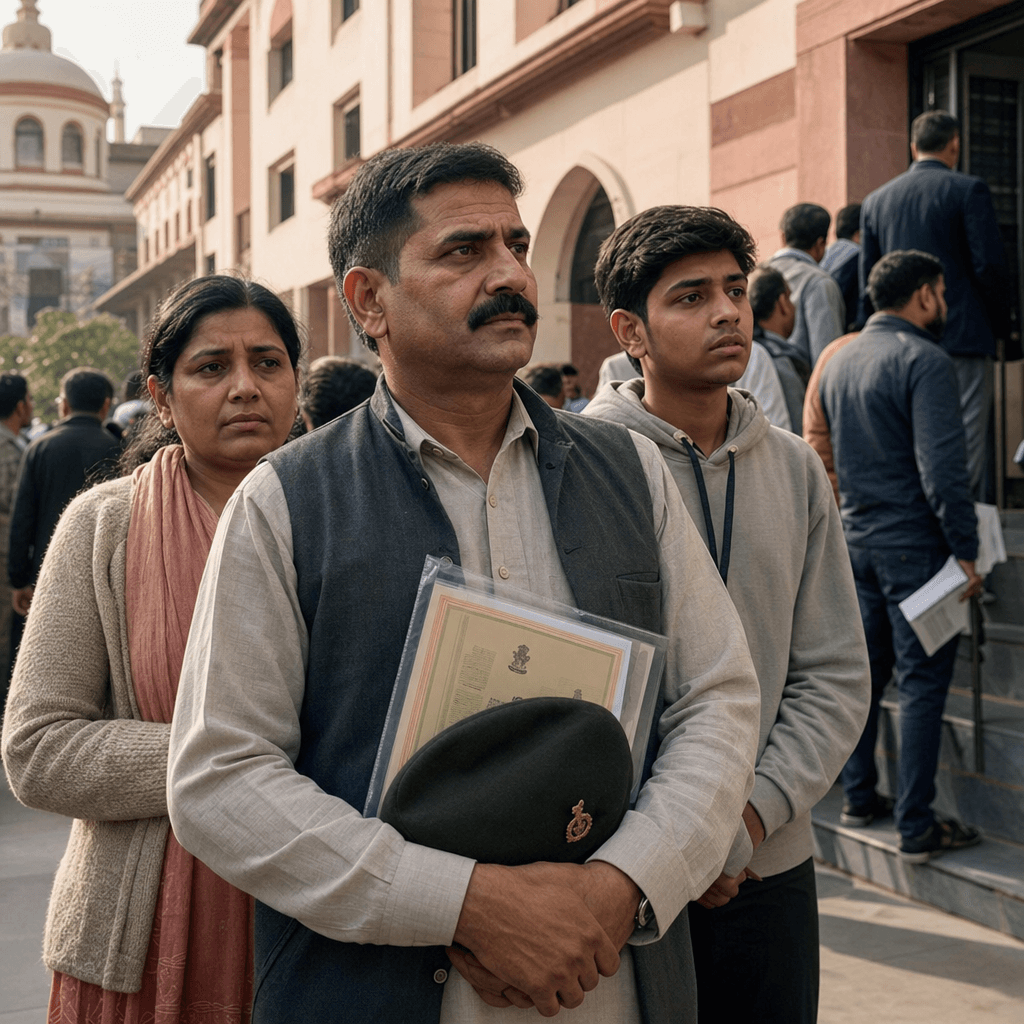
Haryana Narrows Ex-Servicemen Quota to One Family Claim
Haryana has tightened ex-servicemen reservation so a regular government job blocks future family claims, but the state is still preserving a narrow escape hatch for pending applications.
The Haryana government has put a hard cap on how far ex-servicemen reservation can travel within one family. Under the revised instructions notified Monday, once an ex-serviceman secures regular government employment by using the quota, the spouse, son and daughter lose eligibility for future reservation claims in another appointment, though age relaxation remains available for higher posts, the state said in the order reported by The Indian Express and mirrored in the
Haryana Government notification.
That is the real power move here: Haryana is treating ex-servicemen reservation as a single-use welfare channel, not a transferable family entitlement. The new rule also says ex-servicemen or eligible family members who applied for multiple vacancies before landing their first regular civil job may still use the quota in one later recruitment, if they file a self-declaration listing earlier applications, according to The Indian Express and the official instructions.
Why Haryana is drawing the line
The state is trying to close a loophole that has long blurred the line between rehabilitation and inheritance. Haryana’s revised policy broadens and clarifies who counts as an ex-serviceman, but it also says domicile matters: only Haryana-domicile candidates can claim the benefit, the government order says in the Haryana Government notification. It further excludes personnel discharged for dismissal, misconduct or inefficiency — and their spouses and children — from reservation altogether, according to the same order and
The Indian Express.
That tightens a policy area already shaped by the courts. In January, the Punjab and Haryana High Court ruled that dependents of ex-servicemen cannot be denied reservation merely because one applicant took interim employment while recruitment dragged on, citing a 2014 DoPT clarification and a 2022 Haryana communication, reported by The Tribune. Haryana’s new rule does not overturn that logic; it narrows it. The state is saying: if you had applied before joining a post, you may still salvage one claim — but the family cannot keep reusing the category after a regular job has already been secured.
Who wins, who loses
The immediate winners are recruitment administrators and non-ESM applicants who have faced competition from a category that can sometimes appear to compound across family members. The state also protects its own credibility: by spelling out priority rules and eligibility, it reduces litigation over who gets counted first, especially in direct recruitment, as laid out in the Haryana Government notification.
The losers are families that had come to view ex-servicemen status as a durable fallback for multiple members. Haryana is drawing a boundary between compensation for military service and a broader social entitlement. That matters in a state where ex-servicemen policy has repeatedly been used as a political signal of deference to the armed forces — and where quota disputes routinely end up in the courts, as the January High Court ruling showed in The Tribune.
What to watch next
Watch for two things: whether the new instructions generate fresh litigation from dependents who were already in the pipeline, and whether recruitment boards apply the self-declaration rule consistently. The next test point is simple: if a candidate joined one post after applying for several, does Haryana honor the one remaining claim or treat the new cap as absolute? That answer will shape the practical value of the policy — and how far the state is willing to push its India reservation reset.
Discover more
India
CPI(M) Calls to Decouple Quota from Delimita
CPI(M) advocates for a 33% women's quota in Lok Sabha by 2029, removing the need for delimitation and census linkage.
India
BJP's Misunderstanding of Women's Quota Needs
The BJP's linking of the Women Reservation Bill to delimitation risks delaying women's empowerment in India, misreading the aspirations of female voters.
India
Congress Accuses Modi of Stalling Women's Law
Congress accuses Modi of stalling women's reservation law by linking it to delimitation, revealing a deeper electoral strategy.

Conflict & Security
Drone Warfare Killing Aid Workers at Unprec
Over 1,000 humanitarian workers killed in three years as cheap armed drones collapse legal protections. Gaza, Sudan, Ukraine, and DRC see deliberate targeting of aid convoys and hospitals with zero prosecutions.