Gaza's Reconstruction Stalled
US plans for Gaza hinge on disarmament amid stalled reconstruction.
Model Diplomat3 min readMiddle East
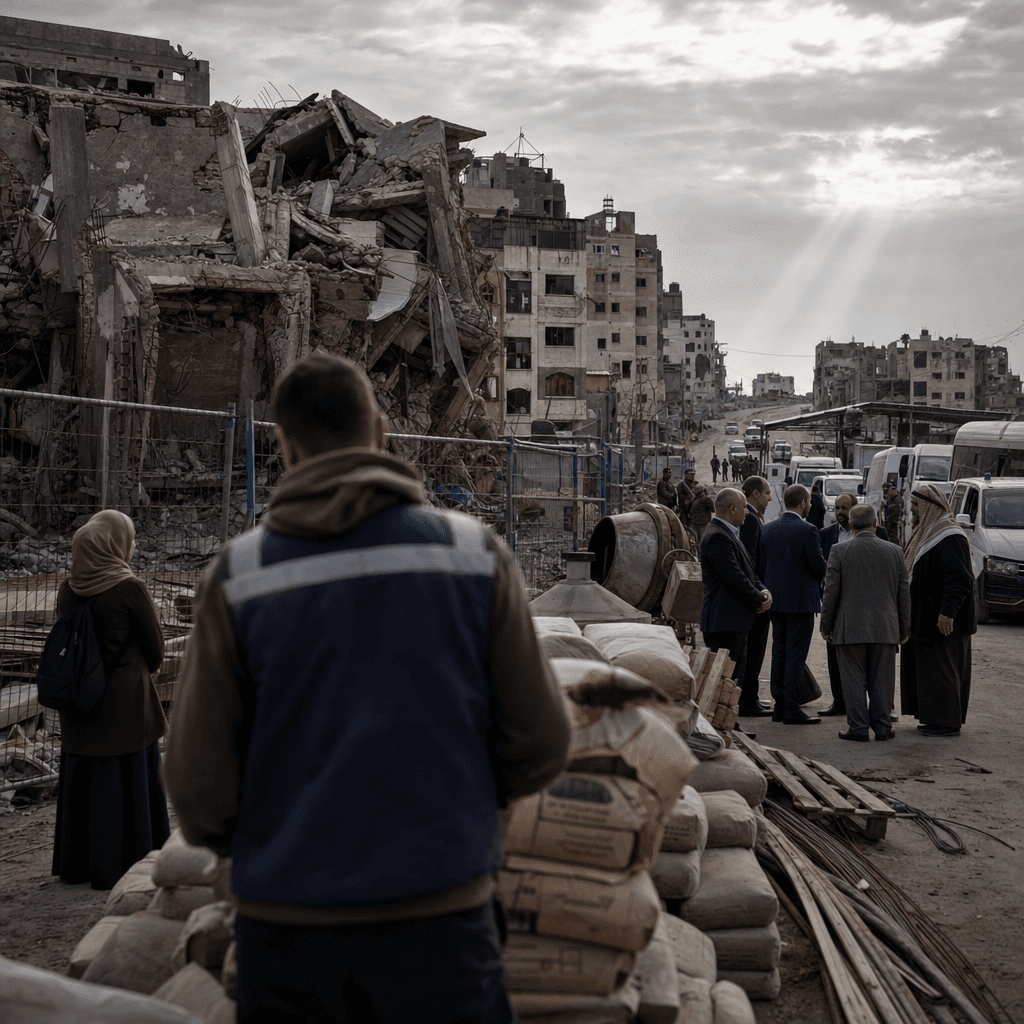
Gaza’s Next Phase Is Stuck on One Question
US-backed plans for Gaza now hinge on disarmament, but Hamas, Israel, and donors each hold a veto. That is freezing reconstruction and hardening partition.
Nickolay Mladenov told the UN Security Council on Thursday that Gaza’s postwar status quo risks becoming permanent, with Hamas retaining control over “less than half the territory” while reconstruction remains blocked and Israeli forces still hold more than half of the Strip, according to Al Jazeera and
AFP via Gulf News. The point of his warning is simple: the deal is no longer being driven by battlefield momentum, but by who is willing to move first on disarmament, withdrawals, and money.
The leverage is now political, not military
The Board of Peace, created by the US in January, is trying to turn a fragile ceasefire into a sequenced transition: Hamas disarms, Israeli forces pull back, technocratic Palestinian administrators move in, and reconstruction starts. But that sequence only works if all sides comply. As Al Jazeera reported earlier this month, Mladenov has made clear that Hamas does not have to “disappear” as a political movement, but its arsenal is “not negotiable.”
Al Arabiya via AFP says the board’s first report to the UN Security Council calls Hamas’s refusal to accept verified decommissioning the “principal obstacle” to moving into phase two.
That framing matters because it shifts blame, but it does not solve the bargaining problem. Hamas can still deny legitimacy to any plan that demands surrender without a full Israeli withdrawal. Israel can keep arguing that no withdrawal is safe while Hamas retains weapons and administrative control. The US can press both sides, but it does not control Gaza on the ground.
Who gains from delay
Delay favors the actors who already possess facts on the ground. Israel retains control over access, movement, and more than half of Gaza’s territory, which gives Prime Minister Benjamin Netanyahu’s government a strong hand in deciding whether phase two ever begins, according to Al Jazeera and
AFP. Hamas, meanwhile, preserves local coercive power by refusing to lay down arms. The losers are the civilians trapped between those positions:
Al Jazeera says more than 72,775 Palestinians have been killed since the war began, while hundreds more have died since the ceasefire, and reconstruction remains stuck behind the weaponization of aid.
This is also where the external money matters. Donors are unlikely to finance large-scale rebuilding into an environment that still looks like active contestation. That makes the Board of Peace less a reconstruction engine than a political gatekeeper. Until the security question is settled, the aid question will not move. For a wider read on how this fits the regional balance, see Global Politics and
Conflict.
What to watch next
The next decision point is whether the UN Security Council gives Mladenov’s roadmap political backing, and whether Washington pushes Israel and Hamas toward a concrete phase-two timetable. Watch for any Israeli move to expand or freeze its current control lines, and for any signal that aid flows or reconstruction financing will be tied to verified disarmament. If that link holds, Gaza’s ceasefire will remain a holding pattern, not a settlement.
Discover more

International Relations
Pakistan's Key Role in US-Israel-Iran Meddle
Pakistan is seeking to mediate the US-Israel-Iran conflict, balancing high-stakes diplomacy against severe economic pressures and steep regional challenges.

Conflict & Security
Drone Warfare Killing Aid Workers at Unprec
Over 1,000 humanitarian workers killed in three years as cheap armed drones collapse legal protections. Gaza, Sudan, Ukraine, and DRC see deliberate targeting of aid convoys and hospitals with zero prosecutions.

Global
World Normalises Taliban as Afghan Women Eras
UN data shows Afghan women erased from public life as Russia recognises the Taliban, EU hosts officials in Brussels, and ICC warrants for gender persecution go unenforced.
Conflict & Security
West Africa Food Crisis: Three Shocks in 2026
Conflict, climate extremes, and the Strait of Hormuz closure drive a severe food crisis in West and Central Africa, with fertilizer prices surging 80% and millions displaced.