FSB Labels Youth Protest as Terrorism in 2023
Russia's FSB labels youth digital protest as a terror threat.
Model Diplomat3 min readEurope
FSB Turns a Youth Protest Into a Terror Case
Russia’s security services are using the “Алый лебедь” case to deter digital protest: a small anti-blocking campaign is now framed as terrorism.
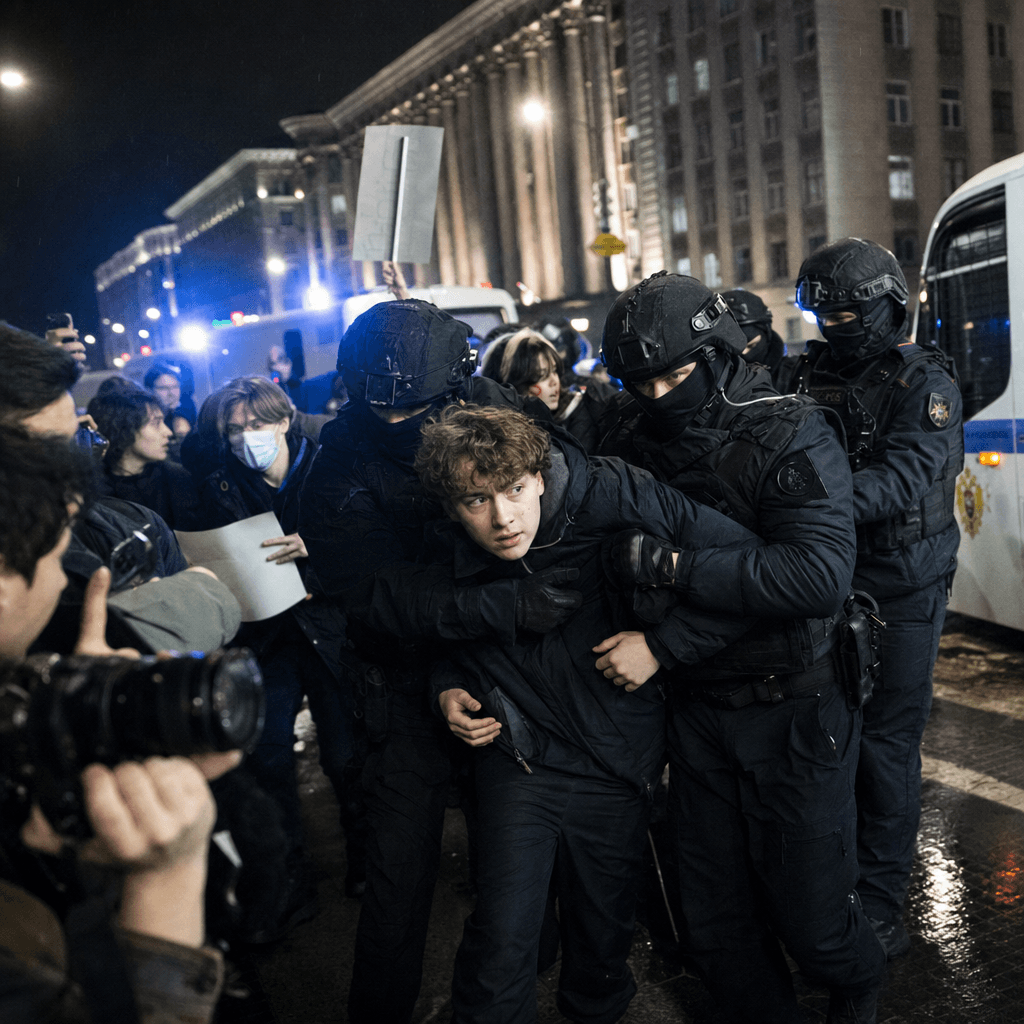
Russia’s FSB is setting the terms of this fight. What began in mid-March as a loose youth campaign against internet blocks — organized on Telegram and TikTok under the name “Алый лебедь” — is now being recast by the security services as a terror plot against senior Roskomnadzor officials, according to BBC News Russian,
Zona Media, and
Verstka. That shift matters more than the movement itself: Moscow is signaling that even ad hoc, youth-led digital protest can be treated as a security threat.
The leverage is in the label
The state’s advantage is not just police power; it is classification power. On 24 April, the FSB said it had detained seven people across Moscow, Ufa, Novosibirsk and Yaroslavl for allegedly preparing a “terrorist act” against Roskomnadzor leaders, BBC News Russian reported. One man, born in 2004 and described as the group’s “leader,” was killed during arrest, the FSB said. By putting a protest network into a terrorism frame, the Kremlin raises the political and legal cost of joining any future online mobilization.
That is the real target: not the handful of teenagers involved in “Алый лебедь,” but the broader cohort of young Russians who still think internet shutdowns and censorship are contestable issues. The movement’s original demand was narrow — oppose blocks, mobilize for demonstrations on 29 March — and Zona Media says the campaign lost momentum quickly after its channel was compromised and then taken over by hostile actors. But the state response was disproportionate enough to do the damage itself.
A warning shot to the digital public
Sofia Chepik, one of the most visible participants, told Verstka she was arrested for 15 days on a minor-hooliganism protocol, then pressured into appearing in an FSB video about the alleged Roskomnadzor plot. She later left Russia. Her account is important because it shows how the security services can manufacture an evidentiary package: administrative arrest, coerced video, then a public terror narrative.
The state also benefits from confusion. The “Алый лебедь” activists deny the terror accusation and say the more radical material circulating under similar channel names was not theirs, Zona Media reported. That ambiguity is useful to the security apparatus: it blurs the line between protest, provocation and criminality, and keeps the entire space of online organizing under suspicion. For
Global Politics, the lesson is straightforward: Russia is not simply censoring platforms; it is criminalizing the social habit of organizing around them.
What to watch next
The next decision point is whether the FSB converts this from a scare campaign into a formal criminal case against the detained seven. If it does, expect more exits like Chepik’s and a wider chill on youth activism around internet policy. Watch for any filing from Moscow investigators, and for whether Roskomnadzor uses the episode to justify another round of blocking. The date that matters is the next court hearing and any new FSB release.
Discover more
US Politics
Congress Targets AI Chatbot Access for Terror
The House passed the Generative AI Terrorism Risk Assessment Act, focusing on AI's role in terrorism and potential surveillance implications.
India
UN Expert Albanese: India Violates Law
UN Rapporteur Francesca Albanese accuses India of breaching international law, spotlighting human rights concerns in Kashmir and prompting diplomatic pushback.

Conflict & Security
Guatemala: El Niño 2026–27 becomes regional security test
UNICEF: 25.8M children face El Niño risks in Latin America; Guatemala maps 188 municipalities for drought and food insecurity amid regional security test.
Economics
Fed's stress-test overhaul is a capital-smoothing exercise
Federal Reserve finalized stress-test overhaul: two-year averaging for bank capital buffers and public input, expected to halve volatility.