France's New Strategy: Partnering with Kenya
Exploring France's new partnership with Kenya amid challenges.
Model Diplomat3 min readAfrica
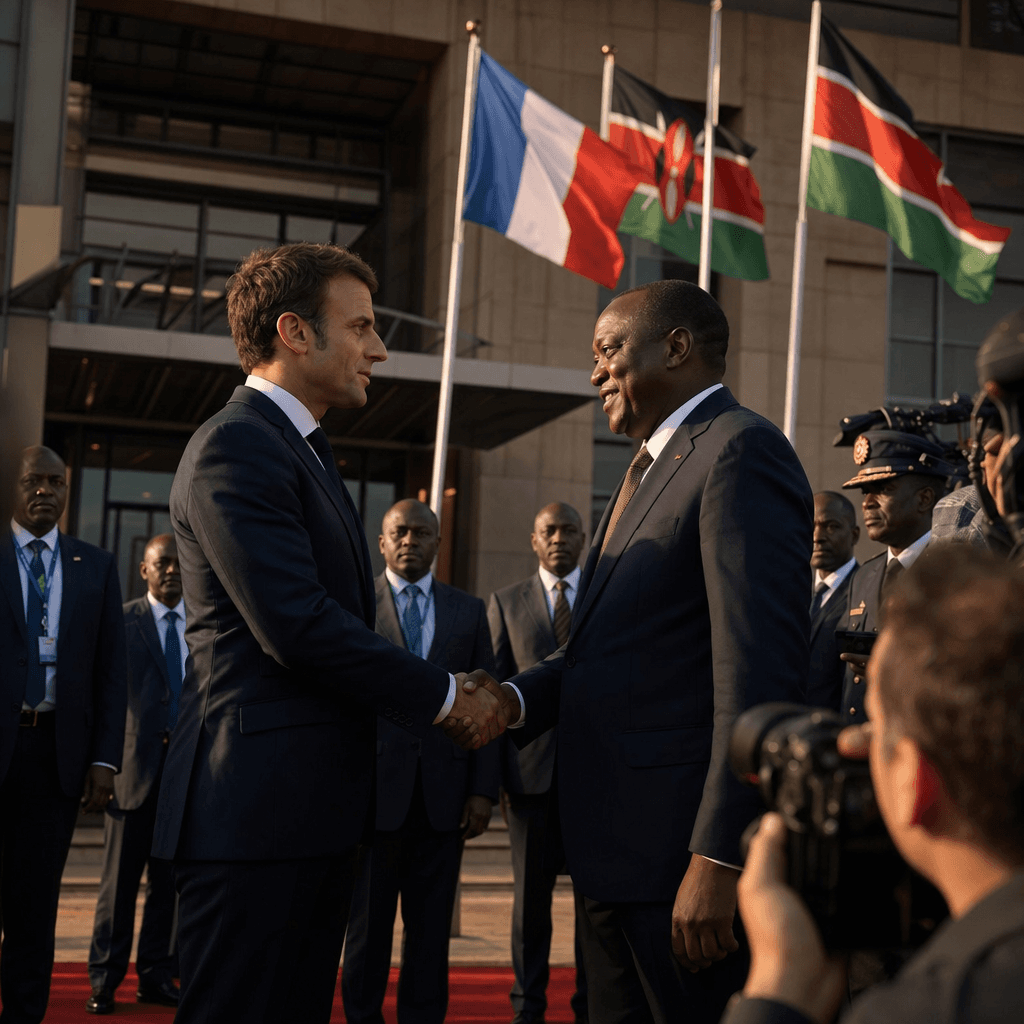
France Bets on Kenya to Rebuild Its Africa Leverage
Paris is using Nairobi to offset Sahel losses; Kenya wants investment and status, but the defence pact is already triggering sovereignty backlash.
France is trying to convert Kenya into its new African anchor as President Emmanuel Macron co-hosts the Africa Forward summit in Nairobi, the first France-Africa gathering held in an English-speaking country, after Paris lost ground in the Sahel and was pushed out of several former military arrangements in West Africa (Al Jazeera Staff,
DW). The immediate leverage is clear: France brings capital, security cooperation and diplomatic attention; Kenya offers political stability, regional access and a base in East Africa that Paris can sell as a cleaner alternative to its former Francophone footprint (
Business Daily Africa,
DW).
France is trading old influence for new access
The partnership is not just symbolic. France and Kenya signed a defence cooperation agreement in April 2026, after the arrival of 800 French troops in Mombasa for joint exercises with the Kenya Defence Forces; the deal covers maritime security, intelligence, peacekeeping, humanitarian assistance and disaster response, and France has already deployed 600 personnel to Kenya for training (Al Jazeera). That fits Macron’s broader effort to recast France’s Africa policy around private-sector investment, technology and education rather than the old aid-security model (
Business Daily Africa,
Al Jazeera Staff).
This matters because France is not entering Kenya as a donor of last resort. It is entering as a power looking for a reset after setbacks in Mali, Burkina Faso, Niger and Senegal, where anti-French politics turned military access into a liability (DW,
Kenya Insights). In that sense, Nairobi is less a breakthrough than a workaround: a stable, English-speaking partner that gives Paris a foothold in the Western Indian Ocean and a route back into continental politics (
DW).
Kenya gets upside — and a sovereignty bill
For President William Ruto, the upside is tangible. Kenya wants more investment, infrastructure financing, trade and diplomatic weight, and the summit is designed to showcase Nairobi as a hub for business, green energy and fintech (Business Daily Africa,
DW). The country is also diversifying beyond its traditional security ties with the UK and US, while keeping an eye on maritime security and counterterrorism in the western Indian Ocean (
Al Jazeera).
But the terms are what opponents are targeting. The defence agreement reportedly grants French forces diplomatic-style immunity, sends disputes through diplomatic channels rather than Kenyan courts, and gives Paris primary jurisdiction over offences committed by its soldiers in Kenya (Al Jazeera). Critics in Nairobi say that looks less like partnership than asymmetric access, especially given that French nationals enjoy visa-free entry to Kenya while Kenyans do not get the same treatment (
Al Jazeera). That is the political risk for Ruto: he can sell growth, but he has to defend a deal that looks, to opponents, like outsourced sovereignty.
What to watch next
The key test is whether the summit delivers signed commercial deals and public detail on the defence pact, or just a reset narrative. Watch for Kenyan parliamentary scrutiny of the immunity clauses, any new investment announcements from French firms, and whether Macron’s East Africa tour produces follow-through beyond optics. If the partnership is real, it will show up in contracts and enforcement rules; if not, it will become another case study in how quickly African capitals can turn to Global Politics for leverage and to
Conflict for cover.
Discover more

International Relations
Pakistan's Key Role in US-Israel-Iran Meddle
Pakistan is seeking to mediate the US-Israel-Iran conflict, balancing high-stakes diplomacy against severe economic pressures and steep regional challenges.

India
India-South Korea $50B Trade Expansion Plan
India and South Korea target $50 billion in bilateral trade by 2030, focusing on industrial cooperation and strategic alignment amid US pressures.

Economics
Fed's Amex AML order puts correspondent banking on notice
Federal Reserve's Amex AML order requires board-level controls and a 90-day plan; OCC fined the bank $350 million over enterprise-wide deficiencies.
Conflict & Security
Guatemala: El Niño 2026–27 becomes regional security test
UNICEF: 25.8M children face El Niño risks in Latin America; Guatemala maps 188 municipalities for drought and food insecurity amid regional security test.