FIFA’s China-India TV Standoff Threatens World Cup Reach
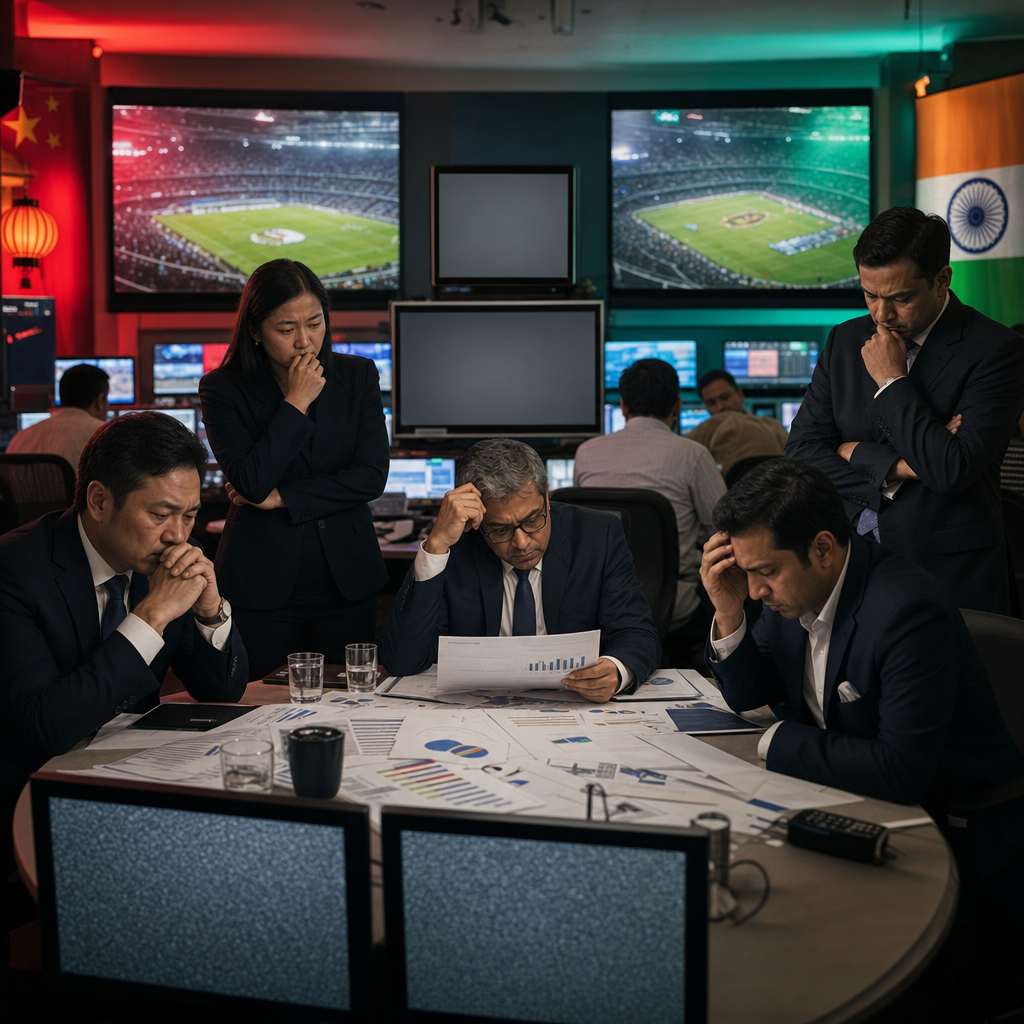
FIFA has most of the world sold, but China and India are still unsigned. The fight is over price, time slots, and who absorbs the risk.
FIFA is entering the final month still without broadcast deals in China or India. Reuters reported on May 4 that FIFA had agreements in at least 175 territories, but not in the two biggest Asian markets, where a Reliance-Disney venture in India had offered about $20 million and FIFA rejected it ( Reuters;
  Al Jazeera). The bargaining power is split: FIFA needs the credibility and revenue of near-global carriage, but broadcasters in China and India can wait because they know the tournament starts June 11 and the clock is now the federation’s problem, not theirs (
 BBC; Reuters).
Why the holdout matters
This is not a marginal rights dispute. FIFA itself said China accounted for 49.8% of all digital and social viewing hours during the 2022 World Cup, while China and India together made up 22.6% of total global TV reach for that tournament (Reuters; BBC). In other words, FIFA is trying to sell the most commercially valuable soccer event on earth while still missing two of the biggest audience pools on the planet.
The commercial logic cuts against FIFA’s asking price. BBC reported that FIFA initially sought as much as $300 million from China and later lowered the figure to roughly $120 million to $150 million, still above what state broadcaster CCTV was willing to pay (BBC). In India, local reports cited by Reuters said the bid from the Reliance-Disney joint venture was far below FIFA’s expectation, and Sony passed rather than bid (Reuters). That is the core leverage problem: FIFA is pricing the rights as if audience reach is guaranteed, while broadcasters are pricing them on what they can realistically recoup from ads and sponsors in a North American tournament that will air overnight in Asia (BBC).
The U.S. angle is leverage, not fandom
For the host market, the deal is already largely locked in. Reuters reported that Fox holds the U.S. rights, and FIFA says it has agreements covering most of the rest of the map (Reuters). That matters for  United States politics because the event is being staged in America, monetized globally, and sold as a premium product even as the biggest unresolved negotiations sit abroad. The bigger story for Global Politics is that FIFA’s commercial model still depends on sovereign-friendly broadcasters and state-backed platforms willing to pay for prestige, reach, and sponsor access.
What to watch next
The next decision point is simple: whether CCTV and the Indian buyer close before June 11, or whether FIFA accepts a late, discounted deal and eats the reputational cost of blank screens in two giant markets (BBC; Reuters). If the numbers do not move quickly, FIFA will have to choose between volume and valuation — and volume is already slipping.