Fed Split on Inflation Puts Rate Hike on the
FOMC minutes reveal a split on rate hikes and inflation debate.
Model Diplomat7 min readNorth America
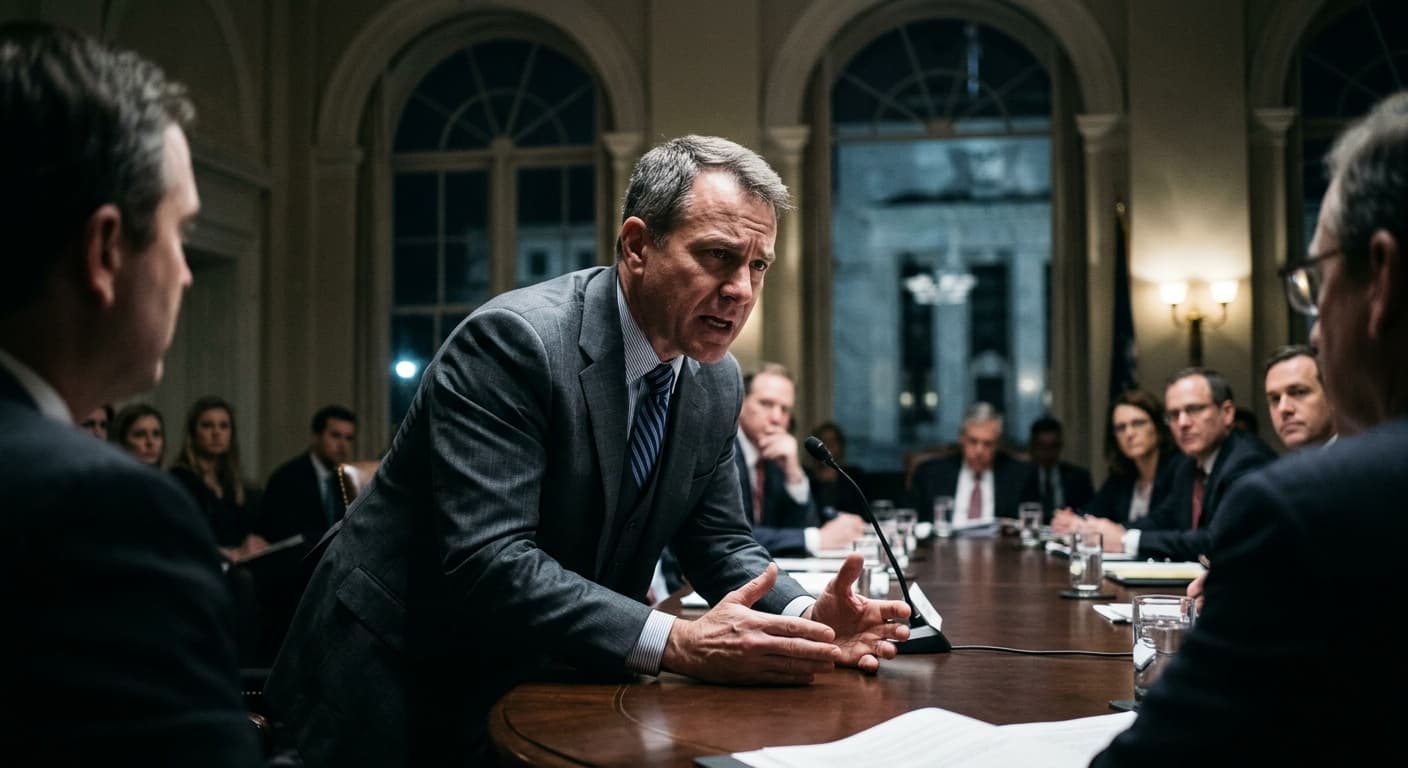
Fed Split on Inflation Puts July 28 Rate Hike on the Table
The June FOMC minutes reveal a 9-8 dot-plot split on 2026 rate hikes, an AI-driven inflation debate, and a July 28 decision that will test Warsh's hawkish turn.
The Federal Reserve is no longer arguing about when to cut — it is arguing about whether to hike, and the answer will land on July 28. Minutes of the June 16–17 meeting, released July 8 by the Board of Governors, show a committee split down the middle on the path of US inflation, with "several" officials saying they could have supported a rate increase at the meeting itself. That divide, more than any single data point, is the story that global markets and emerging-market central banks must now price. It marks the clearest inversion of Donald Trump's first-term-into-second-term monetary bet: Kevin Warsh, hired to deliver cuts, is presiding over the most hawkish FOMC in a decade.
What the minutes actually say
The FOMC voted 12–0 on June 17 to hold the federal funds rate at 3.50–3.75%, according to the official statement. Unanimity ended there. The dot plot — the individual projections Warsh personally opposes but did not scrap — showed nine of the 18 participating policymakers penciling in a rate hike by year-end, eight expecting no change, and one lonely dove favoring a cut. Warsh himself declined to submit a dot,
according to the Financial Times, and a second unidentified official abstained from the 2028 and long-run projections.
The minutes go further than the summary suggested. "Many" participants said inflation could stay elevated even as energy and tariff pressures fade; "several" would have supported raising rates in June, Reuters and the FT both reported. The staff view, quoted in the record, framed persistence as "a salient risk" given cumulative price gains near 25% over five years. The post-meeting statement itself was pared to 132 words and ended with a line that reads as a mission pledge: "The Committee will deliver price stability."
That sentence is the most important primary text from the meeting. It replaces the easing bias that survived every Powell-era statement since 2024.
The three-way split — and the AI wild card
The nine-eight-one dot plot is only the surface. The minutes describe three distinct camps.
The first — call them the transitorists — expect inflation to decelerate as the Iran war shock unwinds. The manager of the System Open Market Account noted that the US–Iran memorandum of understanding "pushed the oil futures curve and near-term inflation compensation materially lower," and that longer-term inflation expectations remained "well anchored near the Committee's 2 percent longer-run inflation objective." For this camp, May's 4.2% headline CPI print — the highest in three years, per the Bureau of Labor Statistics via Al Jazeera — is a supply shock working itself out.
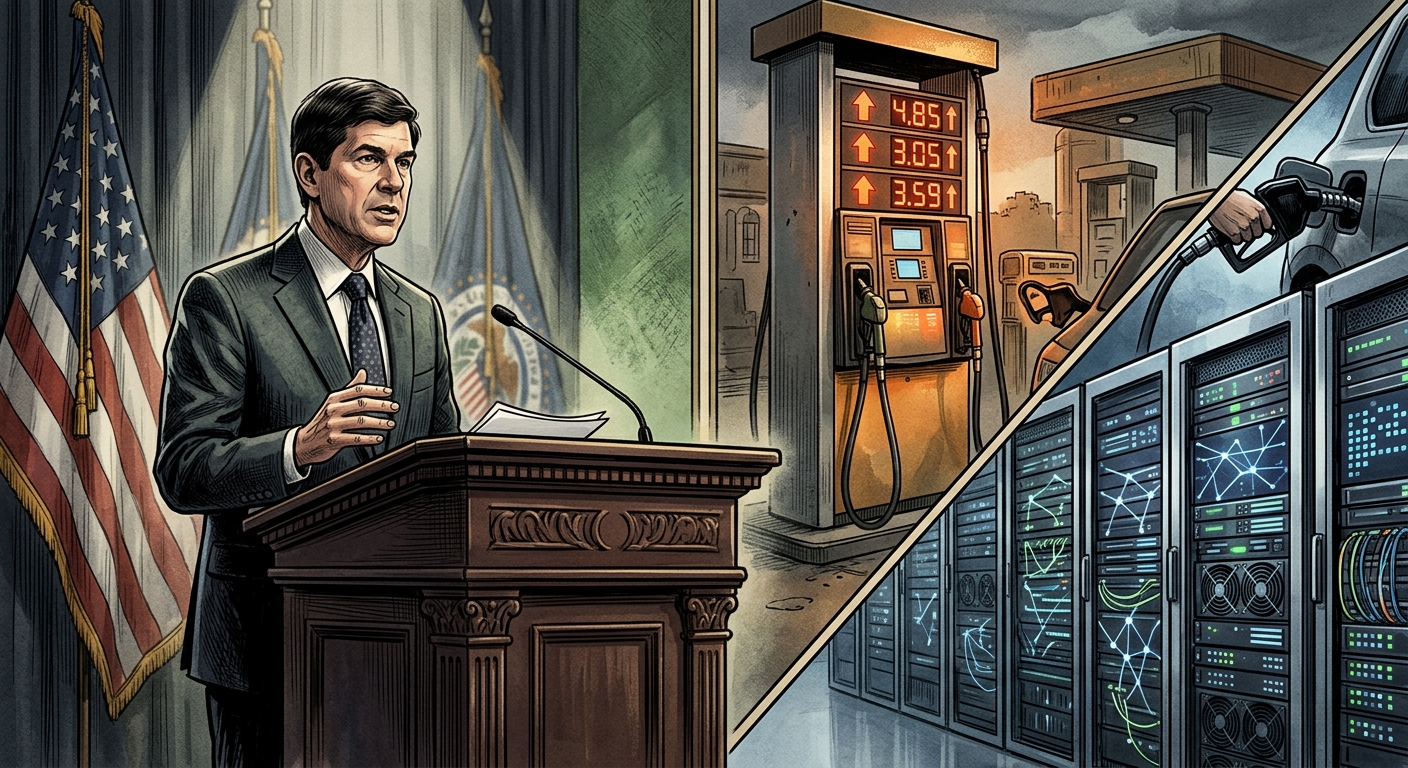
The second camp — the persistents — is the analytically interesting one. They point to AI infrastructure demand as a structural source of upside inflation the Fed's models under-weight. The Center for Strategic and International Studies estimates the United States is on track to spend more than $2.7 trillion on data-center buildout by 2030, with semiconductors representing 54 cents of every dollar. Overlay Trump's Section 232 threats — CSIS calculates that a 100% chip tariff would add roughly $1.4 trillion in additional cost — and the AI capex boom becomes an inflation transmission channel the Fed cannot offset with rates alone.
Electricity is the more immediate pressure point. According to the Atlantic Council, US retail electricity prices rose nearly 21% in real terms from 2021 to 2024 after a decade of flat prices. Brookings puts the cumulative post-2019 increase at
42%, versus 29% for headline CPI. S&P Global's Douglas Giuffre told the Peterson Institute that data-center-linked capacity costs are "only now beginning to hit retail electricity prices," concentrated in the PJM footprint that stretches from Northern Virginia to Chicago,
per PIIE's podcast. Apple's recent memory-driven price rises on laptops and iPads are the retail-facing tip of the same iceberg.
The third camp is the hawkish minority who, per the minutes, saw a live case to raise rates in June. They did not prevail — but they set the terms for July.
The politics inside the split
Warsh's transformation is the second story inside the first. Nominated in January and confirmed on a party-line vote in May, he was billed by Trump as the man to deliver cuts. What arrived at the June press conference was, in the FT's Robert Armstrong's words, "double-whammy hawkishness": a chair declaring inflation "a choice" the Fed had gotten wrong, and a committee planting half its dots on a hike.
Trump has publicly wobbled. Asked about a potential increase, he told reporters, "It could happen … it's hard to believe," before pivoting to complain that high rates "keep the country down." A day earlier he had told the White House press corps, "I love the inflation,"
as the BBC reported — a line Democrats promptly weaponized ahead of November's midterms.
The Council on Foreign Relations had flagged this scenario in April: "if inflation reaccelerates, [Warsh] may find himself compelled to raise interest rates — doing precisely the opposite of what the president who nominated him had in mind." That scenario is now baseline.
Warsh has also killed forward guidance, cut the FOMC statement in half, and launched five internal task forces reviewing communications, the balance sheet, data use, the productivity–jobs link, and the inflation-targeting framework itself. The signal to markets, per FT US economics editor Claire Jones, is that "less is more" — meaning the July 28 decision will not be pre-cooked in speeches.
Global spillover: the hawkish shock EMs feared
The international transmission has already begun. The minutes note the two-year Treasury yield rose faster than sovereign yields in other advanced economies during the intermeeting period, and the dollar "modestly appreciated." That combination is precisely the "pure hawkish shift" the Federal Reserve Board's own DSGE modeling warns is most damaging to emerging markets — worse than a demand-driven US tightening because it forces EM central banks to raise their own rates to defend currencies.
The IMF's April 2025 working paper on the global dollar cycle found that dollar appreciations impose "sizable negative cross-border spillovers" concentrated in commodity-exporting emerging markets, with capital inflows contracting on impact. The
April 2026 Global Financial Stability Report added a specific new vulnerability: a one-standard-deviation increase in the VIX now cuts portfolio debt flows to emerging markets by roughly 1% of GDP — a sensitivity nearly twice pre-2008 levels because nonbank investors have replaced banks as the marginal lender.
Emerging-market policymakers have spent a decade building the credibility buffer that let them survive the 2022–23 Fed hikes without a crisis, as Kalemli-Özcan documented at Brookings. That buffer is now being tested against a Fed hike cycle they were not pricing three months ago. Sovereign-debt issuers with dollar exposure — Argentina, Egypt, Pakistan, Turkey — are the obvious pressure points, alongside frontier issuers waiting to tap markets in the second half.
The Warsh trilemma
Robert Armstrong's framing bears repeating because it will define the next 18 months. Warsh has said he wants to shrink the Fed's balance sheet from $6 trillion back toward pre-crisis norms. He also wants stable Treasury markets. And the US is running a deficit north of 6% of GDP, meaning the Treasury will keep flooding the market with paper. Pick two.
If Warsh presses too hard on the balance sheet while the deficit is wide, long-end yields spike — and CFR warned in April that markets would read a premature cut as "an increase in inflation expectations and concerns about Fed independence" simultaneously. If he holds the balance sheet steady, he owns the "mission creep" he built a career criticizing. If he hikes without shrinking, he tightens through the front end while the term premium keeps building anyway.
The Middle East is the swing variable. Al Jazeera reported on July 8 that Trump's fresh strike comments on Iran pushed Brent crude to a two-week high, threatening to reverse the disinflationary tailwind the June meeting had banked on. Any renewed disruption of Strait of Hormuz traffic — the closure that drove US gasoline from $2.98 to $4.50 a gallon between February and May,
per AAA data cited by Al Jazeera — would collapse the transitorist case.
What to watch next
- July 15, 2026 — June CPI print. A core reading at or above 0.3% month-on-month puts a July hike on the table; anything softer buys Warsh time.
- July 28–29, 2026 — Next FOMC meeting. The first live test of whether the hawkish dot plot translates into policy or was, in effect, cheap talk.
- August 21–23, 2026 — Jackson Hole. Warsh's first symposium as chair; expected to preview conclusions from the inflation-targeting task force, potentially including a formal move away from flexible average inflation targeting back to a strict 2%.
- November 3, 2026 — US midterms. A Democratic flip of either chamber would sharpen oversight of the Warsh Fed and complicate any late-cycle pivot.
Diplomat View
The base case is now a 25-basis-point hike at either the July 28 or September FOMC, with a second hike into year-end conditional on core services inflation staying above 3.5% annualized. Nine dots do not lie, and Warsh has spent his first six weeks manufacturing the intellectual permission structure to move. The trade is short two-year Treasuries, long the dollar against commodity-importing EM currencies, and cautious on EM sovereign spreads through Q4.
What would falsify this call: a genuine Iran de-escalation that drives Brent below $70 and drags core goods inflation with it; a sharper-than-expected labor-market crack (three consecutive nonfarm payroll prints below 75,000); or an explicit White House ultimatum that forces Warsh to choose between the chair and the mandate. The last is the tail risk markets are under-pricing. Trump built this Fed to cut. If it hikes instead, the confrontation will not stay quiet through the midterms — and Fed independence, not inflation, will become the story that reprices global assets.
Discover more
Global Politics
Xi Jinping Calls China-Russia Ties 'Precious'
Xi Jinping's description of China-Russia ties as 'precious' reflects a strategic imbalance, with Beijing dictating terms in the partnership.
US Politics
House Ethics Committee Pushes Sexual Miscond.
The House Ethics Committee has shifted responsibility for sexual harassment settlement records to the Office of Congressional Workplace Rights, complicating disclosure efforts.
India
Congress Advocates 33% Women’s Quota
Congress calls for a 33% women's reservation in the existing 543 Lok Sabha seats, countering Modi's plan to expand the house to 850 seats.

Economics
Fed's Amex AML order puts correspondent banking on notice
Federal Reserve's Amex AML order requires board-level controls and a 90-day plan; OCC fined the bank $350 million over enterprise-wide deficiencies.