Farage Gains, Starmer Shrinks in Britain’s Local Vote
Labour’s local-election losses have handed Farage a national platform while Starmer’s authority erodes, even as he still controls Westminster.
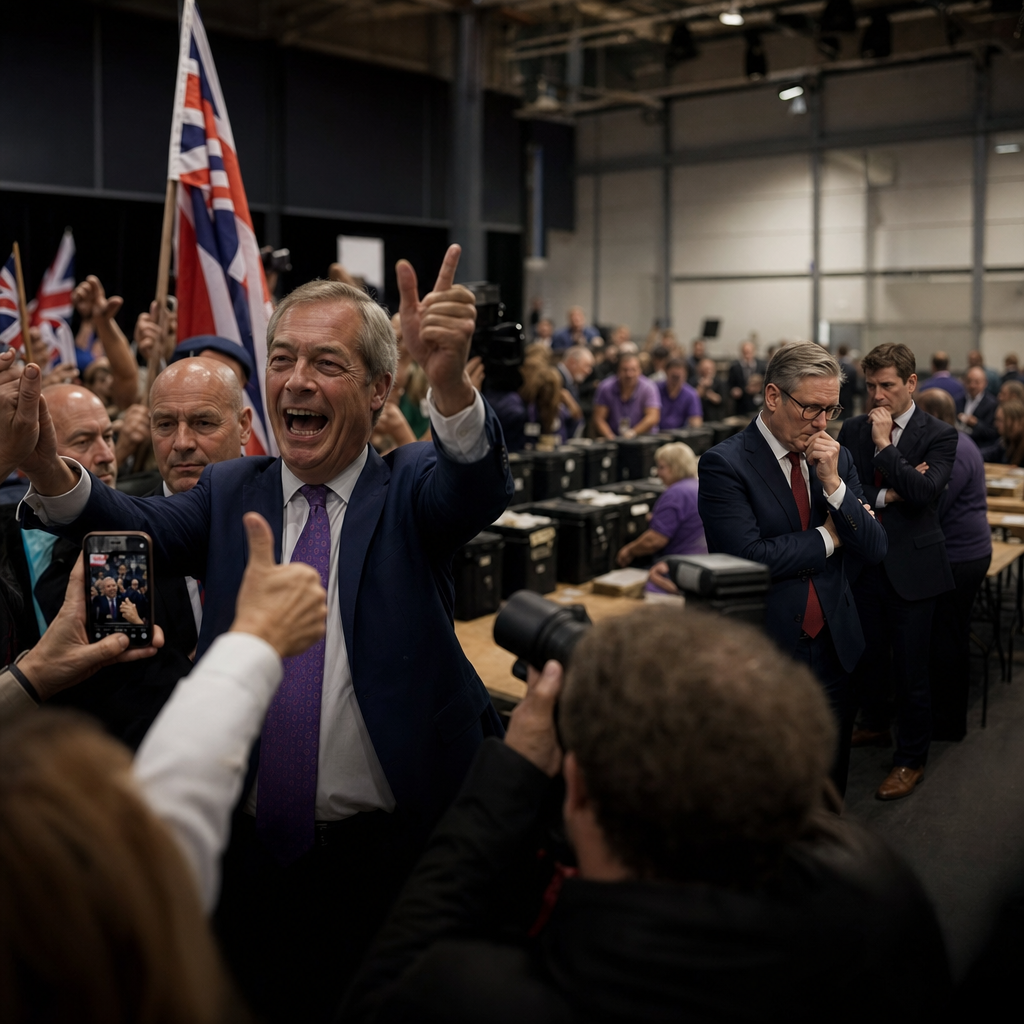
The local-election count has become a verdict on Keir Starmer: Labour is losing ground, Reform UK is taking the gains, and Nigel Farage is using the results to argue that Britain’s old party system is breaking apart, according to  AP and
  BBC. Starmer says he will not quit and “plunge the country into chaos,” but Farage has the momentum: he is shaping the story of who is rising and who is running out of room. For the broader realignment, see
  Global Politics.
The scale of the hit matters
This was not a narrow protest vote. The BBC projected Reform on 26% of the vote, ahead of the Greens on 18%, with Labour and the Conservatives tied on 17%, a sign that the old two-party structure is still eroding, not merely wobbling (BBC). Labour has also lost more than 1,100 English council seats, while power in Wales has slipped away and the SNP remains the largest party in Scotland (BBC). That makes these results a midterm referendum on a government elected less than two years ago after 14 years of Conservative rule (AP).
The deeper problem for Starmer is not just the losses; it is where they came from. Reform has broken into Labour’s northern and Midlands heartlands, while the Greens and Liberal Democrats are also siphoning off progressive voters in cities (BBC,  Politico). That leaves Labour squeezed from both sides: right-wing voters leaving for Farage, and soft-left voters drifting elsewhere.
Farage is winning the agenda, not yet the state
This is where Farage’s leverage becomes more important than his local-seat tally. He does not control Westminster, but he now claims the right to define the national argument around immigration, identity and protest against the establishment — the same terrain that has dragged the Conservatives rightward for years, as  El País notes. Reform’s gains in places like Havering and in Labour’s “red wall” are useful less because they govern immediately than because they normalize Farage as the central opponent in British politics (BBC).
That leaves the Conservatives in the worst strategic position. They remain the official opposition, but Reform is eating the same voter base and making the Tory brand look stale and defensive (BBC, El País). Starmer’s problem is different: he still has a parliamentary majority, so he is not facing an automatic leadership crisis in the Commons, but he is losing political authority faster than he is losing formal power (El País).
What to watch next
The next pressure point is internal Labour discipline. BBC reporting says more than 20 Labour MPs have already called for Starmer to stand down or set a timetable, and that number matters more than any single council result (BBC). If cabinet loyalty holds, Starmer can buy time; if it cracks, Reform’s local victories will have done the real work of moving British politics before the next general election, due in 2029.