Europe's Defense Gap and U.S. Leverage
Exploring Europe's reliance on U.S. defense systems
Model Diplomat3 min readEurope
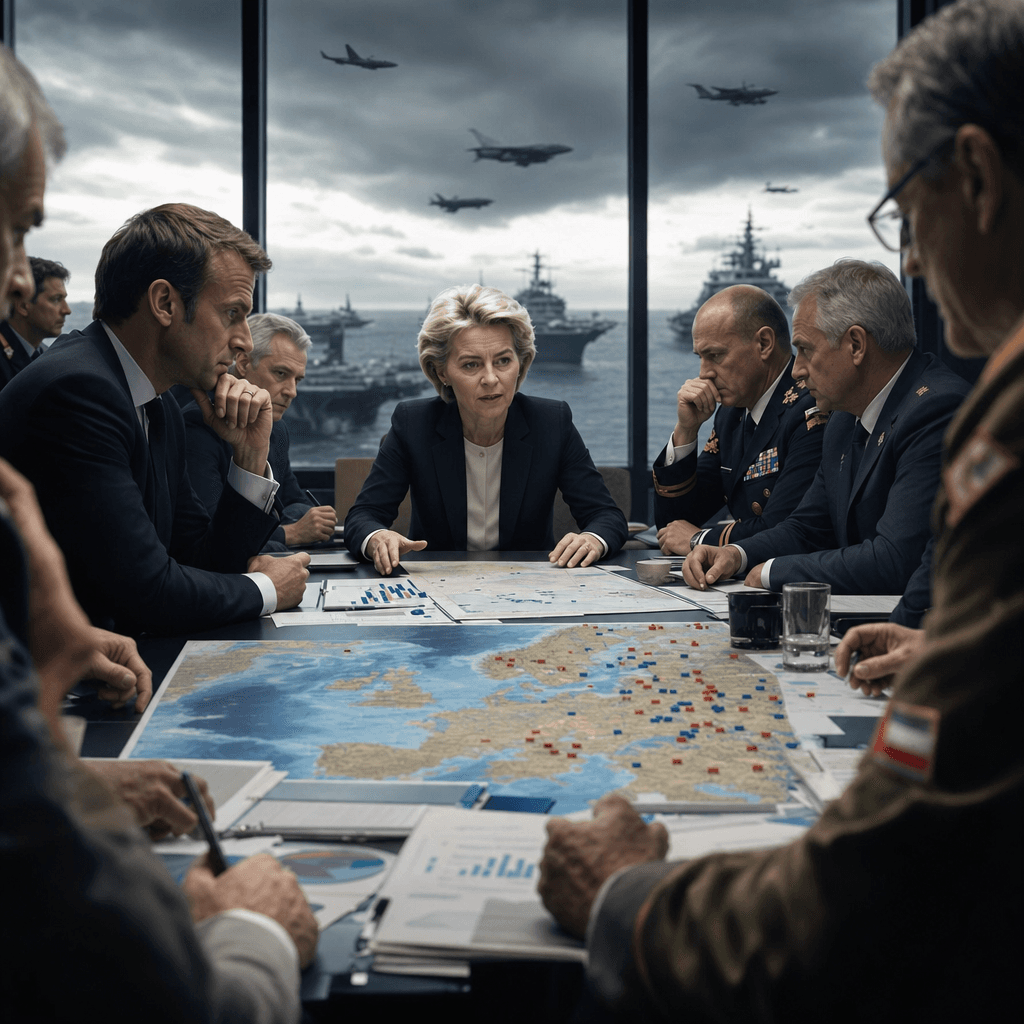
Europe’s defense gap still runs through Washington
Europe can buy time, not independence: the article argues for paying the U.S. to keep NATO’s enablers in place while rearming at home.
Europe’s leverage problem is simple: it can raise defense budgets, but it cannot quickly replace the U.S. systems that make those budgets usable. Foreign Affairs argues the answer is a new transatlantic bargain in which European allies cofinance America’s command-and-control, intelligence, logistics, cyber, and air-defense architecture, with payments phased over time and held in escrow to keep Washington committed. That is not a theory of autonomy; it is a plan to buy continuity while Europe rebuilds.
Why this matters
The article lands in the middle of a real political squeeze. Washington has already signaled that it wants Europe to shoulder more of its own defense, while also making clear it will not necessarily keep underwriting the alliance on the old terms. Reuters reported last week that Secretary of State Marco Rubio told NATO ministers President Donald Trump was “very disappointed” over allied behavior during the Iran war and that the administration announced plans to pull 5,000 troops from Europe, with Europeans scrambling to reassure Washington while asking for clarity on future force levels (Reuters). That is the power dynamic the Foreign Affairs essay is trying to manage: Europe needs the U.S. more than the U.S. needs Europe’s current posture.
The problem is not just troop numbers. As CFR notes, the deeper vulnerability is U.S.-supplied missiles, air defense, ISR, and logistics that Europe cannot replace quickly, even if it spends more. That is why the article’s proposed deal is less about symbolism than deterrence: if Washington can still decide unilaterally to turn off critical enablers, then every European rearmament plan remains hostage to U.S. politics.
What Europe can and cannot buy
Europe’s best case is not strategic independence in the near term. It is a stable transition. The Foreign Affairs piece is explicit that Europe should use its money to lock in continued U.S. support while also accelerating its own learning curve through joint training, operating integration, and shared facilities. In practice, that means spending to preserve the alliance’s backbone, not duplicating it immediately.
That logic fits the wider European debate. A recent BBC report quoted German defense minister Boris Pistorius saying U.S. troop presence remains in both countries’ interests, even as Berlin accepts that Europe must take greater responsibility. The tension is obvious: Germany and others are expanding defense budgets, but the continent still depends on American enablers and on U.S. political restraint. The proposed cofinancing model is a hedge against the opposite scenario — a sudden U.S. pullback before Europe can stand alone.
It also has a bargaining element. The article says Europe should trade money for access, but also demand economic relief, including a rollback of U.S. tariffs to pre-2025 levels. That matters because it reframes defense as a transaction, not a favor. For policymakers in Global Politics, the implication is blunt: Europe’s rearmament will be shaped as much by trade and industrial policy as by tanks and missiles.
What to watch next
The next decision point is whether European capitals treat this as a procurement fix or a strategic compact. If Berlin, Paris, and Warsaw can build a common position before the next NATO and EU rounds, they may extract a more durable U.S. commitment. If they don’t, Washington will keep the leverage — and Europe will keep paying for uncertainty. Watch for any move on U.S. force posture, any new NATO burden-sharing language, and any European push to link defense funding with tariff concessions over the summer.
Discover more
Global Politics
Trump's Conflicting Messages on Iran War
Trump's mixed messages on Iran reflect a strategy of audience management, benefiting Tehran amid a complex geopolitical landscape.

Global Politics
US Seizes Iranian Ship, Tensions Surge
The US seizure of the Iranian ship Touska highlights a shift in control over the Strait of Hormuz, favoring Iran's strategic position.

Conflict & Security
Drone Warfare Killing Aid Workers at Unprec
Over 1,000 humanitarian workers killed in three years as cheap armed drones collapse legal protections. Gaza, Sudan, Ukraine, and DRC see deliberate targeting of aid convoys and hospitals with zero prosecutions.

Global
World Normalises Taliban as Afghan Women Eras
UN data shows Afghan women erased from public life as Russia recognises the Taliban, EU hosts officials in Brussels, and ICC warrants for gender persecution go unenforced.