EU Vote Boosts the Far Right, But Macron Feels the Shock
Far-right parties gained ground across Europe, but the real leverage shifted to France, where Macron turned an EU setback into a domestic gamble.
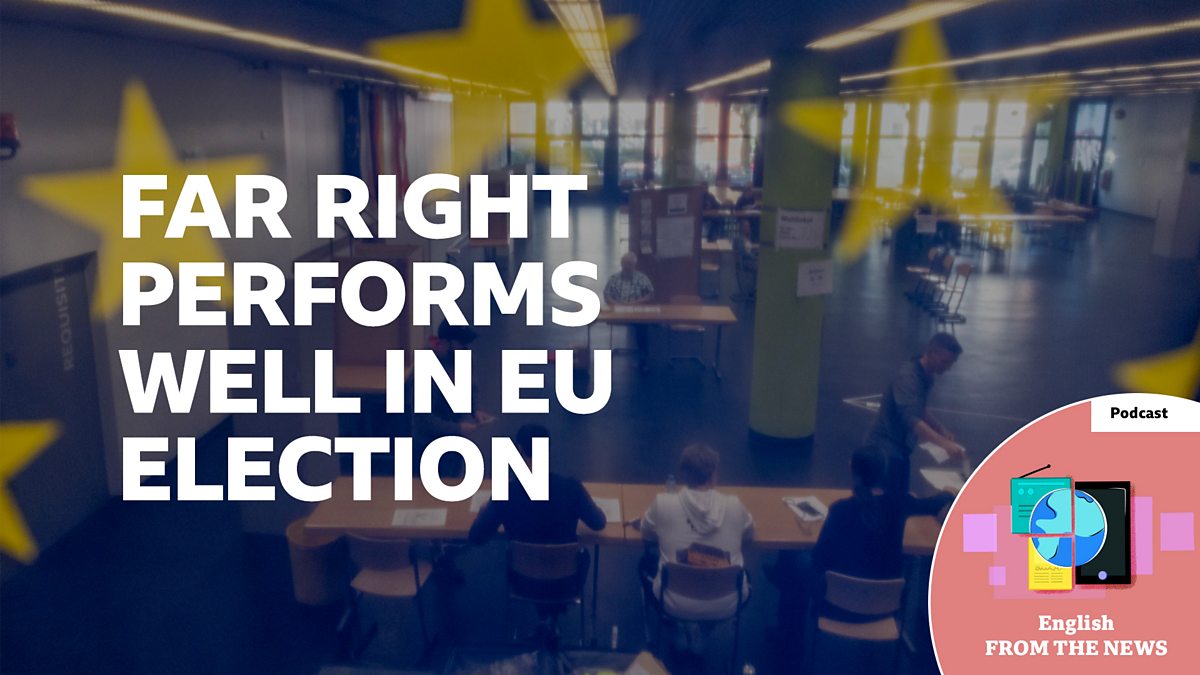
The far right did not take control of the European Parliament, but it forced the agenda. BBC Learning English’s roundup said the far right “performed well” in the EU election even as the centre-right remained strongest, while French President Emmanuel Macron responded by calling a surprise national election after his camp did badly in the vote ( BBC Learning English). That is the key power dynamic: the big winner in Brussels was not a governing bloc, but a protest vote strong enough to destabilise a major EU leader.
The centre-right kept power — but not control
The European People’s Party still emerged as the largest family in the next parliament, giving Ursula von der Leyen the best path to a second term, but the margin narrowed and the extremes gained ground (BBC News;  France 24). That matters because Brussels is now a coalition-management exercise, not a clean mandate. Von der Leyen can still assemble a majority, but she will need to balance centre-right allies with some support from conservatives on the right, which gives figures like Italy’s Giorgia Meloni more leverage than before (France 24).
The main losers are the mainstream incumbents who were already under pressure at home. In Germany, Olaf Scholz’s Social Democrats suffered a historic setback; in France, Macron’s Renaissance was crushed by Marine Le Pen’s National Rally; and across the bloc the Greens lost ground as voters punished elites over migration, living costs, and the green transition (BBC News; France 24). That is why the result reads less like a single EU election and more like a continent-wide anti-incumbent stress test.
Macron made France the next battleground
Macron’s snap election was not a reflex; it was an attempt to reframe defeat as a choice. DW reported that his party’s EU result left him weakened domestically and that he is betting voters will behave differently in a national contest than they do in a midterm-style European vote ( DW). In other words, Macron is trying to turn a low-turnout protest into a high-stakes question of government formation — and force rivals to expose whether they can actually govern.
That is the strategic consequence of the EU vote: Marine Le Pen and Jordan Bardella gained leverage without taking office. They now enter France’s legislative race with momentum, while Macron’s centrists must defend both Brussels and Paris at the same time (DW; BBC News). For  Global Politics, the lesson is simple: European elections are no longer second-order contests. They are proving grounds for national power.
What to watch next was Macron’s gamble, with the first round of France’s snap legislative election set for 30 June and the second on 7 July (DW; BBC News). If Le Pen’s National Rally converts EU votes into a parliamentary breakthrough, the far right will not just be louder in Brussels — it will be closer to government in one of the EU’s core states.