EU Election 2024
Far-right parties gain influence, but center-right EPP remains largest.
Model Diplomat3 min readEurope
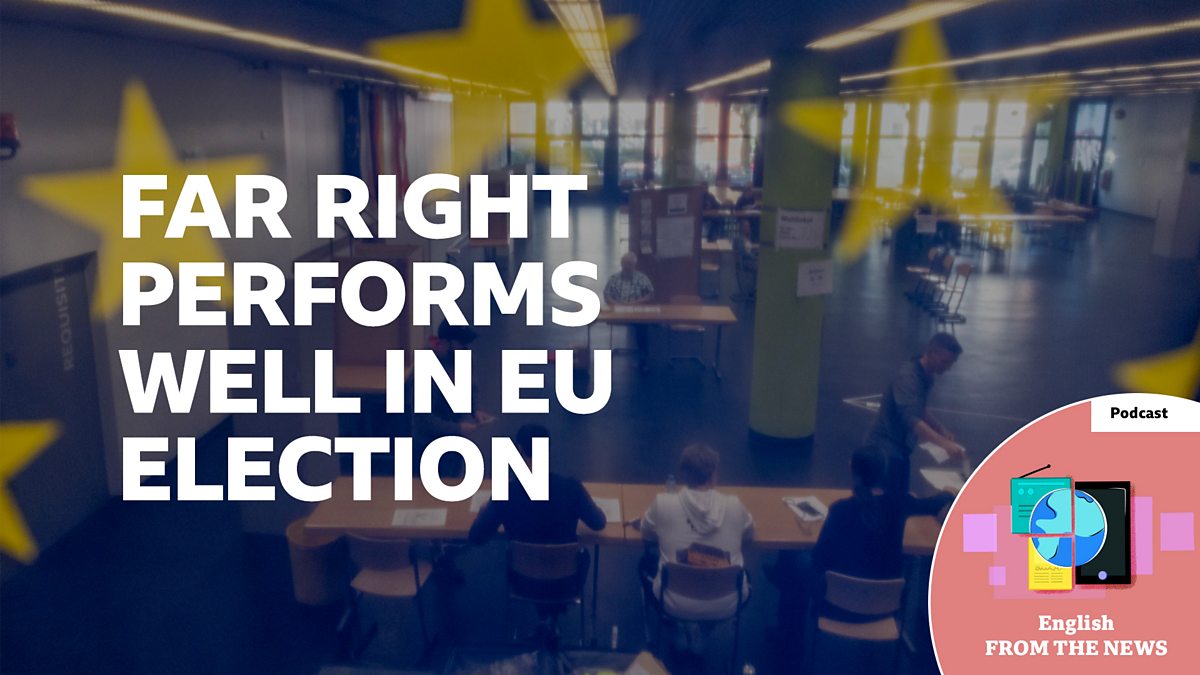
EU Election: Far Right Gains Leverage, Center Still Holds
Far-right gains in the 2024 EU vote rattled Macron and Scholz, but the real power shift was toward the center-right EPP.
Far-right parties did well in the June 2024 European Parliament election, but they did not take control of Brussels. The decisive move came in Paris, where Emmanuel Macron dissolved the French National Assembly after Marine Le Pen’s National Rally crushed his list, while the broader EU balance still left the center-right European People’s Party as the largest bloc (BBC,
DW,
France 24).
The far right won influence, not command
The power dynamic is straightforward: protest parties gained votes because inflation, migration, and climate rules were easy targets, but the European Parliament still runs on coalition arithmetic. DW’s seat projections showed the center-right EPP on 184 seats, ahead of the Socialists and Democrats on 139 and liberals on 80, while the hard-right ECR and far-right ID groups together grew but remained short of a governing majority on their own (DW). In other words, the far right improved its bargaining position without acquiring the numbers to rewrite EU policy by itself.
That distinction matters for Global Politics: the far right is strongest when it can force others to move first. On migration, green regulation, and border policy, its leverage comes less from formal control than from making mainstream parties adopt harder lines to avoid losing votes.
Macron and Scholz paid the domestic price
The clearest losers were the leaders who owned the status quo. In France, Macron’s Renaissance was decisively beaten by National Rally, prompting his snap election gamble; in Germany, Olaf Scholz’s Social Democrats suffered their worst-ever EU result, while the Greens also took a heavy hit (BBC,
BBC). That is the real political damage: voters used the European ballot to punish national incumbents, and the punishment landed hardest on centrist, pro-integration governments.
The beneficiary with the most room to maneuver is Giorgia Meloni. Her Brothers of Italy came out ahead at home, but unlike France’s National Rally or Germany’s AfD, Meloni has kept one foot inside the EU’s governing mainstream. That gives her a better trade: support for Commission priorities in exchange for influence over migration, industry, and defense. Brussels prefers her over the more disruptive nationalists because she can help assemble majorities without blowing them up (France 24,
DW).
For International, that is the key lesson: the European right is not one bloc. The radical right can block, the nationalist right can pressure, but the governing right can still pick off enough votes to stay in charge.
What to watch next
The next decision point was the French snap election on June 30 and July 7, which could turn Macron’s European setback into a national crisis if Le Pen’s camp repeats its EU performance (BBC,
France 24). In Brussels, the bigger test was whether Ursula von der Leyen could secure a second term without leaning too far right and alienating Socialists and liberals, or whether Meloni’s camp would extract a price for its support (
DW).
Discover more
India
Romanian Coalition Party Demands PM Resign
Romania's Social Democrats withdrew from coalition, joining far-right AUR to topple PM Bolojan, risking €10 billion in EU funds by August 2026.

Economics
Fed's Amex AML order puts correspondent banking on notice
Federal Reserve's Amex AML order requires board-level controls and a 90-day plan; OCC fined the bank $350 million over enterprise-wide deficiencies.

Conflict & Security
Guatemala: El Niño 2026–27 becomes regional security test
UNICEF: 25.8M children face El Niño risks in Latin America; Guatemala maps 188 municipalities for drought and food insecurity amid regional security test.

Economics
Fed's stress-test overhaul is a capital-smoothing exercise
Federal Reserve finalized stress-test overhaul: two-year averaging for bank capital buffers and public input, expected to halve volatility.