Ebola Risk in DRC Escalates to Very High
WHO warns of escalating Ebola outbreak in Congo
Model Diplomat3 min readAfrica
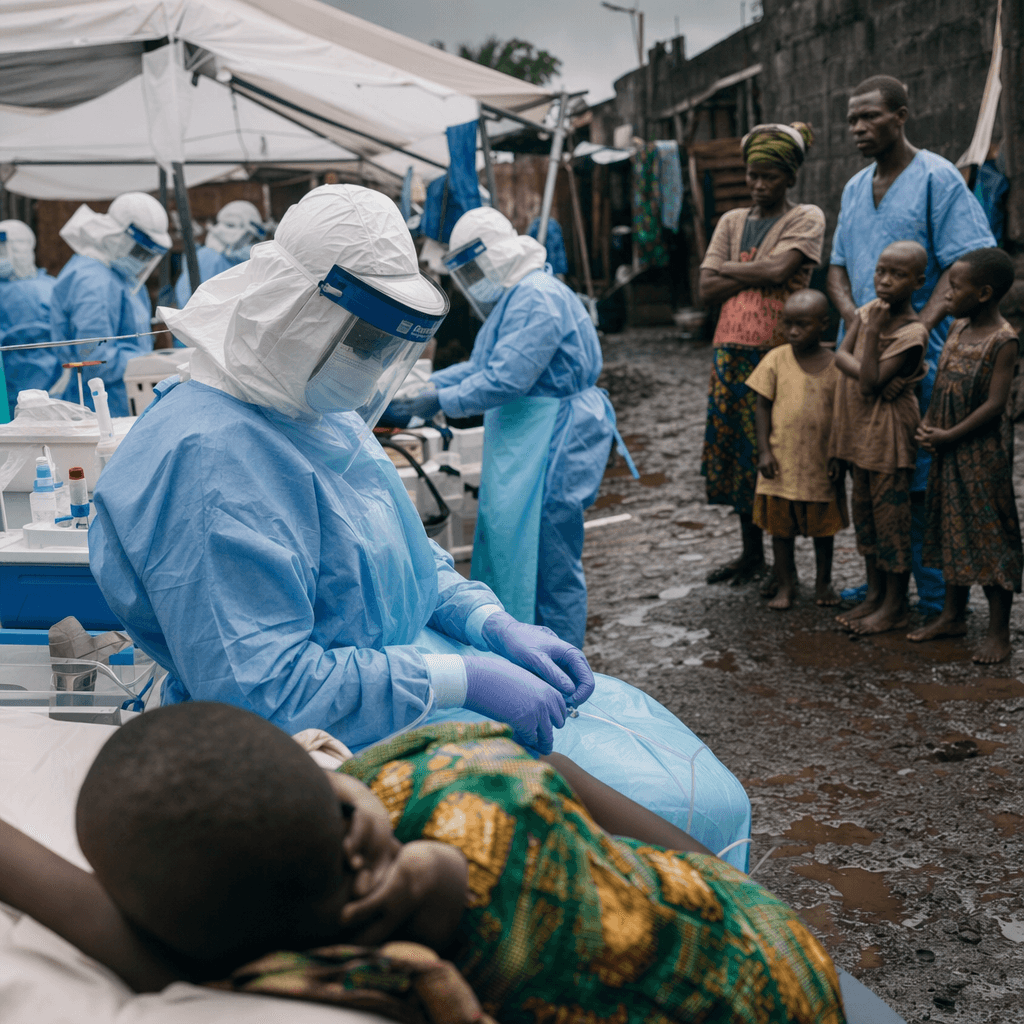
DRC’s Ebola surge is beating a broken health line
WHO has raised Ebola risk in Congo to “very high” as cases and deaths climb faster than response capacity, with insecurity and hospital overload slowing containment.
The power dynamic is straightforward: the virus is moving faster than the state can isolate it. On Friday, the World Health Organization raised the Ebola risk in the Democratic Republic of Congo from high to very high, saying there were nearly 750 suspected cases and 177 suspected deaths, with 82 confirmed cases and seven confirmed deaths so far (BBC;
Al Jazeera). The Guardian reported the human cost behind those numbers: in affected areas, residents said “every health facility said they were full” (
The Guardian).
Why this outbreak is spreading
This outbreak is centered in eastern DRC, especially Ituri and North Kivu, where health systems are thin and insecurity is constant (BBC). WHO said the strain involved is Bundibugyo Ebola, a rarer variant with no approved vaccine or treatment, which makes containment more dependent on surveillance, isolation, and safe burials (
BBC;
Al Jazeera). That is a bad fit for a region where people may die before being tested and where fear of treatment centers can outrun trust in public health.
The spread is already cross-border. WHO said Uganda has confirmed two cases in people who travelled from DRC, including one death, though the situation there is currently stable (BBC;
Al Jazeera). That matters because the outbreak is no longer just a DRC emergency; it is now a test of regional screening, tracing, and border discipline, the kind of problem tracked closely on
Conflict and
Global Politics.
The real constraint is governance, not medicine
This is why the outbreak is politically dangerous for Kinshasa. Ebola does not just kill; it exposes where the state cannot deliver basic services. Al Jazeera reported that authorities in Ituri imposed funeral restrictions, capped public gatherings, and suspended the local football league after residents torched an Ebola treatment center and clashed with police while trying to recover a body (Al Jazeera). That kind of violence tells you the response is fighting two battles at once: the epidemic and public distrust.
WHO is trying to buy time. But the BBC reported that a vaccine candidate for this strain could take six to nine months to become available, which means the immediate leverage sits with frontline containment: tracing contacts, securing burial teams, keeping clinics open, and protecting health workers (BBC). In other words, the outcome now depends less on laboratory progress than on whether local authorities can keep treatment sites functioning long enough to break transmission chains.
What to watch next
Watch the next WHO case update and, more importantly, whether suspected deaths continue to outrun confirmations in Ituri and North Kivu (BBC). If suspected numbers keep climbing while clinics remain overwhelmed, the response will shift from outbreak control to regional containment. The next decision point is whether security forces, health teams, and local officials can keep burial rules, treatment centers, and border screening in place over the coming days — or whether fear on the ground keeps doing Ebola’s work for it.
Discover more

Global Politics
US Seizes Iranian Ship, Tensions Surge
The US seizure of the Iranian ship Touska highlights a shift in control over the Strait of Hormuz, favoring Iran's strategic position.
India
Romanian Coalition Party Demands PM Resign
Romania's Social Democrats withdrew from coalition, joining far-right AUR to topple PM Bolojan, risking €10 billion in EU funds by August 2026.
Conflict & Security
Guatemala: El Niño 2026–27 becomes regional security test
UNICEF: 25.8M children face El Niño risks in Latin America; Guatemala maps 188 municipalities for drought and food insecurity amid regional security test.

Economics
Fed's stress-test overhaul is a capital-smoothing exercise
Federal Reserve finalized stress-test overhaul: two-year averaging for bank capital buffers and public input, expected to halve volatility.