Durand Line Peace Accord
A ceasefire led by tribal elders, not governments.
Model Diplomat6 min readSouth Asia
The Durand Line Peace Accord Is Tribal, Not State — And That's the Point
The only Pakistan–Afghanistan ceasefire holding in July 2026 was signed by tribal elders at Nawa Pass — not by Islamabad or Kabul. That inversion is the story.
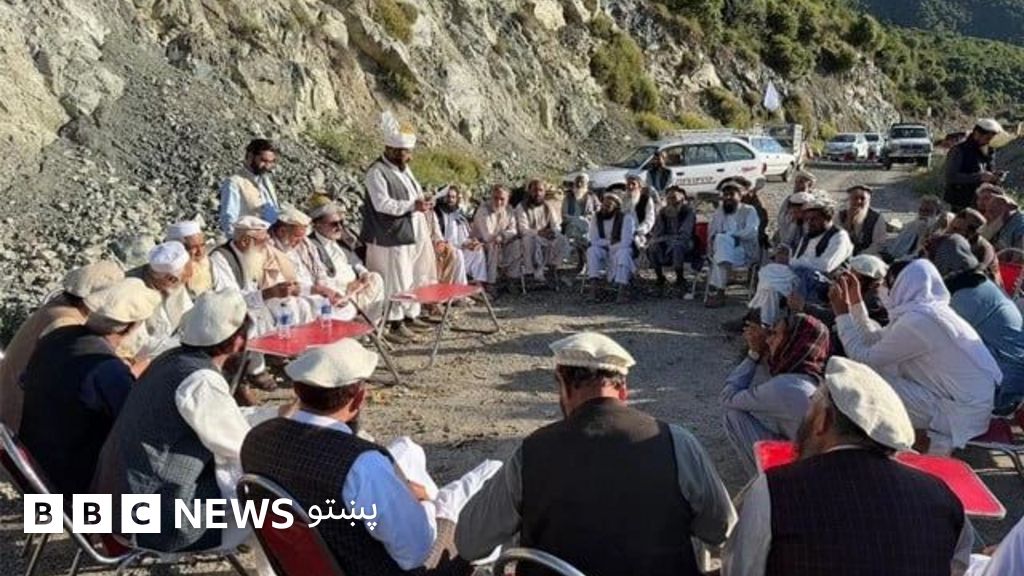
The Durand Line "peace accord" that actually holds in mid-2026 is not the Doha ceasefire, not the Istanbul mechanism, not the Urumqi understanding. It is a five-point agreement signed on May 5 by roughly 30 tribal elders from Pakistan's Bajaur district and Afghanistan's Kunar province at the Nawa Pass — a document Islamabad welcomed, Kabul refuses to touch, and that has outlasted every state-to-state framework Qatar, Türkiye, Saudi Arabia and China combined. The tribal accord is holding precisely because it is not a treaty — it commits Pashtun jirgas, not sovereigns, and therefore sidesteps the two claims that keep governments deadlocked: Pakistan's demand that the Taliban recognise the Durand Line as a border, and the Taliban's insistence that they will not.
What was actually signed, and where
The Bajaur–Kunar agreement was inked at a jirga led by Haji Lali Shah, president of the Bajaur Chamber of Commerce, and Haji Zahir Gul from Kunar. According to Dawn, which obtained a copy, the five clauses commit both sides' security forces to refrain from firing across the line, oblige the elders to resolve future disputes through consultation, and mandate a joint review after three months. A BBC Pashto report on the same document adds a striking provision: if attacks originate from the Pakistani side toward Kunar, Islamabad bears responsibility; if from Kunar toward Bajaur and Mohmand, the responsibility "shall fall on the government of the Islamic Emirate of Afghanistan" — language that quietly assigns state accountability without either state signing.
A parallel agreement between elders of Pakistan's Chitral district and Afghanistan's Nuristan province had already been finalised in mid-April, according to Kabul-based Hasht-e Subh (8am.media), which noted that the deal reopened the Kamdesh–Barg-e-Matal supply road that Pakistani soldiers had closed. Pakistan's Ministry of Foreign Affairs endorsed both pacts at its May 7 briefing, with spokesperson Tahir Andrabi saying, per
Afghanistan International, that the agreements "reflect the desire of people on both sides of the hypothetical Durand Line for peace." The word "hypothetical" is diplomatic engineering: it lets Islamabad welcome the substance of a de-escalation while the Taliban avoid saying the word "border."
Why state-level diplomacy failed
The state track has been an accumulating record of failure. A ceasefire mediated by Qatar and Türkiye was signed in Doha on October 19, 2025 by Defence Ministers Khawaja Asif and Mullah Muhammad Yaqoob; Al Jazeera reported the two sides also agreed to a monitoring mechanism to be finalised in Istanbul. That third round collapsed. Pakistan's Foreign Ministry stated on November 7 that Taliban negotiators "avoided taking any measures on ground and tried to back out of the commitments they had undertaken at the first round," according to the
MOFA statement — a rare on-the-record accusation from a mediation participant.
The break was not accidental. Pakistan's public position, as its Defence Minister told Reuters on October 20, was that "everything hinges on this one clause": a written, verifiable commitment that the Tehreek-e-Taliban Pakistan (TTP) — fighters who use Afghan territory to attack Pakistani forces — will be curbed. Kabul refused to sign such language. According to Ariana News,
Defence Minister Yaqoob said Pakistan had also proposed replacing "Durand Line" with the neutral term "border" in the text — a formulation the Taliban rejected outright. On October 19, 2025, Qatar's Foreign Ministry quietly amended its own statement to remove the word "border," according to
The Week, after Afghan objections. The mediator was drawn into semantic surgery within twenty-four hours of the signing ceremony.
Talks brokered by Saudi Arabia in early 2026, and by China in Urumqi in April, produced brief pauses that the fighting they were meant to prevent then erased. On February 27, Islamabad declared "open war" and launched Operation Ghazab-lil-Haq after the Taliban attacked Pakistani border posts, per the Council on Foreign Relations. Pakistan bombed Kabul and Kandahar. The United Nations Assistance Mission in Afghanistan recorded 372 Afghan civilians killed and 397 wounded in cross-border fighting in the first quarter of 2026 alone, a figure cited by
Al Jazeera from the UN report.
Whose control is being exposed
The Nawa Pass agreement's most consequential effect is the question it forces on Kabul. Former Afghan president Hamid Karzai publicly criticised the tribal pacts, warning that Pakistan is engineering "de facto recognition" of the Durand Line by routing negotiations through jirgas, according to Hasht-e Subh. But the Taliban's silence reveals more. The Islamic Emirate has neither endorsed nor rejected the Kunar and Nuristan agreements, even though the jirga text asserts they were held "with the permission" of both governments. Hasht-e Subh analyst Kiomars Samadi puts the dilemma plainly: either the Taliban approved tribal negotiations with a foreign state they were unable to conduct themselves — an admission of diplomatic incapacity — or elders acted without authorisation and Kabul lacks the writ to stop them.
Pakistan's ambivalence is equally telling. Islamabad welcomed the deals in the same breath that it kept insisting only a written, state-level TTP guarantee will produce a real ceasefire. The Observer Research Foundation notes that TTP attacks killed more than 2,400 Pakistani security personnel in 2025 — the highest annual toll in a decade — while
CFR puts the broader Pakistani death toll at over 1,200 civilians and personnel that same year. The Institute of Strategic Studies Islamabad, in its
June 2026 issue brief, calls the current escalation "one of the most serious since October 2025." Elders cannot deliver a TTP crackdown. What they can deliver is the local silence that lets shops reopen and roads clear — and, according to a copy of the deal obtained by
BBC Pashto, a schedule for the jirga to reconvene every three months to enforce it.
The historical parallel Islamabad would rather forget
This is not the first time Pakistan has traded a tribal pact for a fighting truce it could not otherwise get. In 2007, per Al Jazeera archives, elders of Bajaur's Mamound tribe signed a verbal agreement not to harbour foreign militants — one of a series of pacts that Pervez Musharraf defended and that US officials later concluded had allowed fighters to cross the border more freely. Farooq Yousaf, writing in
Third World Quarterly, documents how successive Pakistani states have oscillated between empowering the jirga as a counter-insurgency tool and dismantling it when it produced outcomes the establishment could not control. The current wager runs the same risk in reverse: elders in Bajaur and Kunar have every incentive to keep roads open and traders moving, but no capacity to deliver the one thing Islamabad publicly says it wants — verifiable Taliban action against the TTP.
The Middle East Institute's Durand Line assessment frames the underlying asymmetry: for Kabul the line is "an existential" grievance embedded in Pashtun geography; for Islamabad it is a "settled" security perimeter. The tribal accords resolve nothing at that level — and they are designed not to.
What to watch next
- August 5, 2026. The three-month review window written into the Bajaur–Kunar agreement falls due. A quiet, unphotographed reconvening of the jirga would signal the model is being institutionalised; a no-show would confirm it was a photo op.
- The next Karachi- or Islamabad-scale TTP attack. Pakistan's response to the June 27 Karachi paramilitary strike was air raids on Paktia, Paktika and Kunar that, per the
BBC, killed 28 civilians by UN count. Another urban attack will test whether Islamabad honours the tribal ceasefire in Kunar even as it strikes elsewhere in Afghanistan.
- Chinese mediation. The NUS Institute of South Asian Studies published a
July 2, 2026 assessment arguing Beijing is now the most consequential external mediator, given its CPEC exposure. Any resumption of Urumqi-format talks will show whether the tribal track is a substitute or a supplement.
- Kabul's public position. The Taliban have not officially responded to either the Chitral–Nuristan or the Bajaur–Kunar pact. Silence past the August review window will be read as tacit endorsement — and, by Karzai's logic, as a de facto concession Islamabad has been seeking since 1947.
The Bottom Line
The Durand Line accord functioning in July 2026 was signed by tribal elders because no government could sign it. Pakistan gets a quiet border without conceding its demand for a written TTP crackdown; the Taliban get de-escalation without conceding recognition of the line. The cost is that neither party controls what happens next — and the last time Islamabad outsourced its western frontier to jirgas, it took a decade and 60,000 Pakistani lives to claw the border back.
Discover more

International Relations
Pakistan's Key Role in US-Israel-Iran Meddle
Pakistan is seeking to mediate the US-Israel-Iran conflict, balancing high-stakes diplomacy against severe economic pressures and steep regional challenges.

Conflict & Security
Drone Warfare Killing Aid Workers at Unprec
Over 1,000 humanitarian workers killed in three years as cheap armed drones collapse legal protections. Gaza, Sudan, Ukraine, and DRC see deliberate targeting of aid convoys and hospitals with zero prosecutions.
Global
World Normalises Taliban as Afghan Women Eras
UN data shows Afghan women erased from public life as Russia recognises the Taliban, EU hosts officials in Brussels, and ICC warrants for gender persecution go unenforced.
Conflict & Security
West Africa Food Crisis: Three Shocks in 2026
Conflict, climate extremes, and the Strait of Hormuz closure drive a severe food crisis in West and Central Africa, with fertilizer prices surging 80% and millions displaced.