DRC’s World Cup entry hinges on Ebola compliance
US health screening now controls Congo’s path to the 2026 World Cup, forcing FIFA and Kinshasa into a tightly managed Europe-to-Houston pipeline.
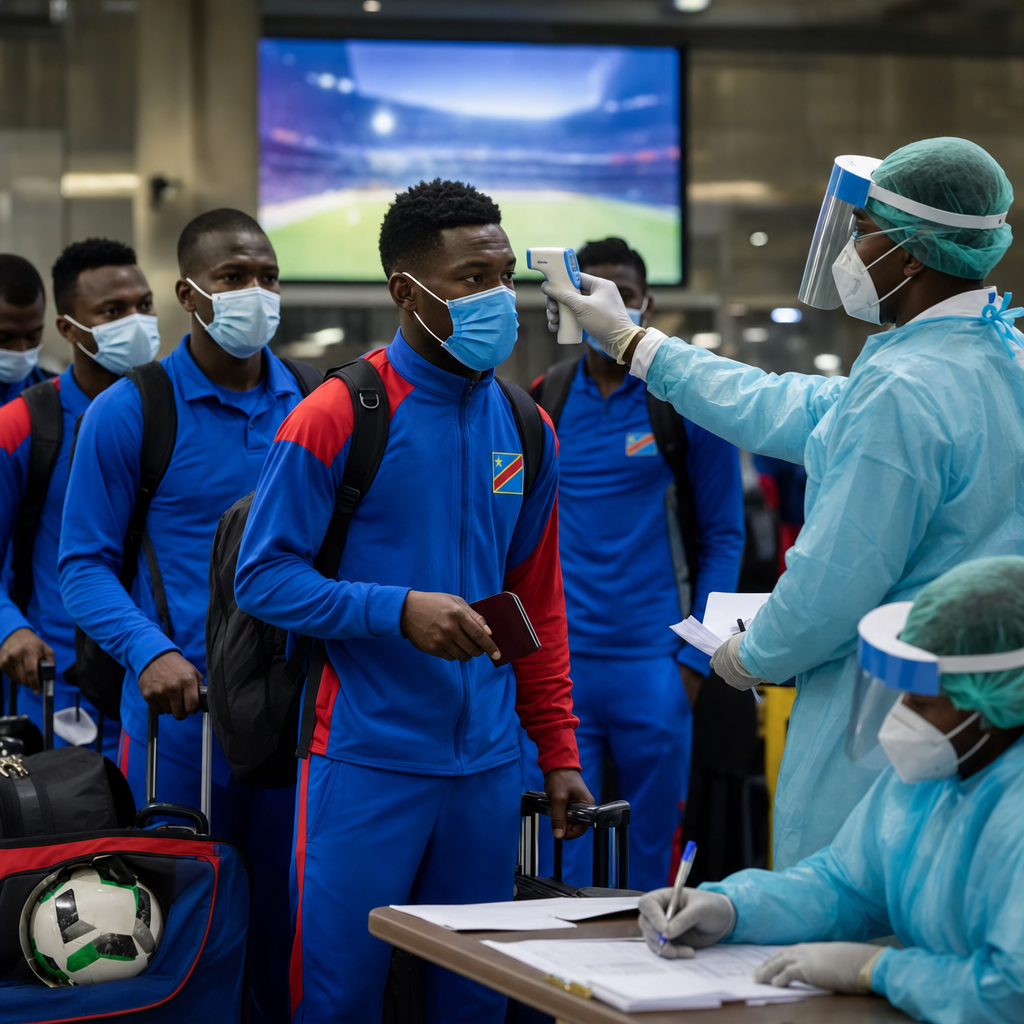
The Democratic Republic of Congo said its national federation and FIFA have confirmed the World Cup delegation is compliant with U.S. Ebola-related protocols, removing the immediate risk to its place in the tournament,  Reuters reported. The key lever is Washington: U.S. officials had told Congo the squad must keep a 21-day “bubble” in Europe before travelling, after the Ebola outbreak at home triggered tighter entry rules,
  BBC Sport and
  Al Jazeera reported.
Washington has the stronger hand
This is not really a football dispute; it is a border-control problem dressed up as one. The U.S. can set the terms because the tournament’s first phase runs through its territory, and Congo needs access to Houston for its opening game against Portugal on 17 June, Reuters said. Andrew Giuliani, the White House World Cup task force director, said the team had to preserve the integrity of its bubble or risk being denied entry, BBC Sport reported.
That puts Congo in a narrow lane: keep the squad outside the outbreak zone, keep the delegation clean under U.S. health rules, and keep FIFA onside. Reuters said the federation cancelled a Kinshasa training camp and moved preparations abroad, with most players already based in Europe, reducing the exposure risk and making compliance easier to prove. In effect, the U.S. has outsourced the safety burden to Congo’s federation and FIFA.
Congo gains access, but fans and officials lose flexibility
For Kinshasa, the upside is obvious: the team keeps its first World Cup berth in 52 years. But the price is loss of autonomy. The squad’s pre-tournament plans have been rewritten around U.S. public health rules, and Reuters noted that discussions were under way with FIFA about refunds for ticket-holders who have not been able to secure U.S. visas because of administrative restrictions, Reuters reported.
That matters beyond football. FIFA wants the tournament to proceed without a health scare or a diplomatic fight; Washington wants to show it can protect the event without appearing to single out Congo unfairly; and Congo wants to preserve a rare moment of national visibility. The arrangement serves all three — but only if the bubble holds.
What to watch next
The next decision point is simple: whether Congo’s delegation stays inside the approved European quarantine window through its 11 June departure date, as U.S. officials have required, Al Jazeera reported. If any staff movement from Kinshasa or any breach of the protocol occurs, the U.S. still has the power to complicate or block entry.
The more immediate political signal is whether FIFA treats this as a one-off public-health exception or a template for future travel rules at the World Cup. If it is the latter, the host governments — not the federation — will be the real arbiters of who gets to play. For more on the geopolitical side of sport, see  Global Politics and United States.