Ex-Judges Urge Court to Investigate Trump IRS
Former judges challenge Trump's IRS settlement deal.
Model Diplomat3 min readNorth America
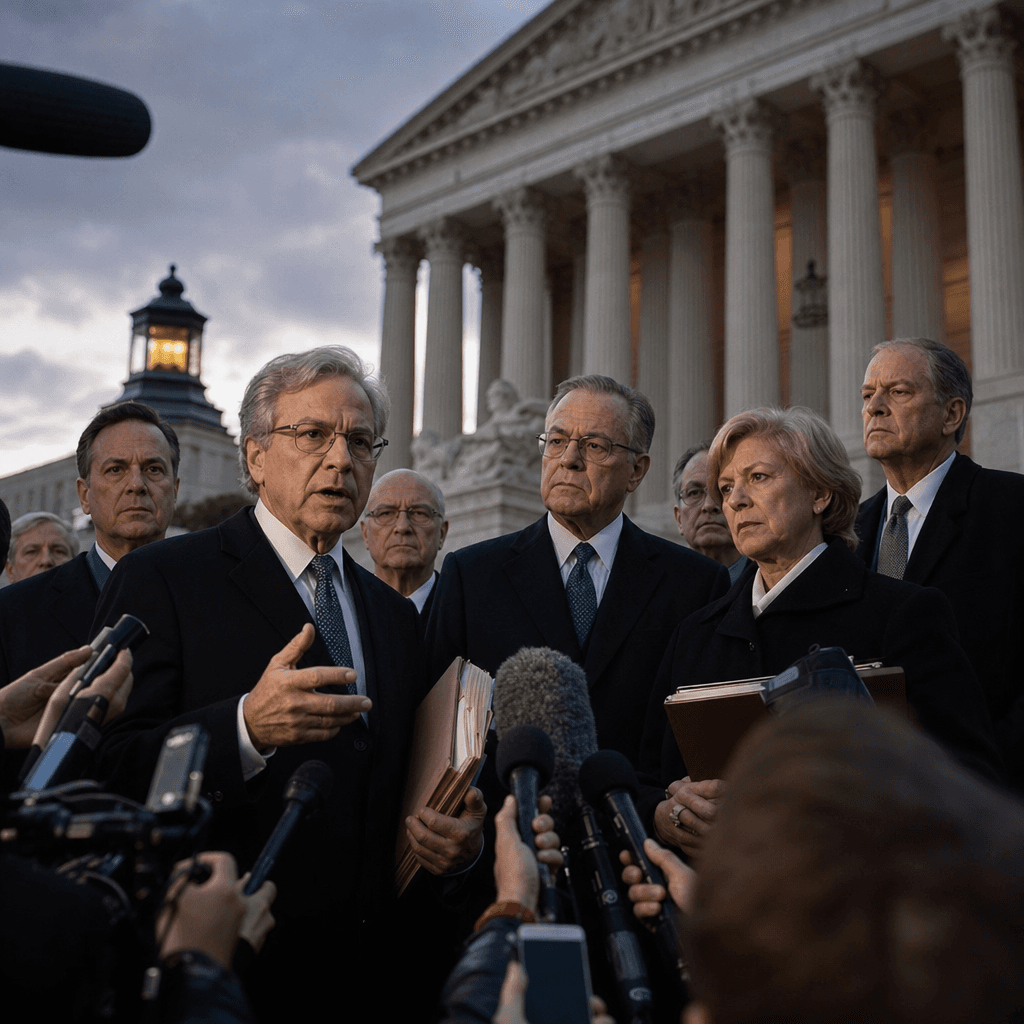
Ex-Judges Push Court to Probe Trump’s IRS Settlement
The former judges say DOJ concealed a deal that shielded Trump from IRS scrutiny and created a $1.776 billion claims fund for allies.
A bipartisan group of more than 30 former federal judges is asking U.S. District Judge Kathleen Williams to reopen Donald Trump’s withdrawn IRS lawsuit and investigate whether the Justice Department misled the court when it struck the settlement, The Hill reported. The judges argue the government “deceived” Williams by announcing a deal after Trump’s lawyers had moved to dismiss the case without disclosing it, and that the agreement threatens confidence in the courts. A separate
Washington Post report said the former judges want the court to probe whether the settlement was effectively a fraud on the tribunal.
What Trump gained
Trump’s leverage was simple: he filed a sprawling January suit over the leak of his tax returns, then used the case to force a settlement that did far more than end litigation. Under the deal described by The Hill and
Bloomberg, Acting Attorney General Todd Blanche agreed to bar the IRS from auditing Trump, his family, or their businesses’ prior returns and to halt existing or potential tax matters tied to them. That is a major win for a president who oversees the executive branch but was suing one of its agencies.
The political payoff is even broader. The DOJ also created a $1.776 billion “anti-weaponization” fund that can award money and formal apologies to people who claim the federal government wronged them, according to The Hill and
Bloomberg. That gives Trump and his Justice Department a new distribution mechanism with obvious political upside: it can reward allies, energize his base, and reframe his legal fights as evidence of state persecution. It also shifts the fight from tax enforcement into the more explosive arena of grievance politics, which is why
US Politics watchers should treat this as a test of institutional discipline, not just a tax dispute.
Why the judges are pushing back
The former judges are trying to reclaim the court’s authority before the settlement hardens into precedent. Their core claim is not about Trump’s taxes alone; it is about whether the executive branch can use a litigation settlement to rewrite future enforcement rules for a sitting president and his family. The Hill said the judges argued the arrangement “threatens to undermine confidence in the administration of justice,” while the
Washington Post reported that they want Williams to reopen the case to examine whether the court was deceived.
That matters because Williams had already raised questions about whether Trump could sue his own government when the named defendant agencies were answerable to him. Bloomberg reported on May 19 that she closed the case only after the DOJ announced the settlement and Trump moved to drop the suit, which made the judges’ filing this week a direct challenge to the legitimacy of that closure. If Williams grants the request, the court could shift from passive recipient of a settlement to investigator of the settlement process itself.
What to watch next
The next decision point is Williams’s response. If she reopens the case, the immediate question will be whether DOJ lawyers can defend both the legality of the anti-weaponization fund and the claim that the settlement was negotiated at arm’s length. If she refuses, the deal stands as an aggressive model for executive settlement power, with United States tax enforcement and the broader administrative state left to absorb the precedent.
Watch for three things: whether the court orders a hearing, whether Senate Finance Committee Republicans join Democrats in scrutinizing the fund, and whether any claimant starts filing under the new program. The legal fight is now about more than Trump’s taxes; it is about who can use the machinery of federal justice to create political and financial leverage.
Discover more
Conflict & Security
De la Espriella's Razor Win Resets US-Colomb
De la Espriella's razor-thin election win signals a reset in US-Colombia relations, reshaping security ties and the agenda under a Trump-aligned approach.
International Relations
Colombia's Razor-Thin Rightward Pivot
Colombia swings right as Abelardo de la Espriella narrowly wins the presidential runoff by under one percent, exposing a deeply divided and polarized nation.
Global Politics
Iran Demands US Enforce Ceasefire
Iran insists the United States must enforce a ceasefire in Lebanon to uphold the memorandum of understanding, raising pressure on Washington and Netanyahu.

Conflict & Security
Trump's Iran Deal Faces Bipartisan Backlash
Trump's Iran deal draws fierce criticism from both Republicans and Democrats, exposing deep political divides over the ceasefire and the terms of the agreement.