Doval-Wang Yi Meeting: India, China Border
India and China emphasize border stability for trust-building.
Model Diplomat3 min readAsia
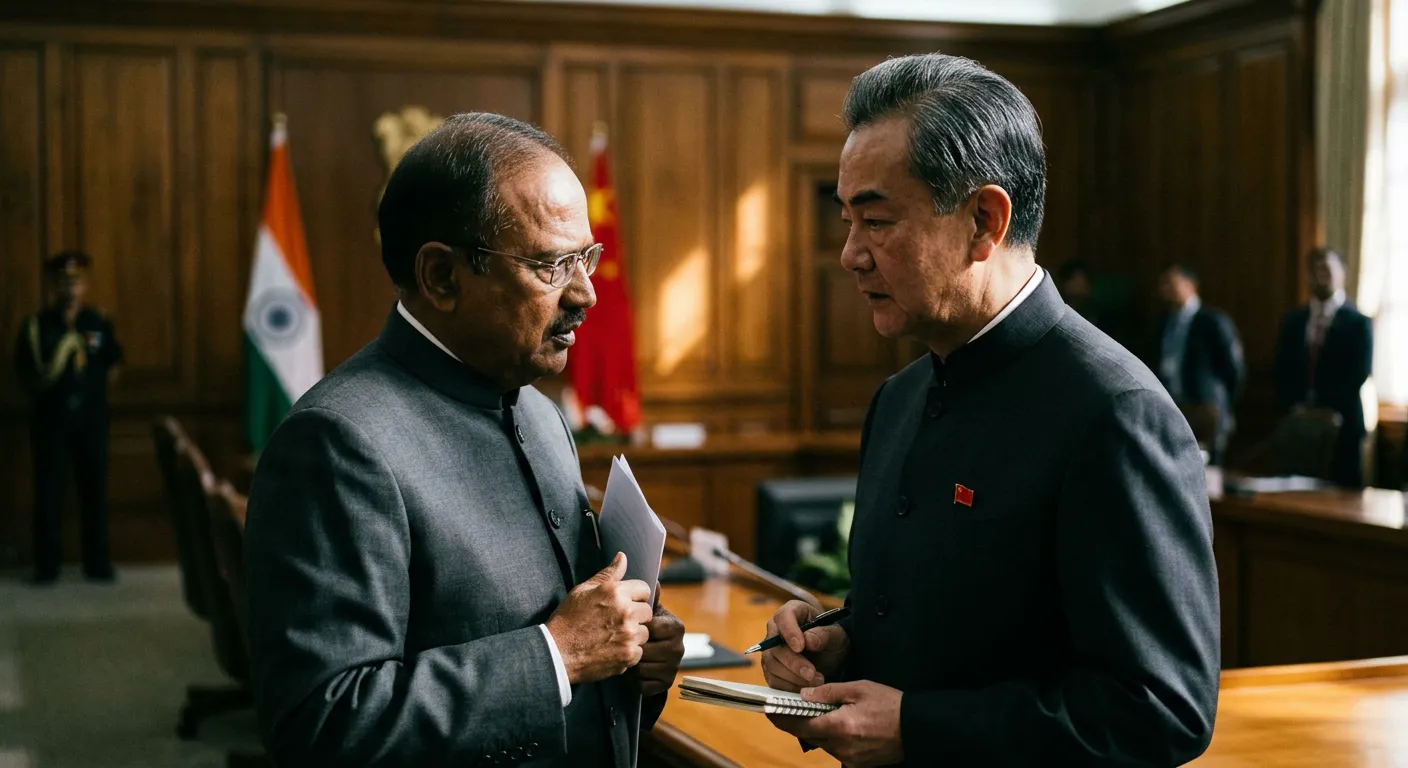
Doval-Wang Yi Meeting: India, China Frame Border Reset as Prerequisite for Trust
National Security Advisor Ajit Doval and Beijing's top diplomat emphasize that LAC stabilization must come before deeper cooperation.
India and China have signaled a recalibration of their diplomatic approach to bilateral ties, but with the border squarely placed as the condition for trust-building rather than the outcome. During a meeting on the sidelines of the BRICS National Security Advisors gathering in Johannesburg on Monday, NSA Ajit Doval told Chinese Foreign Minister Wang Yi that six years of military standoff along the Line of Actual Control since 2020 "eroded strategic trust and the public and political basis of the relationship."
The framing is calculated: Doval did not dispute the value of deeper engagement—he conditioned it. According to India's Ministry of External Affairs, the NSA emphasized "the importance of continuing efforts to fully resolve the situation and restore peace and tranquility in the border areas, so as to remove impediments to normalcy in bilateral relations." Stable borders are now explicitly presented not as a byproduct of trust, but as the prerequisite for it.
This reverses the traditional order of diplomatic negotiation. Rather than building confidence through trade and cultural exchange before tackling hard security issues, India is signaling that the bilateral relationship cannot be normal unless there is peace in the border area—a position External Affairs Minister S. Jaishankar has described as the most complex challenge of his diplomatic career.
China's Countermove: Compartmentalization
Beijing is pushing back with a softer framing. Wang Yi told Doval that the two sides should "place the boundary question in an appropriate position and prevent it from affecting the overall development of bilateral relations," effectively arguing for compartmentalization—a chance to proceed on trade, dialogue mechanisms, and economic cooperation while border talks continue separately.
China's position is strategically coherent: Wang emphasized that dialogue mechanisms should be restored and exchanges in trade, finance, and law enforcement expedited, framing incremental pragmatism as sufficient momentum to build "strategic mutual trust" over time. He also called on both countries to "actively guide various sectors of society toward a correct understanding of each other," suggesting Beijing sees public opinion and business pressure as levers to drive normalization despite security stalemate.
The catch: India has consistently rejected decoupling. New Delhi views border stability as non-negotiable before normalcy can be achieved, giving it structural leverage if it maintains discipline in this position.
What to Watch
The next test is the 24th round of Special Representative talks. Doval noted during the meeting that he looks forward to hosting Wang Yi for these discussions at a mutually convenient date. These talks—the formal mechanism for border dialogue—will signal whether either side has yielded on the sequencing question: does LAC stability unlock cooperation, or does cooperation gradually normalize the LAC?
The timing matters. India chairs BRICS this year, and China has positioned itself as a willing supporter. That mutual interest creates incentive for atmospherics, but atmospheric statements alone will not shift the fundamental calculation on either side of where leverage lies.
Discover more

India
India-South Korea $50B Trade Expansion Plan
India and South Korea target $50 billion in bilateral trade by 2030, focusing on industrial cooperation and strategic alignment amid US pressures.
India
CPI(M) Calls to Decouple Quota from Delimita
CPI(M) advocates for a 33% women's quota in Lok Sabha by 2029, removing the need for delimitation and census linkage.
India
UN Expert Albanese: India Violates Law
UN Rapporteur Francesca Albanese accuses India of breaching international law, spotlighting human rights concerns in Kashmir and prompting diplomatic pushback.

Conflict & Security
Drone Warfare Killing Aid Workers at Unprec
Over 1,000 humanitarian workers killed in three years as cheap armed drones collapse legal protections. Gaza, Sudan, Ukraine, and DRC see deliberate targeting of aid convoys and hospitals with zero prosecutions.