Democrats Highlight 600,000 Deaths from USAID
Vought faces tough questions on USAID cuts and preventable deaths.
Model Diplomat4 min readNorth America
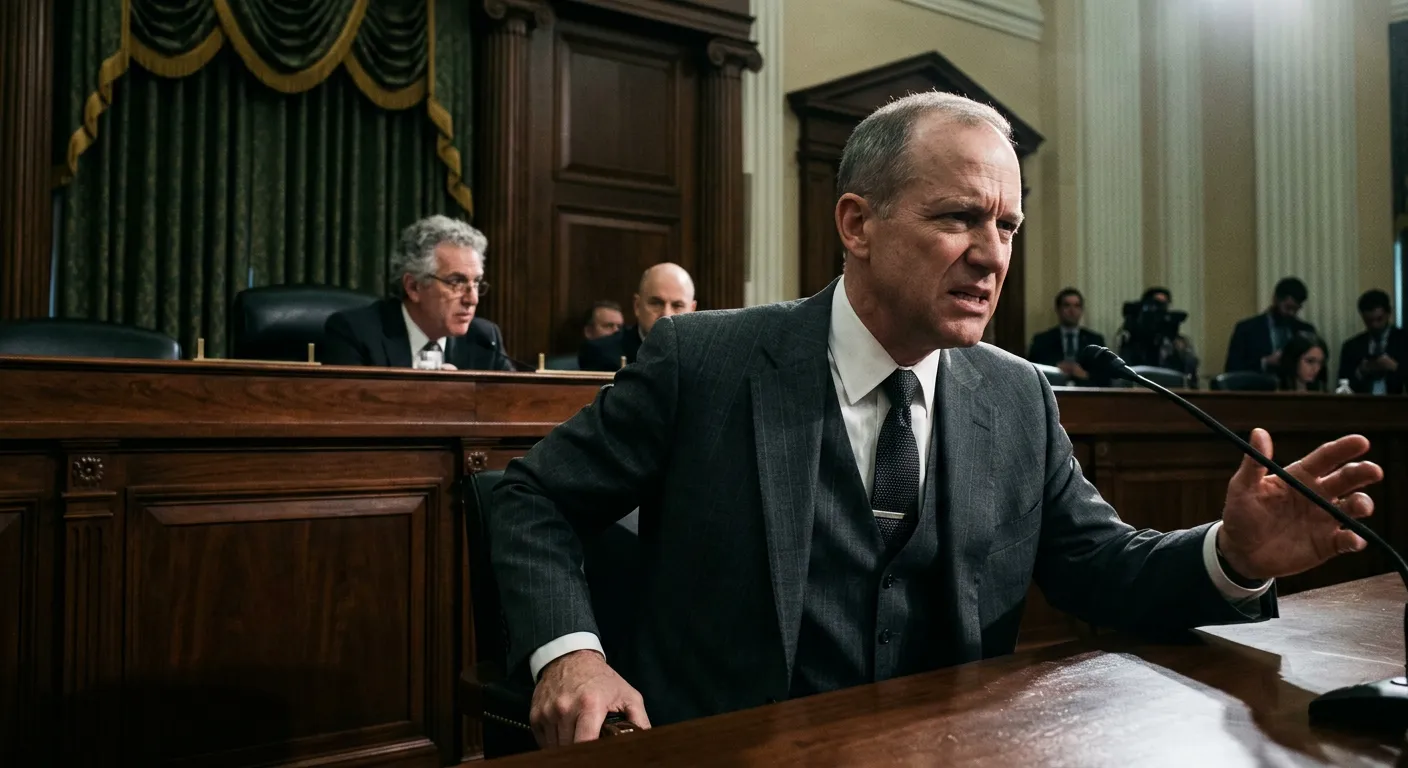
Vought Faces the Death Toll: Democrats Put a Number on USAID Cuts
OMB Director Russell Vought clashed with House Democrats who cited 600,000 "entirely preventable" deaths — and declined to answer whether that was morally wrong.
Office of Management and Budget Director Russell Vought appeared before the House Appropriations Subcommittee on Financial Services and General Government on Tuesday, and Democrats came armed with a figure they intend to make stick: 600,000 deaths. The estimate, drawn from a House Oversight Committee Democratic report, attributes that toll to the administration's dismantling of the U.S. Agency for International Development. The exchange that followed was the most personal confrontation Vought has faced in months of budget hearings — and it previewed the Democratic strategy heading into this fall's spending fight.
Rep. Mark Pocan (D-Wis.) opened the attack directly. "Isn't it wrong to facilitate the death of children?" he asked, pointing to studies linking USAID program terminations to preventable fatalities. The Hill reported that Vought rejected the premise outright, calling it slander and insisting the administration bears no responsibility. When Pocan pressed — "morally, ethically, or biblically" — Vought declined to answer.
The exchange was not rhetorical excess without a factual anchor. The Lancet medical journal published a peer-reviewed study estimating USAID cuts could result in 14 million preventable deaths by 2030, including 4.5 million children. NPR reported that the study analyzed demographic and mortality data from 133 countries and concluded high levels of USAID funding were associated with a 15% reduction in deaths from any cause — and 32% for children under five. USAID has now been shuttered as an independent agency, its remnants folded into the State Department, with more than 80% of its programs terminated.
Republicans close ranks around Vought
Subcommittee Chair Dave Joyce (R-Ohio) cut in to end the Pocan exchange: "I believe he answered the question. You just don't like the answer." Pocan shot back, "Mr. Chairman, you can answer your own questions and get your own answers." The moment captured the procedural asymmetry: Republicans control the gavel and can shield the witness; Democrats control the moral framing and intend to amplify it.
Rep. Chuck Edwards (R-N.C.), a member of the committee overseeing USAID's budget, later told Vought he took the earlier treatment "personally" and called it "disrespectful," offering Vought a reset to defend the administration's record. Vought used it to argue the president "cares greatly about continuing to fund areas where we can be effective" — without naming specific lifesaving programs preserved.
The dynamic echoes earlier hearings. When Vought testified before the Senate Appropriations Committee in June 2025, Sen. Mitch McConnell — the former Republican leader — warned that the administration's approach to aid cuts had been "unnecessarily chaotic" and had "created vacuums for adversaries like China to fill." NPR reported that exchange. Those intra-party fissures were absent on Tuesday. House Republicans presented a unified front.
The constitutional fight underneath
The hearing was not only about aid. Rep. Rosa DeLauro (D-Conn.), ranking member of the full Appropriations Committee, closed with a constitutional challenge. "The Constitution says that the appropriations process is the power of the purse. You are ignoring that," she said. "No president has the right to just violate the United States Constitution."
This is where the confrontation connects to the larger appropriations calendar. Vought's testimony comes as Congress braces for another potential government shutdown this fall, with the Sept. 30 funding deadline approaching. Al Jazeera reported that the White House recently requested an additional $87.6 billion in spending, primarily for the Iran war effort — a request that requires precisely the kind of bipartisan cooperation Vought has dismissed as unnecessary.
Vought's stance on earmarks offered one tactical concession: he assured lawmakers that congressional earmarks would be protected under new grant rules, saying an earmark to "a specific person or a specific organization" would "probably be at the top of the list." That carve-out is a pressure-release valve for individual members — but it does nothing to address the broader separation-of-powers question DeLauro raised.
What to watch
The Democratic strategy is now clear: humanize the cuts with a death toll and force Republicans to defend the indefensible on camera. The 600,000 figure will recur in every markup, every floor speech, and every campaign ad through November. The administration's response — deny causation, refuse the moral question, pivot to "waste and abuse" — held Tuesday. Whether it holds under repeated application is a different question. Watch for whether any House Republican from a swing district begins to echo the McConnell-style critique that cost is being imposed without strategic benefit — and whether Vought's next rescission package, which he has already told reporters is "likely" coming, gives them a reason to break ranks.
Discover more

US Politics
US Military Strikes Drug Traffickers Pacific
A U.S. military strike in the eastern Pacific killed two amid an anti-drug trafficking campaign, raising questions over sovereignty and regional cooperation.

India
Yamini Aiyar on Modi's Federalism Shift
Yamini Aiyar critiques Modi's shift from equity-based to performance-based federalism, highlighting implications for India's political landscape.

International Relations
U.S.–Iran Peace Deal
A narrow US-Iran deal on nuclear and regional issues could reshape Middle East diplomacy, offering a pragmatic path forward despite grand bargain obstacles.

Economics
Fed's Amex AML order puts correspondent banking on notice
Federal Reserve's Amex AML order requires board-level controls and a 90-day plan; OCC fined the bank $350 million over enterprise-wide deficiencies.