US Military Strikes Drug Traffickers Pacific
U.S. military targets drug smuggling in the Pacific Ocean
Model Diplomat3 min readEastern Pacific
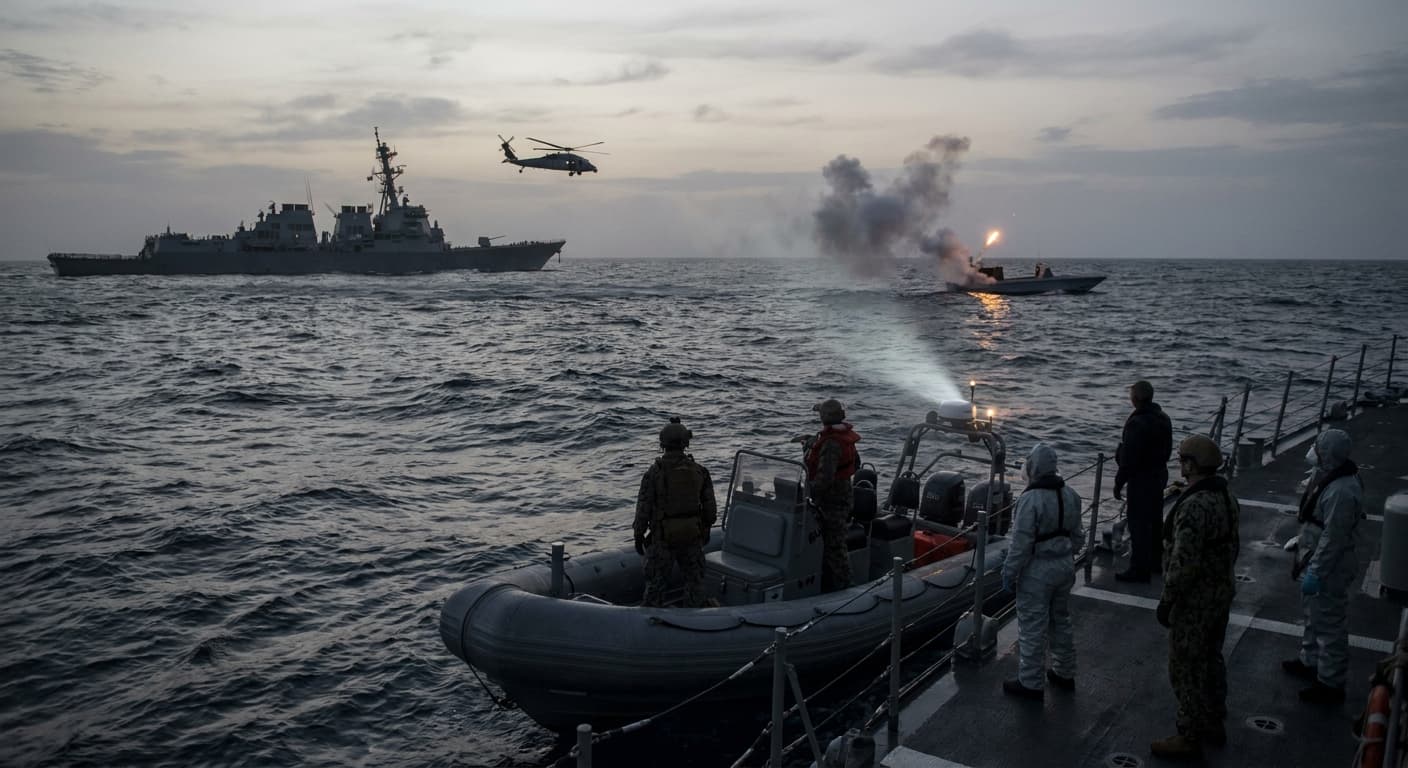
US Military Boat Strike in Eastern Pacific Kills Two Amid Anti-Drug Campaign
The U.S. military’s latest strike on a drug-trafficking vessel highlights a sustained, aggressive campaign by Southern Command targeting maritime narcotics smuggling in the Pacific.
U.S. military officials announced April 17, 2026, that a strike in the eastern Pacific Ocean killed two people aboard a boat accused of drug trafficking. This follows consecutive days of similar strikes in a seven-month-long operation by U.S. Southern Command (SOUTHCOM), part of an intensified effort to disrupt organized drug-smuggling networks exploiting the eastern Pacific maritime routes.
Why the Eastern Pacific Matters in the Drug War
The eastern Pacific Ocean has become a critical chokepoint for drug traffickers moving narcotics—primarily cocaine—northward from South America to markets in the United States. Unlike the Caribbean, which has seen increasing law enforcement pressure and interdiction successes, traffickers have shifted to faster, less conspicuous vessels operating in the vast expanse of the eastern Pacific. This puts pressure on the U.S. military, Coast Guard, and regional partners to coordinate maritime patrols and interdiction efforts over extensive and difficult-to-monitor ocean areas.
The recent strike killing two people aboard a suspected trafficking boat is neither isolated nor random. It's part of a systematic campaign SOUTHCOM launched in late 2025, aiming to directly target smuggling boats before they reach the U.S. coastline or pass drugs to Central American intermediaries. The campaign leverages intelligence sharing, aerial surveillance, and naval firepower—a clear escalation from the traditional law enforcement interdiction model. The strikes in early April follow a pattern of sustained pressure that signals the U.S. commitment to “defend the drug supply chain upstream,” reducing narcotics inflow by cutting it off in open waters.
Regional and Political Stakes
This military approach to drug interdiction, including the use of lethal force in international waters, raises delicate questions about sovereignty and regional cooperation. Latin American governments have broadly supported stronger action against drug cartels, but there remains a cautious stance on how far the U.S. military should operate within or near their waters.
Moreover, the intensification of these strikes under the Biden administration, which contrasts somewhat with earlier Trump-era rhetoric that centered on border walls and harsher domestic enforcement, signals a nuanced pivot toward confronting the drug challenge at its maritime source. However, these operations must balance aggressive tactics with diplomatic finesse to avoid escalating tensions with key regional partners.
What to Watch Next
-
Escalation or Backlash: Renewed use of military force off the Latin American coast risks inciting pushback from drug cartels—potentially triggering more violent responses or alternative smuggling routes—and from regional governments concerned about sovereignty.
-
Legal and Human Rights Scrutiny: The kill count and identification of vessels will attract scrutiny from human rights and international law advocates, particularly regarding the criteria for lethal force at sea and potential civilian casualties.
-
Impact on U.S. Drug Flows: Analysts will watch data on cocaine and other narcotics seized or prevented from reaching U.S. shores to measure operational effectiveness. A sharp decline could bolster support for this naval strategy; negligible change would invite calls for reassessing the approach.
-
Political Messaging: These military actions provide fodder for both supporters and critics in U.S. politics. They reinforce the administration’s resolve against drug trafficking but could also be framed by opposition as militarization of drug policy.
This strike marks a tactical milestone in evolving U.S. drug interdiction strategy, blending military assets with law enforcement goals to wrest control from increasingly sophisticated maritime traffickers. Its success and cost—human, political, and diplomatic—will shape the contours of America’s drug war in the crucial maritime domain for years to come.
For deeper context, see our coverage on United States' counter-narcotics policies and
Global Politics of drug trafficking.
Sources:
Discover more

US Politics
House Vote on Trump Iran Strikes Reveals Divs
The House narrowly declined to block Trump from striking Iran, a close vote that laid bare deep partisan divides over war powers and U.S. military action.
US Politics
House Rejects Resolution on Trump's Iran Host
The House voted down a resolution to limit Trump's military actions in Iran, laying bare partisan divides and reigniting debate over presidential war powers.

Global Politics
Lebanon Ceasefire Amid US Blockade on Iran
Israel and Lebanon entered a 10-day ceasefire as a U.S. naval blockade on Iran took hold, sharply escalating tensions across an already volatile Middle East.

Economics
Fed's Amex AML order puts correspondent banking on notice
Federal Reserve's Amex AML order requires board-level controls and a 90-day plan; OCC fined the bank $350 million over enterprise-wide deficiencies.