Delhi Liquor Case
Court discharges Kejriwal in excise policy case, but political fallout remains.
Model Diplomat8 min readAsia
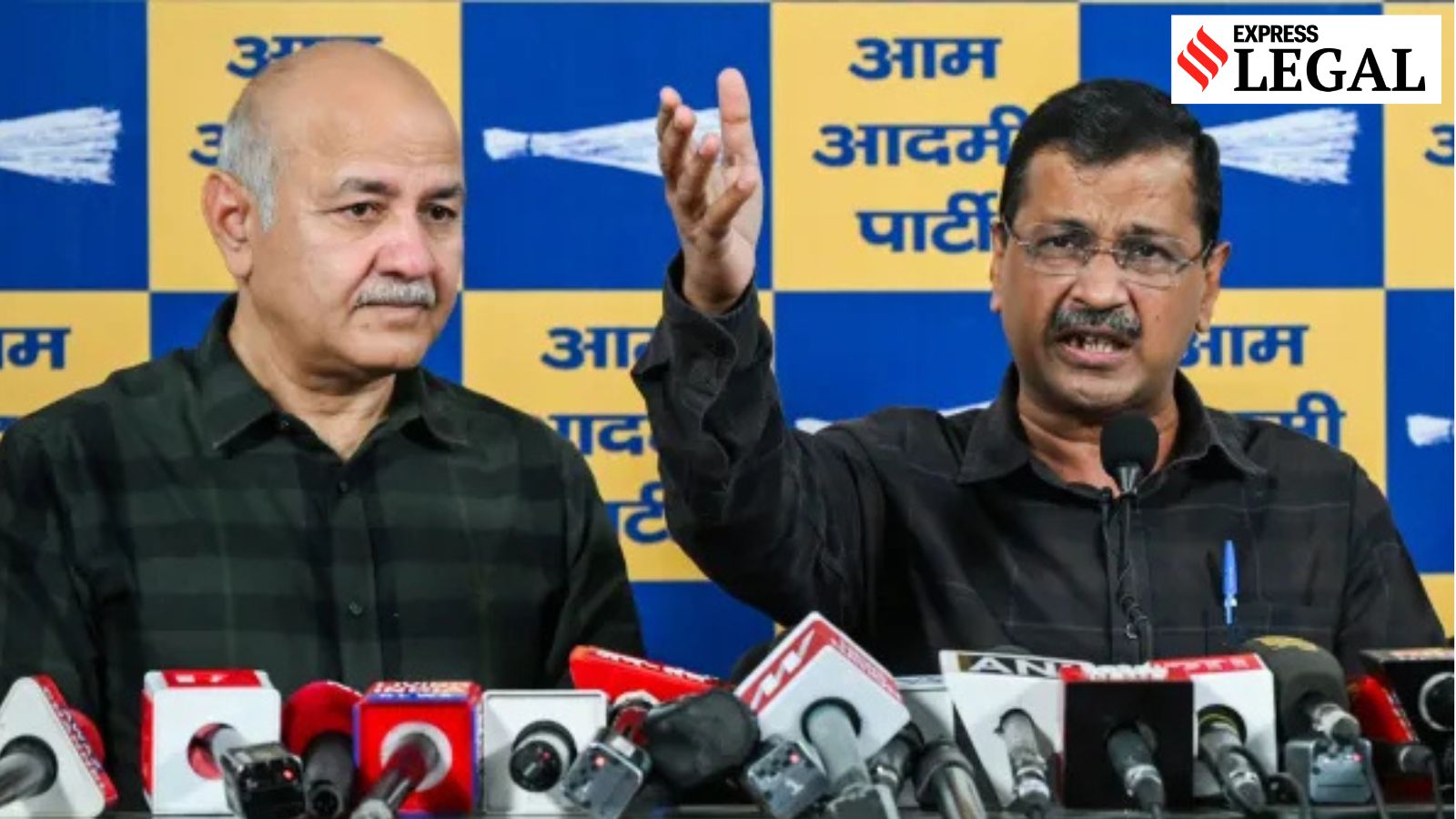
Delhi Liquor Case: Court Clears Kejriwal, But Damage Done
The Rouse Avenue court discharged Arvind Kejriwal and 22 others in the Delhi excise policy case on Feb 27, 2026 — a legal win that arrived after the political damage was done.
Special Judge Jitendra Singh's 549-page order discharging Arvind Kejriwal, Manish Sisodia, BRS leader K Kavitha and 20 others on February 27, 2026 is a legal vindication — but the more consequential story is that it dismantled the evidentiary template India's central agencies have used against opposition politicians since 2022. The Aam Aadmi Party lost Delhi in February 2025 with the "sharaab ghotala" as the BJP's central attack line; the case that helped end its 11-year run in the capital collapsed only after the seat was taken.
That gap — political damage first, evidentiary reckoning second — is the machinery worth reading now.
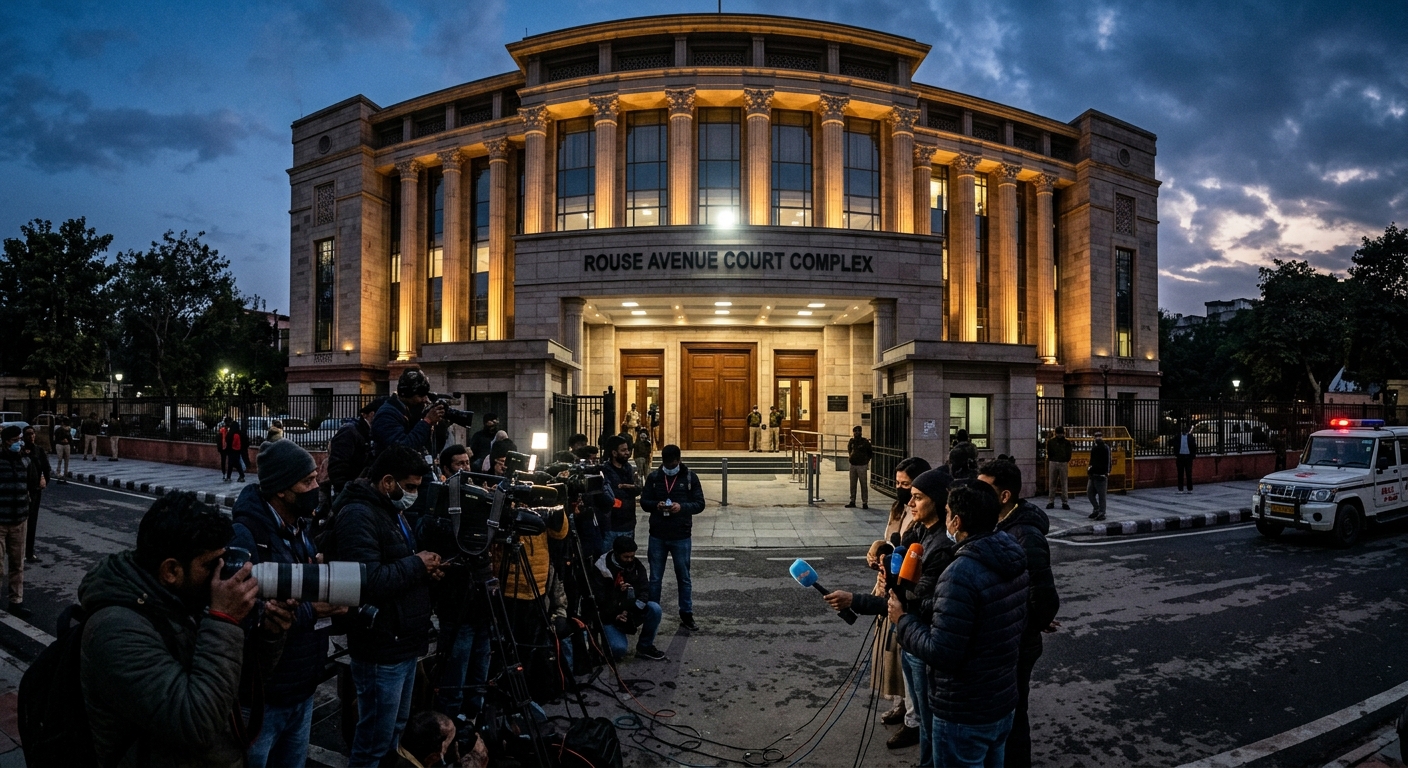
What the Rouse Avenue court actually said
Special Judge Jitendra Singh refused to take cognisance of the Central Bureau of Investigation's chargesheet against all 23 accused, ruling that the prosecution had not produced "even a shred of evidence" of a criminal conspiracy. According to The Hindu, the court held that "there was no overarching conspiracy or criminal intent in the excise policy" and that the CBI had tried to "construct a narrative of conspiracy on the basis of mere conjecture."
The court was unusually direct about method. The BBC reported that the judge "rebuked the CBI for building its case on statements made by approvers" and recommended a departmental inquiry against the investigating officers, calling their conduct a "grave violation of Constitutional principles." That reference is to P. Sarath Chandra Reddy of Aurobindo Pharma, whose testimony after turning approver anchored much of the agency's chargesheet, as detailed by the Indian Express.
On Kejriwal specifically, the court found "no document, electronic communication, financial transaction or digital evidence" linking the then-chief minister to any kickback flow — as recorded in the Times of India summary of the order. On Sisodia, then excise minister, the ruling noted that the prosecution "has not produced a single recovery, document or link in the alleged chain of payments."
A special CBI court recommending departmental action against the CBI's own investigating officers is not a routine outcome; it is a finding that the agency's conduct crossed a constitutional line.
The evidentiary architecture that broke
To grasp why the discharge matters beyond the AAP, look at the case's spine.
The Enforcement Directorate had alleged, in filings the Al Jazeera summary of Kejriwal's September 2024 bail order captured, that "1 billion rupees ($12m)" in kickbacks flowed from a Hyderabad-based "South Group" — represented, the agency said, by K Kavitha, Sarath Chandra Reddy and Arun Ramachandra Pillai — to the AAP, allegedly to fund its 2022 Punjab and Goa campaigns. The middleman, per the CBI, was AAP communications chief Vijay Nair. The trigger was a July 8, 2022 note from Delhi Chief Secretary Naresh Kumar to Lieutenant Governor Vinai Kumar Saxena estimating "financial losses to the exchequer" of more than ₹580 crore.
Two features of that architecture are now formally rejected by a trial court — and both matter beyond this case.
First, the ₹100 crore "advance kickback" number. The Rouse Avenue order found the figure unsupported by any admissible seizure, transfer trail or corroborated statement — resting instead, in the judge's words, on "statements which have not been independently verified." The number was central to the ED's Prevention of Money Laundering Act (PMLA) case, which remains formally alive but now hangs on the same discredited testimonial chain.
Second, the approver-driven mode of proof. Both agencies leaned heavily on witnesses granted pardon in exchange for testimony against principal accused — a mechanism the Supreme Court, when granting Sisodia bail on August 9, 2024 after 530 days of custody, had already warned about. The two-judge bench of Justices B.R. Gavai and K.V. Viswanathan, per the BBC's report on the judgment, held that "the right to a speedy trial is sacrosanct" and admonished the trial judiciary that "bail is a rule and jail is an exception." Kejriwal himself was released a month later on September 13, 2024, with the Supreme Court split — Justice Ujjal Bhuyan writing that federal police "must not only be above board but must also be seen to remain so."
The Rouse Avenue order now converts that Supreme Court unease about method into a finding of fact at the trial-court level.
The politics the ruling cannot undo
Here is where the timing turns the story.
The AAP entered the February 5, 2025 Delhi Assembly election with Kejriwal, Sisodia and Rajya Sabha MP Sanjay Singh all out on bail, but with the "liquor scam" locked in as the BJP's frame. On February 8, 2025, the party lost the capital it had governed since 2013; Kejriwal lost his own New Delhi seat. Academic post-mortems have converged on the case as a decisive factor: an Asian Affairs analysis by Adam Burakowski identifies the excise policy, alongside the "Sheesh Mahal" bungalow controversy and Yamuna river pollution, as the "moral advantage" collapse that ended AAP's Delhi hegemony.
Weeks after the BJP's Rekha Gupta took office, a Comptroller and Auditor General audit was tabled in the Delhi Assembly on the AAP-era policy. The BBC Hindi summary of the report cites an estimated revenue loss of ₹2,027 crore, breaking down ₹890 crore in surrendered licences, ₹941 crore in zonal-licensee discounts and further loss on security deposits. The CAG is a constitutional auditor under Articles 148–151, and its findings — while civil in character, not criminal — sit uncomfortably next to a criminal discharge that says there was no conspiracy at all. Both are now on the record; a constitutional auditor and a criminal court have reached irreconcilable conclusions about the same policy.
For the BJP, the outcome is close to ideal. It got the scrapping of a policy it opposed, the exit of AAP from Delhi and the reputational tar; the criminal case collapsing after the fact costs it little. For Kejriwal, the discharge restores personal legal standing without restoring political ground: his party controls Punjab but has been evicted from its birthplace.
The CBI's appeal — and why the High Court hearing is the next inflection
The discharge is not the end. The CBI has moved the Delhi High Court in a revision petition against the order, and the matter is now before a single-judge bench.
That bench sits with Justice Swarana Kanta Sharma, who had earlier ruled against Kejriwal at various pre-trial stages. Kejriwal filed a recusal petition citing a "pattern" of orders favouring the ED and CBI; the BBC Hindi report on the ruling records Justice Sharma refusing to recuse, saying, "The easy path would have been to withdraw without hearing the application. I chose to decide it because the credibility of the institution was at stake." Solicitor General Tushar Mehta argued for the CBI that "if a party can pick its judge on the basis of speculation… no judge in this country could ever function impartially."
Kejriwal's counter — outlined in a public letter he wrote to the judge and reported by the BBC — was to signal that neither he nor his counsel would appear before the bench. That is a high-risk posture: it leaves the CBI's revision petition uncontested in oral argument and forces any relief through the Supreme Court on a Special Leave Petition. The next hearings will decide whether the High Court restores the chargesheet, in whole or part, or upholds the discharge.
Meanwhile the parallel ED complaint under PMLA — a separate proceeding with a separate chargesheet — has not been formally quashed, though it sits on the same evidentiary substrate the trial court has now called "conjecture."
Who wins, who loses, and what the ruling reframes
The clearest winner of the discharge order is not Kejriwal — it is future defendants in ED/CBI cases who can now cite Rouse Avenue on the evidentiary weight of uncorroborated approver testimony. That is a template shift. It follows the Supreme Court's July 12, 2024 grant of interim bail to Kejriwal on his arrest challenge, in which the bench had already raised the "need for necessity of arrest" test under PMLA. If the High Court upholds discharge, expect that language to migrate into defence arguments in every pending politician-corruption case, including those against Congress and Trinamool leaders.
The clear loser is the CBI's institutional credibility on high-profile political prosecutions. A trial court recommending departmental action against its own investigating officers is rare; it will not be lost on the agency's leadership that the recommendation came in the country's most-watched political case.
The Bharatiya Janata Party, controlling both Delhi's state government and the Union home ministry that oversees the CBI, retains the political spoils and absorbs the reputational hit at arms' length. The BJP said the order "does not mean innocence, only insufficient evidence," per the BBC — a formulation designed to keep the "scam" alive in political discourse even as the criminal case dies in court.
Diplomat View
The Delhi liquor case will be studied less as a corruption prosecution than as a stress test of a specific machinery: arrest a sitting opposition chief minister on the eve of a national election using PMLA's reverse burden of proof, hold him past the polling window, secure a political outcome, then let the case run its course. The machinery worked politically and failed judicially, and the failure is documented in a 549-page order from the court that was supposed to convict. The forecast: if the Delhi High Court upholds the discharge in the second half of 2026, expect two second-order effects. First, a wave of recusal, quashing and bail petitions from opposition figures citing the Rouse Avenue findings on approver evidence. Second, quiet recalibration at the ED, which since 2014 has seen its politician arrest rate rise several-fold, on how far it can lean on Section 45 PMLA absent documentary corroboration. The forecast would revise if the High Court restores the chargesheet in whole, which would preserve the arrest-first template; or if the Supreme Court, on any SLP, uses the case to narrow PMLA's arrest powers. The AAP does not get Delhi back either way. That decision was made in February 2025, not February 2026.
What to watch next
- Delhi High Court, next hearing on CBI revision petition — the bench will decide whether to reinstate the chargesheet; a full or partial reversal would send Kejriwal back to trial, though not to jail.
- ED's PMLA proceedings — no formal move to withdraw; watch for whether the agency files a fresh supplementary chargesheet or lets the case wither.
- CAG report follow-up in Delhi Assembly — the Rekha Gupta government has indicated a Public Accounts Committee referral; any civil-recovery action against former ministers would open a second front distinct from the criminal case.
The Bottom Line
The bottom line: the Delhi liquor case discharge is a legal vindication of Arvind Kejriwal that arrived after the political case had already been won by the BJP — but Special Judge Jitendra Singh's order does something larger by rejecting the approver-and-conjecture template on which central agencies have built their opposition prosecutions since 2022. Whether that template survives depends on the Delhi High Court's ruling on the CBI's revision petition, and, if it goes further, the Supreme Court's willingness to reread PMLA's arrest powers in light of a trial court finding that there was no conspiracy to begin with.
Discover more
India
BJP Congress Clash Over MP Bill Defeat
The BJP's defeat of the women's quota amendment sparks a political narrative war with Congress, impacting future elections.

India
Delhi CM Rekha Gupta Blasts Opposition's Delm
Delhi CM Rekha Gupta's remarks on women's quota defeat reveal BJP's strategy for the 2029 Lok Sabha elections, focusing on delimitation.
India
Congress Advocates 33% Women’s Quota
Congress calls for a 33% women's reservation in the existing 543 Lok Sabha seats, countering Modi's plan to expand the house to 850 seats.

Conflict & Security
Drone Warfare Killing Aid Workers at Unprec
Over 1,000 humanitarian workers killed in three years as cheap armed drones collapse legal protections. Gaza, Sudan, Ukraine, and DRC see deliberate targeting of aid convoys and hospitals with zero prosecutions.