De la Espriella's Victory Could Unwind Peace
Colombia's election pits military action against peace talks.
Model Diplomat3 min readSouth America
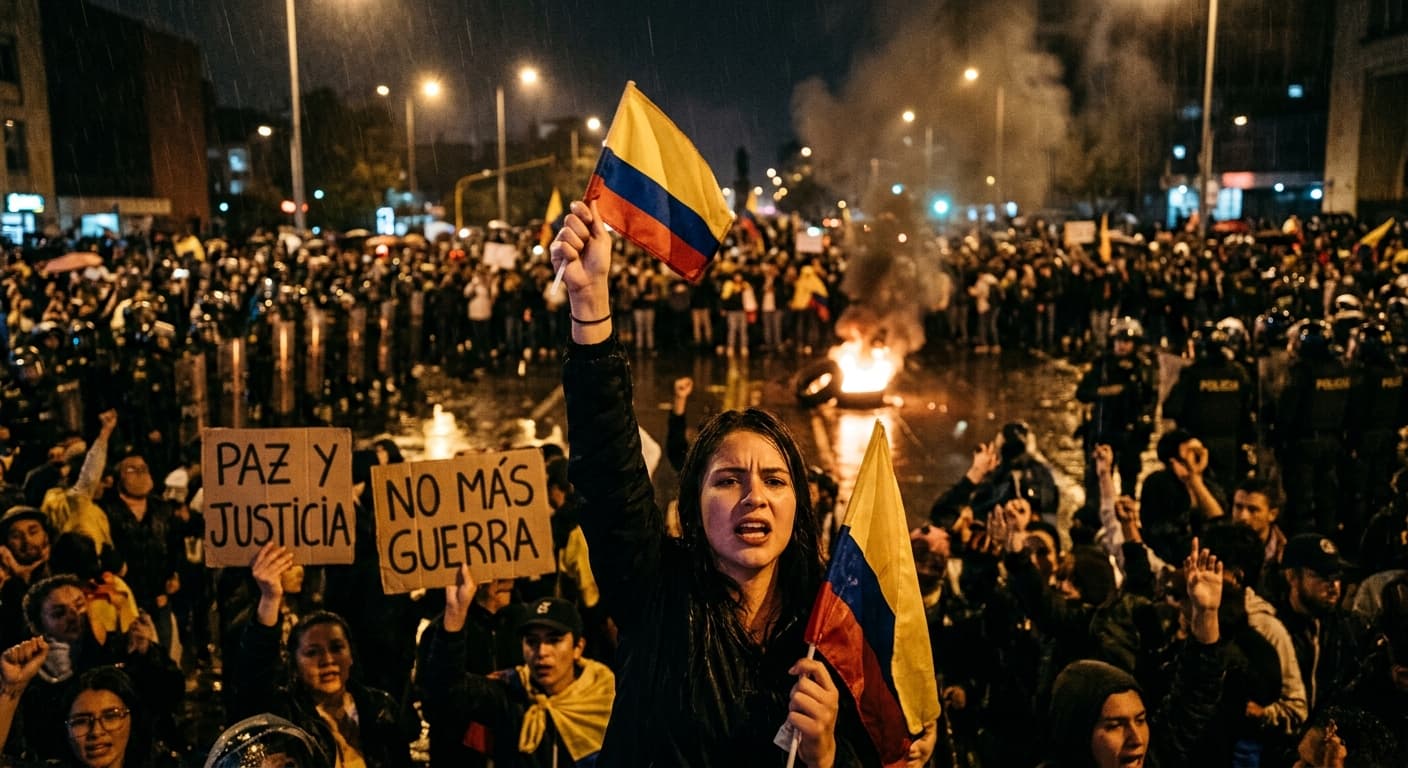
De la Espriella's Victory Could Unwind Colombia's Peace Gambit
Frontrunner's vow to wage unrestricted military war on armed groups divides even the officer corps as runoff vote looms on Sunday.
Colombians vote Sunday to choose between two irreconcilable visions of stability: one grounded in a decade-old peace accord and ongoing negotiation, the other predicated on military dominance and the threat of unrestrained force. Hard-right independent Abelardo de la Espriella leads most polls with a 48–53% range against leftist Senator Iván Cepeda's 44–45%, but the margin is narrowing and the stakes could not be higher for a nation where armed criminal groups now control more territory and field more fighters than at any point since the 2016 peace agreement.
De la Espriella has made a singular campaign promise: to end government peace talks, launch unrestricted airstrikes against guerrillas and drug cartels, and deploy the military without legal constraint. France24 reports he crushed opponents in the May first round with 44 percent, pledging to put "thugs" in "plastic bags." The imagery is deliberate—a return to the iron-fist security doctrine that Colombians have not seen since the early 2000s. His appeal is visceral: kidnappings, extortion, and displacement are climbing. According to
The Christian Science Monitor, cocaine production nearly doubled between 2022 and 2024, and in 2025 alone the number of people displaced by armed violence doubled to 235,000.
Yet the Colombian military itself is fractured over de la Espriella's gambit. France24 cites military sources showing younger officers prefer continuation of peace talks, while older ranks would "fight to the death." Former Admiral Pablo Romero, who once led Colombia's navy, warned that shifting to "armed confrontation" alone was not viable and that the military lacks the capability to execute de la Espriella's vision—even if politically ordered to do so. He noted that when FARC was dismantled in 2016, roughly 12,000 fighters remained to be absorbed or demobilized. Today, more than 27,000 armed combatants are active, and their revenue streams—drug trafficking, extortion, illegal mining—dwarf those of the 1990s. A frontal military assault risks reigniting retaliatory violence in major cities and unraveling the broader peace process that still holds, however tenuously.
The counterargument is equally stark: Petro's four-year gamble on "total peace" dialogue has failed to disarm the armed groups and may have given them space to consolidate. Inkl reports de la Espriella's polling edge stems partly from anti-incumbency—a region-wide swing leftward, then rightward, in reaction to sitting governments. Defense Minister Pedro Sánchez has deployed 408,000 military and police personnel across the country, with 99 municipalities under watch for post-election violence. The ELN guerrilla group, meanwhile, has declared a unilateral ceasefire through the vote, signaling some desire to avoid being blamed for disrupting democracy.
The Risk of Escalation
De la Espriella's model mirrors El Salvador's Nayib Bukele—tough, nationalist, with little room for legal restraint. Former defense minister and Nobel Peace Prize laureate Manuel Santos, architect of the 2016 accord, has tacitly backed continuity over rupture. But the fear running through human rights circles is that unrestricted military operations risk repeating the 2002–2008 "false positives" scandal, in which officers extrajudicially killed 6,400+ civilians, often impoverished young men lured with false job offers, then presented as enemy combatants. Newsy Today notes that observers worry de la Espriella's campaign language mirrors rhetoric that preceded past violence spirals in a nation already marked by deep political polarization.
De la Espriella also carries historical baggage: he has defended leaders of paramilitary groups accused of drug trafficking and human rights abuses. Neither weakness is disqualifying in a polarized electorate where voters choose the "lesser evil"—a dynamic identical to Petro's own path to office four years ago.
What Happens Next
Watch the August 7 inauguration, when de la Espriella (if he wins) takes office and Congress convenes. His party controls no congressional majority; he will need backing from center and conservative blocs—and possibly the Democrats of former President Álvaro Uribe—to get military budgets, legal immunities, or war measures through. If the vote swings toward Cepeda, the Historical Pact holds power but faces the humiliation of a mandate rejected. Either way, the armed groups' response in the first 100 days will determine whether Sunday's choice becomes a genuine shift in policy or merely a change of faces wearing the same intractable problem.
Discover more
Global Politics
Trump's Conflicting Messages on Iran War
Trump's mixed messages on Iran reflect a strategy of audience management, benefiting Tehran amid a complex geopolitical landscape.
India
Romanian Coalition Party Demands PM Resign
Romania's Social Democrats withdrew from coalition, joining far-right AUR to topple PM Bolojan, risking €10 billion in EU funds by August 2026.

International Relations
Pakistan's Key Role in US-Israel-Iran Meddle
Pakistan is seeking to mediate the US-Israel-Iran conflict, balancing high-stakes diplomacy against severe economic pressures and steep regional challenges.

Conflict & Security
Drone Warfare Killing Aid Workers at Unprec
Over 1,000 humanitarian workers killed in three years as cheap armed drones collapse legal protections. Gaza, Sudan, Ukraine, and DRC see deliberate targeting of aid convoys and hospitals with zero prosecutions.