De La Espriella's Razor Margin Masks Harder
Right-wing lawyer narrowly defeats Petro's heir
Model Diplomat3 min readLatin America
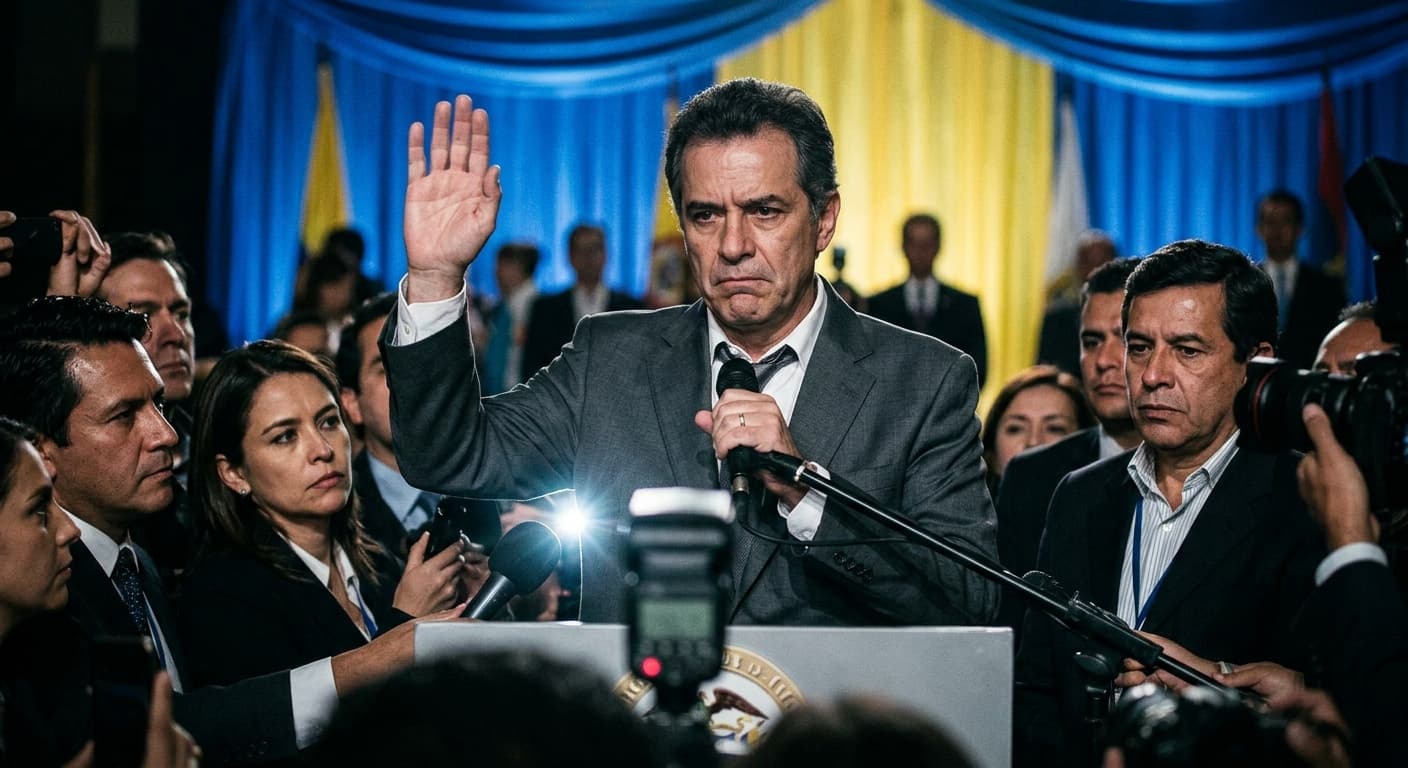
De La Espriella's Razor Margin Masks Harder Road Ahead
Right-wing lawyer narrowly defeats Petro's heir, but tiny majority forces compromise on security promises and threatens fragile peace process.
A flamboyant criminal defense attorney with no prior political experience and explicit backing from Donald Trump has won Colombia's presidential runoff by the narrowest of margins, swinging the country hard rightward after four years of leftist governance—but preliminary victory masks immediate political weakness and a likely legal brawl that could delay his takeover.
Abelardo de la Espriella won 49.66 percent of the vote versus left-wing Senator Ivan Cepeda's 48.70 percent, a margin of roughly 247,000 votes from nearly 26 million cast. With 99.93 percent of ballots counted, the gap is almost certainly insurmountable"—yet both Cepeda and outgoing President Gustavo Petro have refused to concede.
Cepeda announced lawyers will challenge results from 33,000 polling stations out of roughly 122,000 nationally, and Petro took to X claiming widespread irregularities, including unsigned tally forms. A final recount by judicial authorities is required by Colombian law—a process that could stretch the transition and give Petro's coalition room to delegitimize any certification.
De la Espriella ran on an explicit rejection of Petro's eight-year peace process with guerrilla factions. He pledged to scrap talks with dissident groups and launch a 90-day campaign of US-backed airstrikes against them, a platform styled explicitly after El Salvador's Nayib Bukele. Voters exhausted by rising crime and drug trafficking responded: the cocaine trade is at an all-time high, and extortion has surged in rural regions.
Trump personally endorsed De la Espriella this month, and US Secretary of State Marco Rubio rushed to congratulate him Sunday evening, signaling Washington's preference for a realigned partner.
Yet the threadbare majority severely constrains his room to act. De la Espriella enters office with a divided Congress—almost half the country voted against him, and his party controls no legislative supermajority. This forces him to water down his most aggressive anti-crime proposals and negotiate with centrist and progressive blocs on budget and any constitutional changes. A total assault on the peace process will require buy-in from lawmakers who just endorsed Cepeda's continuity agenda.
The regional context matters. De la Espriella's win extends a wave of rightist victories across Latin America—
Argentine President Javier Milei and Ecuadorian President Daniel Noboa both congratulated him Sunday—but Colombia's transition is uniquely fragile.
Petro's government has already seized record cocaine volumes, yet drug output rose. A militarized crackdown that abandons negotiation risks destabilizing neighboring Ecuador and Venezuela, both already facing cartel pressure.
What to Watch
The certification deadline is the first pressure point. If the recount extends into early July, it buys Cepeda and Petro time to organize street protests and challenge De la Espriella's legitimacy before inauguration. Watch whether the electoral court issues interim rulings fast enough to avoid that. Second: De la Espriella's inaugural cabinet. Any early signals on whether he appoints hawks or pragmatists on peace and defense will telegraph whether he intends to govern from campaign rhetoric or from the narrow center where Congress actually sits. Finally, the date his 90-day military campaign would end—late September—matters. By then, he'll face measurable failure if violence hasn't dropped, forcing him to either escalate beyond what his Congress will fund or shift strategy and quietly resume some form of negotiation.
Discover more
India
Romanian Coalition Party Demands PM Resign
Romania's PSD demands PM Ciolacu's resignation, risking a political crisis and economic instability. Will the coalition hold?

Global Politics
US Seizes Iranian Ship, Tensions Surge
The US seizes the Iranian ship Touska near the Strait of Hormuz, escalating tensions and risking wider conflict in the region.

US Politics
Next Generation Republicans
Younger Republicans are adopting more extreme ideologies than MAGA, risking GOP unity and electoral success in key battlegrounds.
India
India's ₹7,100 Crore Chip Incentives for FY27
India commits ₹7,100 crore to boost semiconductor manufacturing and reduce imports.