Congress’s New Swing Vote Is Attendance
Vacancies and no-shows are now shaping outcomes on Capitol Hill, giving party leaders a narrower path than the raw seat count suggests.
The leverage is in the empty chairs
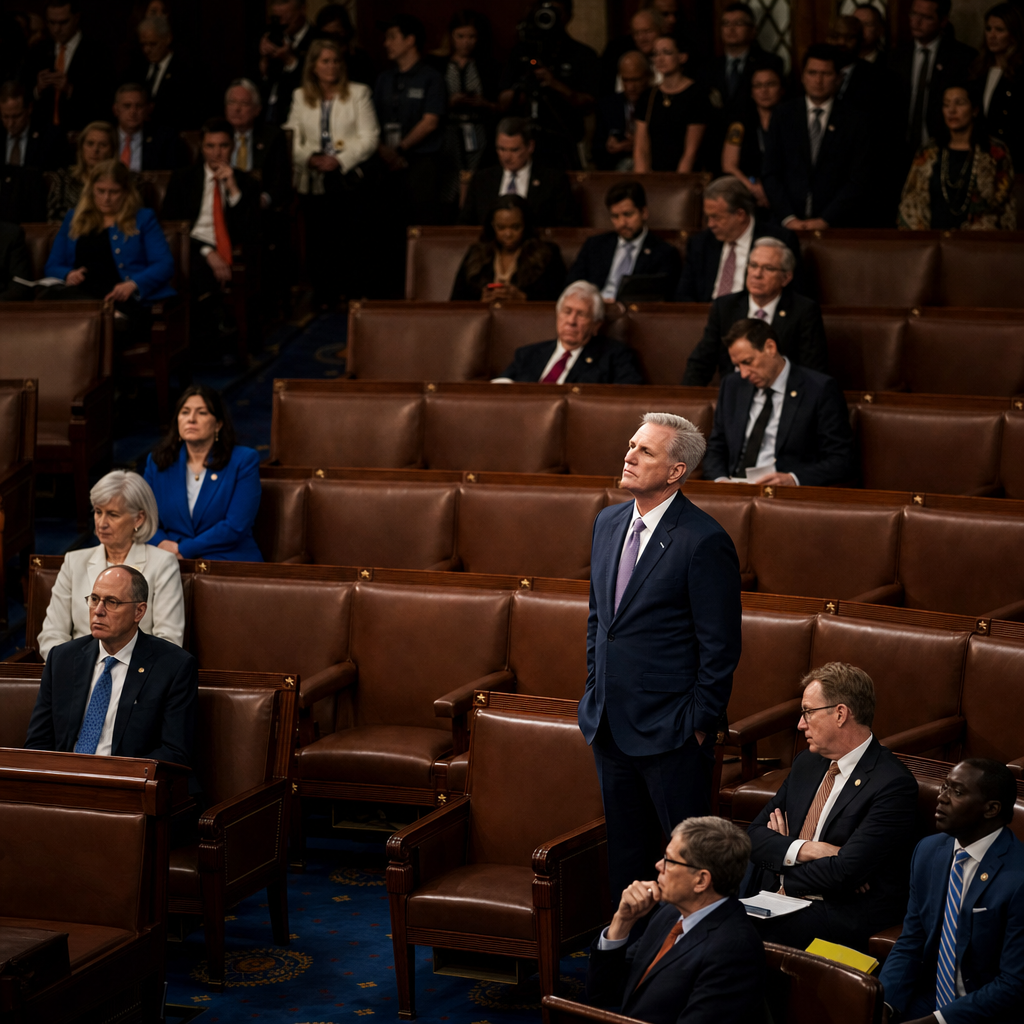
The immediate power shift is simple: whoever can keep members in the room wins more fights. The New York Times reports that the House now has five vacant seats, which lowers the majority threshold to 216 if everyone present votes, and that a dozen members were absent during Thursday’s first scheduled vote before leaders pulled the war powers measure ( The New York Times). That is not a procedural footnote. In a chamber this tight, absences function like defections.
Republican leaders are the ones most exposed. The Times says GOP leaders realized they did not have the votes to block a Democratic war powers resolution on Iran once absences and a small number of Republican defections were combined, so they canceled the vote (The New York Times). That means Mike Johnson’s margin in the House is not just slim; it is fragile enough that attendance discipline now matters as much as persuasion.
Why this Congress is different
This is what a narrowly divided Congress looks like when it is also underpopulated and poorly attended. The Times notes that only three House Republicans have been willing to break with their party on the Iran issue, but that becomes consequential when vacancies and absences compress the math (The New York Times). The Globe and Mail adds that last week’s House war powers vote on Iran ended in a tie, with three Republicans in favor, and that Democrats think they have the votes this time after Rep. Jared Golden said he will switch to yes ( The Globe and Mail).
That is the real dynamic: Democrats do not need a big wave of Republican conversions, just enough absences and one or two defections at the right moment. In a different Congress, that would be marginal. In this one, it is decisive. For lawmakers in swing districts, the result is more than a floor vote; it is evidence that the center of gravity in Washington has moved from coalition-building to attendance management. For a broader view of how these shifts are remaking the chamber, see  US Politics.
What to watch next
The next decision point is whether GOP leaders can actually keep their members present on the next war powers vote and on any other close call before the Memorial Day recess. Politico reported that House Republican leaders already canceled one planned vote because absences and defections would have put the resolution in Democrats’ favor, and that Democrats now feel better about their odds after Golden’s switch ( Politico). That is a warning shot for every other party-line bill this Congress tries to move.
The deeper implication is that vacancies will keep distorting the math until they are filled. Bloomberg’s recent reporting on redistricting shows the broader House battlefield is already shrinking, which makes every live seat more valuable and every missed vote more costly ( Bloomberg). The next date that matters is the next floor vote on the Iran resolution: if leadership cannot guarantee attendance, the minority will keep turning arithmetic into leverage.