Congressional Ethics Failures
Exploring the flaws in House self-policing and ethics enforcement
Model Diplomat3 min readUnited States

Congress Can't Police Itself — Three Cases Prove It
The Cherfilus-McCormick resignation, Swalwell harassment allegations, and Gonzales scrutiny expose a structural flaw at the heart of House accountability.
Three overlapping ethics crises in April 2026 have crystallized what reformers have argued for decades: the House's self-policing architecture is designed more to protect members than to hold them accountable.
The Escape Hatch Is Always Open
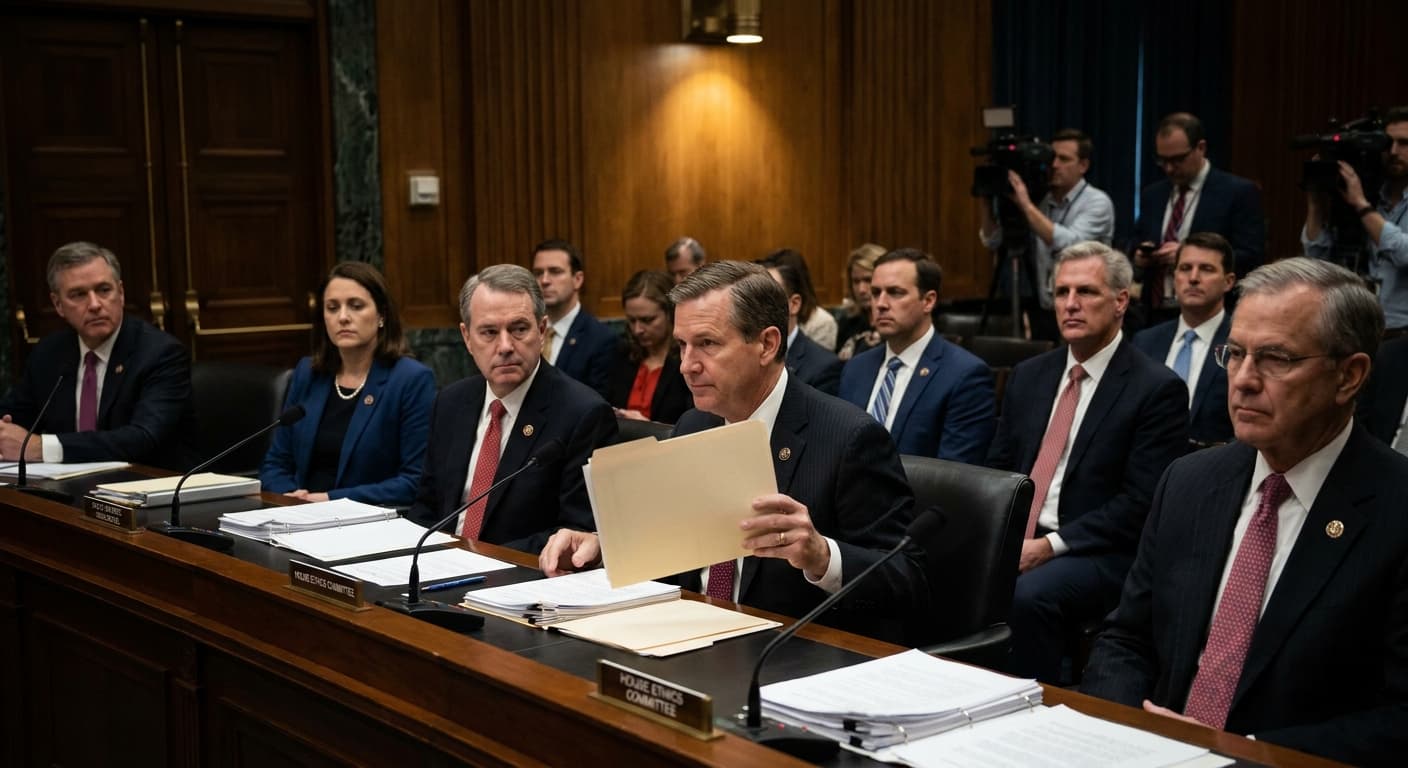
The most glaring example landed April 21, when Florida Democrat Rep. Sheila Cherfilus-McCormick resigned from Congress minutes before the House Ethics Committee was set to announce its recommended sanctions — sanctions that could have included expulsion. The committee's exhaustive investigation involved 30 information requests, 59 subpoenas, 28 witness interviews, and over 33,000 pages of documents, concluding she violated FEC regulations and the Code of Ethics for Government Service. She had already been indicted in November 2025 on charges of diverting federal disaster funds for her 2021 campaign.
The result? No formal House sanction. A resignation voids the committee's jurisdiction, and the institution walks away empty-handed. The constitutional clause granting each chamber the power to discipline its members — including expulsion by a two-thirds vote — is rendered toothless the moment a member moves faster than the process.
Simultaneously, the Ethics Committee opened a rare public call for information on sexual misconduct involving members — a move prompted in part by harassment allegations against Rep. Eric Swalwell (D-CA). A former staffer's account, reported by CNN, describes a culture of intimidation and fear around filing complaints, with no centralized HR mechanism and ethics timelines measured in years, not weeks. Rep. Tony Gonzales (R-TX) faces separate scrutiny in the same cycle, underscoring that the dysfunction is bipartisan.
Why the System Fails by Design
The structural problem is straightforward. The House Ethics Committee is composed equally of members from both parties, creating an institutional incentive toward stalemate. Investigations routinely span multiple Congresses. Members under investigation can run for re-election, raise money, and vote on legislation — including legislation affecting their own cases — while proceedings drag on.
The Office of Congressional Ethics (OCE), an independent body created in 2008 to refer cases to the Ethics Committee, was itself nearly gutted in January 2017 when House Republicans briefly voted to bring it under committee control before public backlash reversed the move. The threat illustrated where institutional loyalties lie. For more on the structural dynamics shaping US Politics, the pattern runs deeper than any single case.
The resignation escape hatch is well-established. Former Rep. George Santos (R-NY) was expelled in December 2023 — a genuinely rare outcome — only after his Ethics Committee report landed publicly and political cover for his colleagues evaporated. That exception proves the rule: expulsion requires a political cost calculation to align, not just evidence of misconduct.
What to Watch
Three pressure points in the coming weeks:
- Criminal exposure is now Cherfilus-McCormick's primary accountability mechanism — her November 2025 indictment proceeds regardless of resignation.
- The Swalwell investigation will test whether the Ethics Committee's sexual misconduct information request produces referrals or quietly expires.
- Reform proposals — including mandatory financial penalties that survive resignation — have resurfaced. Whether
Congress acts before the 2026 midterm campaign cycle consumes all political oxygen is the real question.
The Constitution gives Congress the tools. The institution keeps choosing not to use them.
Discover more
US Politics
House Ethics Committee Pushes Sexual Miscond.
The House Ethics Committee has shifted responsibility for sexual harassment settlement records to the Office of Congressional Workplace Rights, complicating disclosure efforts.
India
Congress Accuses Modi of Stalling Women's Law
Congress accuses Modi of stalling women's reservation law by linking it to delimitation, revealing a deeper electoral strategy.
US Politics
Congress Targets AI Chatbot Access for Terror
The House passed the Generative AI Terrorism Risk Assessment Act, focusing on AI's role in terrorism and potential surveillance implications.

Conflict & Security
Drone Warfare Killing Aid Workers at Unprec
Over 1,000 humanitarian workers killed in three years as cheap armed drones collapse legal protections. Gaza, Sudan, Ukraine, and DRC see deliberate targeting of aid convoys and hospitals with zero prosecutions.

