Chouhan’s Modi Memoir Is a Loyalty Signal for the BJP
Shivraj Singh Chouhan’s book launch is a public signal of loyalty to Modi, with old-guard hosts and party messaging in sync.
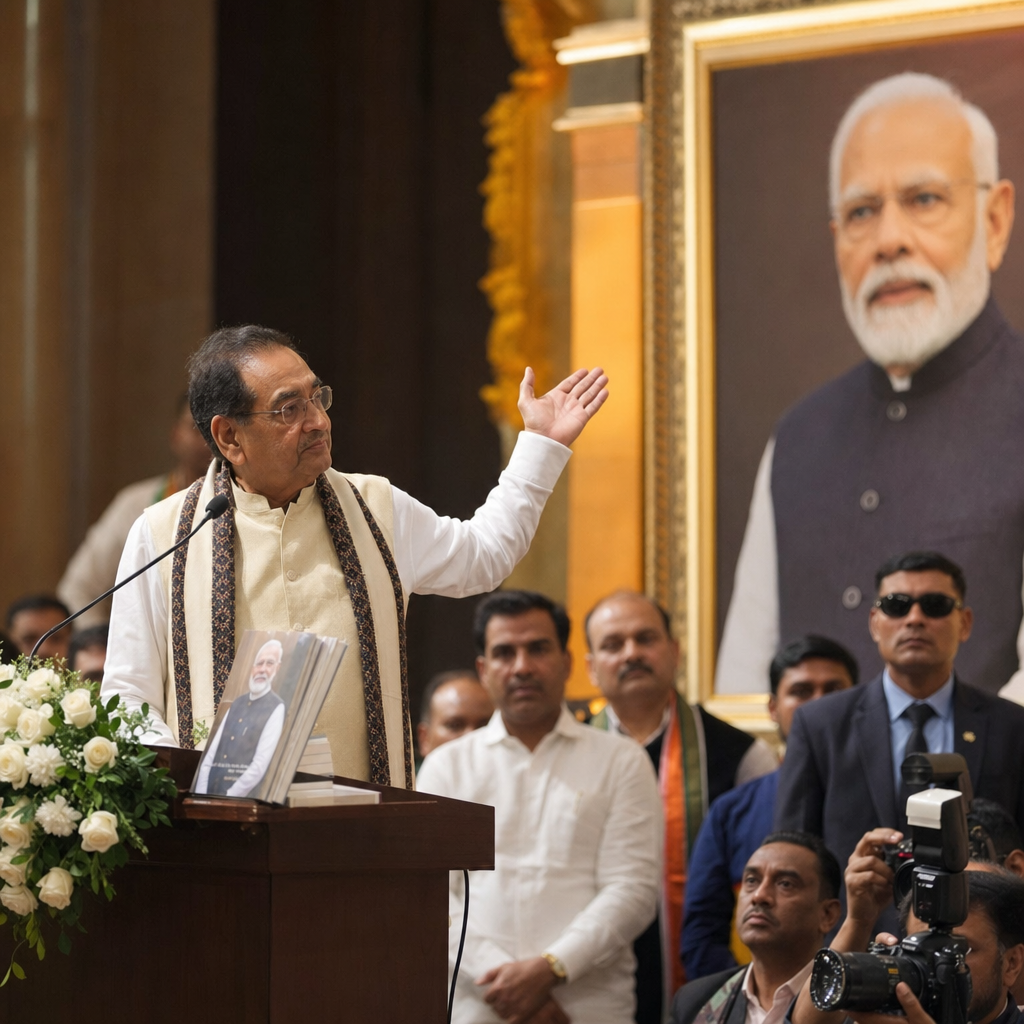
Shivraj Singh Chouhan on Tuesday released Apnapan – Narendra Modi Sang Mere Anubhav, an 11-chapter memoir on his 35-year association with Narendra Modi, with former PM H.D. Deve Gowda and former Vice-President M. Venkaiah Naidu formally launching it in New Delhi, according to  The Indian Express and
  DD India. Chouhan, now Union agriculture and rural development minister, framed the book as a personal record of a leader he said had “live[d] every moment for the nation,” and recalled their first major interaction during the 1991 Ekta Yatra, The Indian Express reported.
What the launch is really doing
This is not just a memoir. It is a status message from one of the BJP’s most seasoned operators to the party’s central authority. Chouhan is not a marginal figure looking for attention; he is a former Madhya Pradesh chief minister, a long-time RSS/BJP worker, and a Union minister with his own regional base. By publicly chronicling Modi as an “extraordinary human being,” a “saadhak,” and a “karmyogi,” Chouhan is folding his own political biography into Modi’s larger national story, The Indian Express reported.
That matters because the BJP’s internal culture rewards visible loyalty. A book like this does two things at once: it flatters Modi, and it places Chouhan on the right side of the party’s memory-making exercise. The presence of Deve Gowda and Venkaiah Naidu gives the event cross-party gravitas, but the real audience is inside the BJP: cadres, ministers, and aspirants watching who gets proximity, who gets praise, and who gets the microphone.
Why it matters now
For  India, the launch comes in a period when Modi’s power is still dominant, but no longer untrammeled. After the BJP failed to win a Lok Sabha majority on its own in 2024, Modi has had to manage a more consultative governing setup and a more complex hierarchy inside the NDA, as
  CNA noted. That weakens the value of private loyalty only if it is not made public. Chouhan is making it public.
The book also reinforces the BJP’s preferred governing vocabulary. DD India said Apnapan is built around themes such as “Seva,” “Antyodaya,” “Jan Bhagidari,” “Nation First,” and “Lok Kalyan,” and presents Modi’s leadership style as a model for public service and discipline. That is not accidental branding. It turns personal reminiscence into political doctrine, and doctrine into a campaign asset.
There is a second-order effect here: Chouhan is also protecting his own position. In a government where the centre still controls the most valuable appointments and access, senior leaders benefit from being seen as narrators of the Modi era rather than as alternative poles of authority. The memoir helps lock in that role.
What to watch next
Watch whether the book is promoted beyond the launch itself — by the BJP’s organisation, by cabinet colleagues, and by state leaders who want to be seen with Chouhan. The real test is whether this becomes part of a broader narrative push before the next cabinet or organisational reshuffle. If it does, Chouhan has turned a personal memoir into political currency. If it doesn’t, this remains what it first appears to be: a polished act of allegiance.