CBI Takes Over Twisha Sharma Probe
Supreme Court intervenes in local investigation
Model Diplomat3 min readAsia
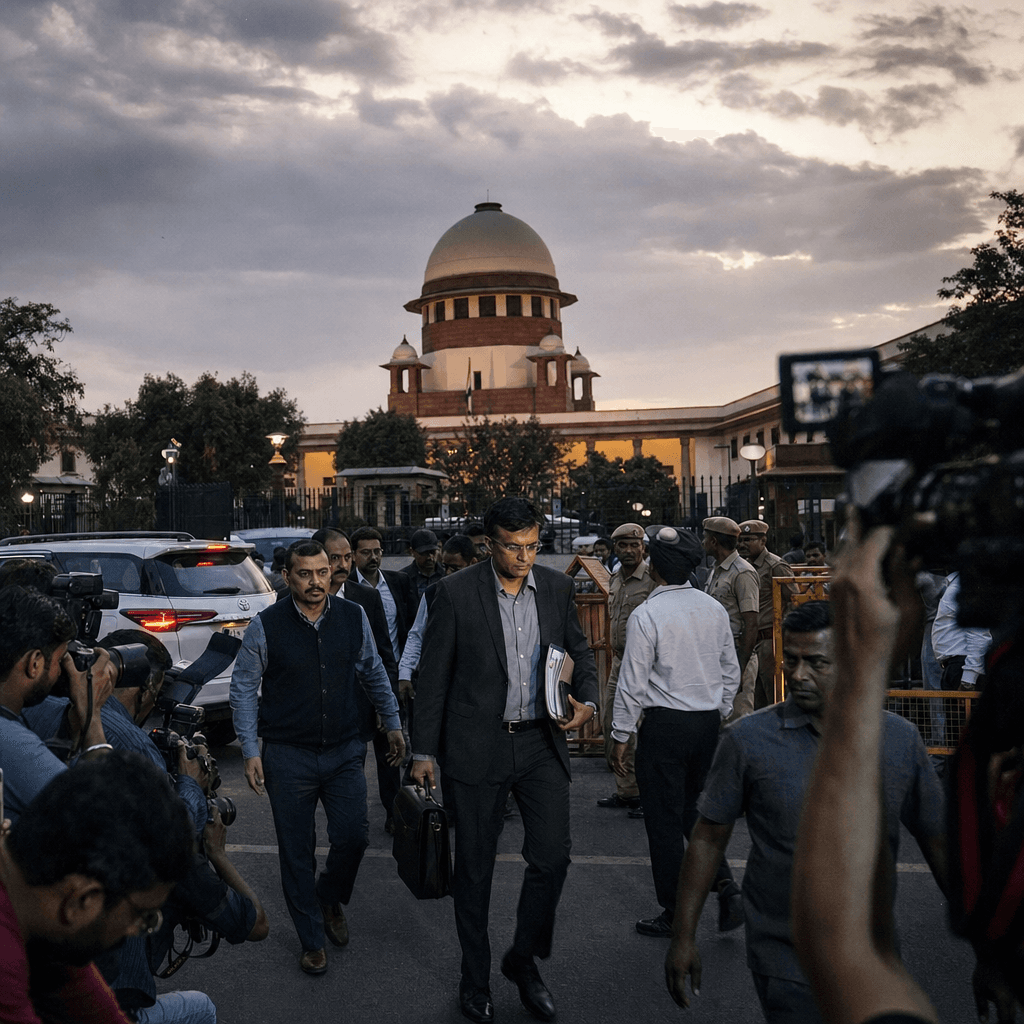
CBI Takes Over Twisha Sharma Probe After Supreme Court Push
The Supreme Court has pushed the case out of state hands, and the CBI takeover signals that the local investigation has lost credibility fast.
The power shift is now clear: the Madhya Pradesh government told the Supreme Court on Monday that it had already written to the Centre recommending a CBI probe in the Twisha Sharma death case, and the bench recorded that the agency was likely to take over within a day, Hindustan Times reported. By later the same day,
Hindustan Times said the CBI had in fact taken over and re-registered the FIR after receiving the police files.
Why the Supreme Court forced the hand
This is not routine escalation. The court’s intervention shows it did not trust the state machinery to carry the case to a conclusion that would be seen as clean. According to Outlook India, the bench had already taken suo motu cognisance of the case and asked for a transfer because the deceased’s husband is an advocate and her mother-in-law is a former judge — a combination the court viewed as enough to trigger concerns about bias in the original probe.
That matters because in politically or socially charged deaths, the real contest is often not just over facts but over who controls the facts. Once the Supreme Court moves a case out of local police hands, it signals that the state’s version will not be allowed to stand on its own. For the Madhya Pradesh government, the CBI request is damage control. For the court, it is a way to protect the eventual verdict from being tainted by procedural doubt.
The case also illustrates how quickly a domestic-violence or dowry-death investigation can become a test of institutional legitimacy. Outlook India reported that the FIR names Twisha Sharma’s husband Samarth Singh and mother-in-law Giribala Singh under provisions of the Bharatiya Nyay Sanhita and the Dowry Prohibition Act. The family has accused the in-laws of driving her to death; the in-laws deny wrongdoing and have offered a different account. Once the matter reaches the CBI, those competing narratives face a more powerful central agency and a more watchful Supreme Court.
What the CBI takeover changes
A CBI takeover does more than swap investigators. It centralises the case, reopens the evidence trail, and raises the political cost of any weak filing, selective leak, or delayed forensic work. It also gives the Supreme Court a cleaner line of sight into the inquiry, which is why the bench reportedly urged both the family and the accused to avoid public statements and give their versions directly to investigators, Outlook India said.
For the family, that is a win: the case is no longer being handled by the same local ecosystem they viewed as compromised. For the state police, it is a loss of authority and narrative control. For the Centre, it is a reminder that the CBI is often deployed not just to investigate, but to restore confidence when a state case becomes politically or socially combustible.
What to watch next
The immediate question is whether the CBI files a fresh FIR and how quickly it reconstructs the timeline from witness statements, phone records and forensic material. The next meaningful marker is the first detailed status report back to the Supreme Court. If the agency moves fast and the court is satisfied, the case will become a model for judicially supervised transfers. If not, the court has already signaled it is prepared to keep pressing.
Watch the next hearing date and the CBI’s first public filing — that is where this case will either stabilise or widen.
Discover more
India
UN Expert Albanese: India Violates Law
UN Rapporteur Francesca Albanese accuses India of breaching international law, spotlighting human rights concerns in Kashmir and prompting diplomatic pushback.
India
Congress Accuses Modi of Stalling Women's Law
Congress accuses Modi of stalling women's reservation law by linking it to delimitation, revealing a deeper electoral strategy.

Conflict & Security
Drone Warfare Killing Aid Workers at Unprec
Over 1,000 humanitarian workers killed in three years as cheap armed drones collapse legal protections. Gaza, Sudan, Ukraine, and DRC see deliberate targeting of aid convoys and hospitals with zero prosecutions.

Global
World Normalises Taliban as Afghan Women Eras
UN data shows Afghan women erased from public life as Russia recognises the Taliban, EU hosts officials in Brussels, and ICC warrants for gender persecution go unenforced.