China's Whistleblower Snags Japan's Fuji
Fuji Electric employees detained amid rare-earth smuggling claims.
Model Diplomat9 min readAsia
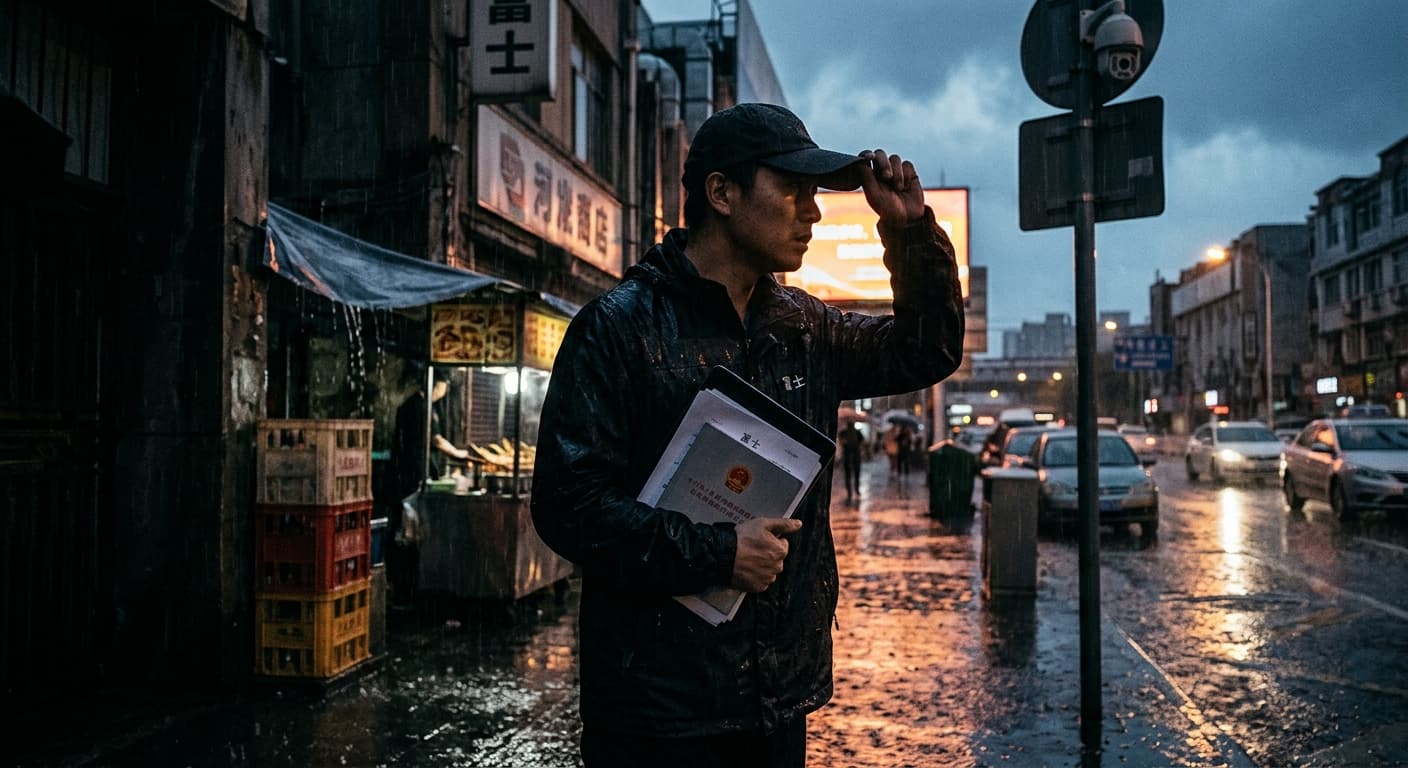
China's Whistleblower Nets Snare Japan's Fuji Electric in Rare-Earth Trap
Two Fuji Electric employees detained in Dalian expose how Beijing's tip-off rewards convert export controls into a coercive tool against foreign firms.
The arrest of two Fuji Electric group employees in Dalian on suspicion of smuggling rare-earth-related products has done something China's April 2025 export curbs alone could not: it has put every Japanese factory manager on notice that Beijing's expanding citizen-informant apparatus is now the primary enforcement engine behind rare-earth controls — and that the line between lawful procurement workaround and criminal smuggling can be redrawn overnight by a co-worker with a hotline number. According to Nikkei Asia, lawyers advising Japanese firms now treat China's whistleblower incentive schemes — not customs inspections — as the single most underestimated compliance risk in the country.
That is the story the wire copy has missed. The Fuji Electric case is not a rerun of the 2023 Astellas Pharma espionage detention. It is the visible face of a policy stack — export controls plus rewarded denunciations plus extraterritorial jurisdiction — that Beijing has spent five years assembling and is now, finally, deploying against a downstream target.
What actually happened in Dalian
On May 2026, Chinese customs officials in the northeastern port city detained two Japanese nationals working for Fuji Electric group subsidiaries. Both were formally arrested in mid- and late June, Jiji Press confirmed, on suspicion of violating China's rare-earth export controls. The
Mainichi Shimbun placed the detentions at Fuji Electric's Dalian factory, and
Kyodo News reported that the two are suspected of attempting to move rare-earth-linked products out of China as Beijing tightens its controls.
The leaked specifics matter. In a July 1 commentary for the Japan Institute for National Fundamentals, Masahiko Hosokawa — a former director-general of Japan's export-control department at METI — wrote that "information leaked from the Chinese side suggests that the detained Japanese nationals are suspected of having exported products that were partially assembled in China to Japan, where they were then disassembled so that the magnets could be extracted and used."
That is a critical detail. Fuji Electric is one of several Japanese firms practicing what the industry calls "China Assy" — partial servomotor assembly inside China as a stopgap for procuring Chinese rare-earth magnets whose direct export has been throttled. What Beijing is prosecuting is not classical smuggling. It is the workaround.
The whistleblower stack
China does not have a single "whistleblower program." It has four overlapping ones, and the Fuji Electric case sits at their intersection. The oldest is the 12339 counter-espionage hotline run by the Ministry of State Security, with rewards up to 500,000 RMB — roughly $70,000 — for tips on foreign spies. Taiwan's Institute for National Defense and Security Research documented that the hotline has been paired since 2015 with an annual National Security Education Day campaign urging citizens to "beware of foreign spies."
In June 2024, the State Council layered a broader instrument on top: the "Measures on Rewarding Citizens Who Report Acts Endangering National Security," which the BBC's Chinese service noted permits material rewards above 100,000 RMB for tips on any conduct deemed to endanger national security — a category Beijing has never defined with precision.
Underneath sit two commercial-enforcement layers that are more directly relevant to Fuji Electric. The General Administration of Customs runs a long-standing anti-smuggling reward regime that pays informants a percentage of seizure value. And in January 2021, MOFCOM opened a hotline — described at the time by NPR as "effectively a hotline for reporting sanctions, tariffs or other foreign legislation that prevent a Chinese entity from 'normal economic, trade and related activities.'" The Anti-Foreign Sanctions Law of June 2021 gave that hotline teeth.
The result is that a disgruntled employee, a competitor, or a former joint-venture partner has at least four separate channels through which to convert internal knowledge of a "China Assy" workaround into a state investigation — and, in three of the four channels, into a personal payout.
Why Beijing is squeezing now
The timing is not incidental. In November 2025, Prime Minister Sanae Takaichi told the Japanese Diet that a Chinese attack on Taiwan could constitute a "survival-threatening situation" for Japan — the formulation that, under Japan's collective self-defense doctrine, could justify military response. Brookings' Wu Xinbo wrote that Beijing viewed the remarks as "completely unacceptable" and has responded with "punitive economic and political measures against Japan."
The escalation ladder has been mechanical. On January 6, 2026, MOFCOM imposed new dual-use restrictions targeting Japanese firms — an action that CSIS called "a warning shot to countries contemplating a more active role in regional politics or greater solidarity with Taiwan." On February 24, Beijing added 20 Japanese entities including Mitsubishi Heavy Industries' shipbuilding group and the Japan Aerospace Exploration Agency to its export-restriction list,
Al Jazeera reported. On June 22, China extended the same treatment to 10 US firms including MP Materials, an action the
Observer Research Foundation argued was "a deliberate reflection of the logic of US semiconductor export controls."
The Fuji Electric detentions sit at the next rung. Restricting exports hurts foreign firms; detaining their employees changes the calculus for every executive weighing whether to keep production in China.
The legal architecture that makes it possible
The 2020 Export Control Law is the load-bearing statute. A Congressional Research Service analysis by Karen Sutter notes that Article 44 explicitly "scopes jurisdiction to include transfers that occur outside of China," while Articles 34–40 set the fine and criminal exposure schedule. Article 48 provides the retaliation clause: "If any country or region abuses export control measures to endanger the national security and national interests of the People's Republic of China, the People's Republic of China may, based on the actual situation, take reciprocal measures against that country or region."
The Stockholm International Peace Research Institute, in an April 2026 assessment, documented how the 2024 Regulations on Export Control of Dual-Use Items fleshed out the framework — creating a "watch list" analogous to Washington's Unverified List, and extending MOFCOM's licensing demands to require "product images and even photos of production lines" in some cases. SIPRI noted that in "some cases, China's licensing requirements have constituted a de-facto ban."
The relevant enforcement dial for the Fuji Electric case, however, is the December 2024 Rare Earth Management Regulations. As RSIS's Janet Fung documented, those rules require "all firms must also enter product flows by the 10th of each month into an information system to ensure traceability across the supply chain." Beijing now has near-real-time visibility into which magnets left which factory, in what quantity, and destined for whom. A whistleblower's tip inside Fuji Electric's Dalian plant maps directly onto a state database — which is why the case moved from detention to formal arrest in under two months.
Under China's WTO notification G/MA/QR/N/CHN/7, the "Import Licensing Administration of dual use substances and technologies" that took effect January 1, 2024 is now jointly enforced by MOFCOM and the General Administration of Customs — the two agencies whose reward hotlines run in parallel.
The mirror across the Pacific
The irony writes itself. Two weeks before Chinese customs began arresting Fuji Electric employees, US Senators Mike Rounds and Mark Warner introduced the Stop Stealing our Chips Act, S. 1473 — legislation modeled on the SEC's whistleblower incentive program to reward informants with "10 to 30 percent of collected fines" for tips leading to export-control violation penalties. The House companion,
H.R. 6322, was ordered reported by the Foreign Affairs Committee 43-1 on April 22, 2026. It creates a mandatory award for whistleblowers whose tips result in fines exceeding $1 million.
The bills' co-sponsors framed the program as an answer to Chinese networks smuggling US AI chips — reporting suggests at least eight networks have run transactions above $100 million each. What they inadvertently confirmed is that Washington and Beijing are converging on the same enforcement architecture: rewarded denunciations backed by extraterritorial statutes. In that convergence, Japanese firms are simply the pressure point where the two systems first collide.
The MERICS analyst Jacob Gunter, assessing China's October 2025 expansion of rare-earth controls, put it plainly: "China is effectively using its chokehold over rare earth value chains and technology the same way the US has done in the past to China. It mirrors Washington's measures quite clearly." What is new is that the Chinese version now includes a "Chinese persons" rule prohibiting Chinese nationals from contributing to rare-earth work abroad — a provision that turns every Chinese national employed by a Japanese servomotor plant into a potential compliance liability, or a potential informant.
Who wins, who loses
The losers are named. Fuji Electric first — its two detained employees, but also its Dalian manufacturing footprint and the "China Assy" model that Japanese servomotor makers built as insurance against magnet curbs. Mitsubishi Heavy, Kawasaki Heavy, Subaru, ENEOS, Hitachi and Komatsu, all now on MOFCOM's dual-use lists. Every Japanese firm running a Chinese subsidiary in a controlled sector must now assume that any Chinese employee — or ex-employee, or supplier — holds a lottery ticket redeemable at MOFCOM.
The winners are less obvious. China's Big Six rare-earth producers, consolidated after 2021, capture pricing power as legal export channels narrow. Chinese servomotor and machine-tool firms, the downstream stage that Japan still dominates, get a runway. And — the second-order effect Tokyo will want to think about — Vietnamese, Malaysian and Indian assemblers gain from every Japanese factory that decides Dalian is no longer worth the personal risk to expatriate managers. Japan's Ministry of Economy, Trade and Industry has been pushing supply-chain diversification since 2010; the Fuji Electric detentions will do more to accelerate it than a decade of METI subsidy.
The Japanese Embassy in Beijing has already warned domestic firms operating in China to review dual-use export-control risks, Nation Thailand reported. That is diplomatic code for: assume your Chinese staff are potential reporters.
Diplomat View
The Fuji Electric case is the first concrete demonstration that Beijing's rare-earth enforcement regime is no longer a licensing bureaucracy — it is a denunciation-driven prosecution machine with extraterritorial reach. That changes the compliance calculus for every foreign firm running controlled production inside China, and it does so on terms Beijing can escalate without further legislation. Expect the response from Tokyo to be quiet exit — Japanese servomotor and precision-machinery firms unwinding "China Assy" operations over the next 18 months, absorbing the cost as insurance against personnel risk. What would revise this call: a rapid diplomatic climbdown in which Beijing releases the two detainees without formal indictment before the September 2026 anniversary of the 2010 Senkaku fishing-boat incident. Absent that, the base case is that Fuji Electric becomes the reference case cited in every board meeting from Nagoya to Osaka arguing to relocate. The whistleblower program was designed to enforce the law. Its more consequential effect is to relocate factories.
What to watch next
- September 2026 — the anniversary window of the 2010 Senkaku rare-earth episode. If Beijing has not released or formally indicted the two Fuji Electric employees by then, the case will become the benchmark other foreign firms use to price country risk.
- US Congress, autumn 2026 — full House and Senate floor votes on the Stop Stealing our Chips Act (H.R. 6322 / S. 1473). Passage would install a mirror-image whistleblower regime in Washington, formalizing the trans-Pacific enforcement architecture.
- MOFCOM dual-use list updates — Beijing has added Japanese entities roughly every 90 days since January 2026. The next addition will indicate whether Takaichi's post-election mandate has bought her diplomatic room, or narrowed it.
The Bottom Line
The two Fuji Electric employees in Dalian are not an isolated diplomatic incident. They are the first public casualties of a fully assembled Chinese enforcement stack — export controls, supply-chain traceability, extraterritorial jurisdiction, and rewarded citizen denunciation — deployed against the downstream stage of a Japanese industry Beijing wants to onshore. The lesson for foreign firms is not that Chinese law has changed; it is that the enforcement engine has, and the informant is now the point of failure. Every board risk register in Tokyo will be rewritten around that fact within the quarter.
Discover more

US Politics
House Ethics Committee Pushes Sexual Miscond.
The House Ethics Committee has shifted responsibility for sexual harassment settlement records to the Office of Congressional Workplace Rights, complicating disclosure efforts.

India
Congress Accuses Modi of Stalling Women's Law
Congress accuses Modi of stalling women's reservation law by linking it to delimitation, revealing a deeper electoral strategy.
India
Rajnath Singh's Durga Squad for 2026 Polls
Rajnath Singh's Durga Squad promised women's safety in Bengal but has since disappeared from the agenda, revealing BJP's true priorities.

Economics
Fed's Amex AML order puts correspondent banking on notice
Federal Reserve's Amex AML order requires board-level controls and a 90-day plan; OCC fined the bank $350 million over enterprise-wide deficiencies.