China's Rice Shipment Buys Cuba Time Against
Cuba receives rice from China amid U.S. sanctions pressure.
Model Diplomat3 min readCaribbean
China's Rice Shipment Buys Cuba Time Against U.S. Pressure
[Beijing’s 60,000-ton rice donation eases Cuba’s food crunch, but it also deepens Havana’s dependence as Washington tightens sanctions.]
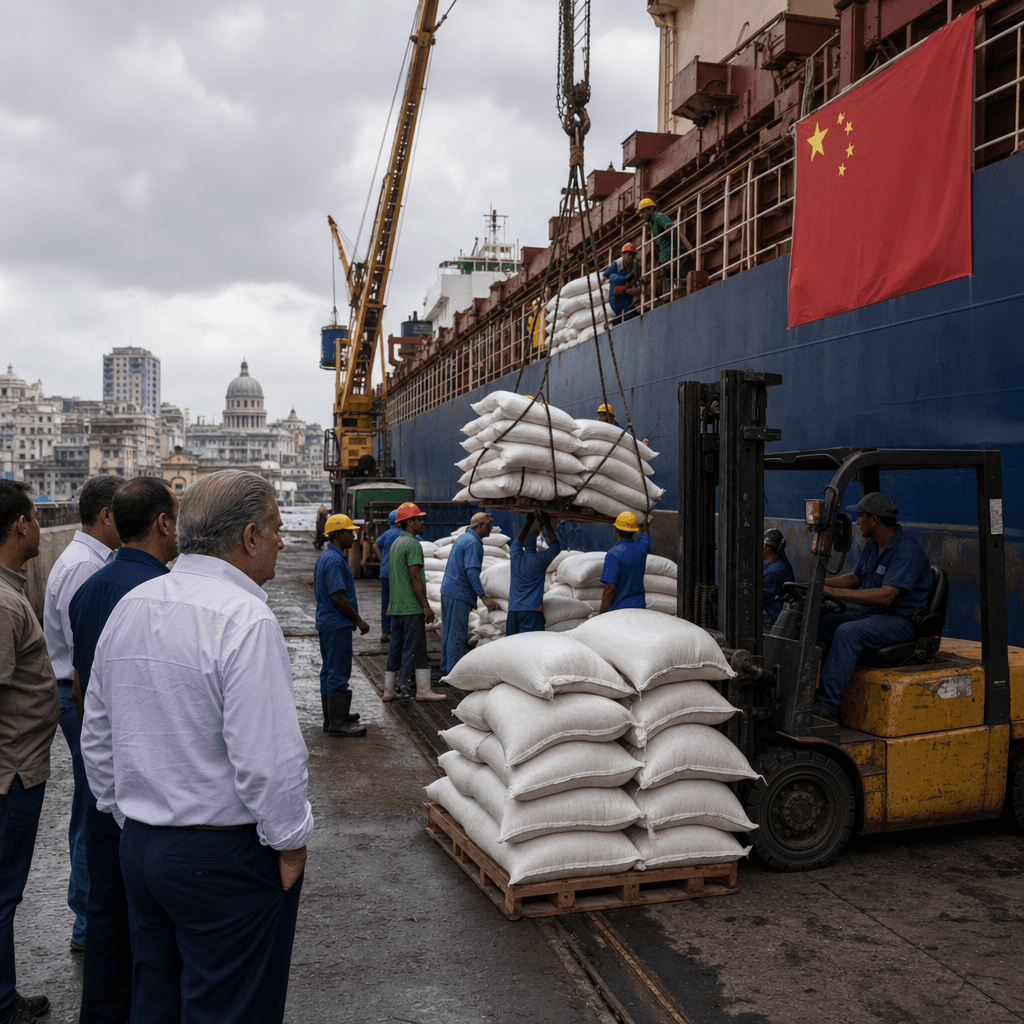
China is turning Cuba’s shortages into geopolitical leverage. Havana said the first 15,000 tonnes of a planned 60,000-ton rice donation arrived in the Port of Havana, and President Miguel Díaz-Canel publicly thanked Beijing while framing the shipment as proof that Cuba still has external backing as its humanitarian crisis worsens (Al Jazeera).
Why the shipment matters
The leverage runs both ways, but not equally. For Cuba, the rice is immediate relief in a country where blackouts, fuel shortages and transport breakdowns have pushed public services toward paralysis; earlier this month, Energy Minister Vicente de la O Levy said the island had exhausted its fuel supplies, and Al Jazeera reported that the U.S. had tightened sanctions and oil restrictions since January (Al Jazeera,
Al Jazeera). The political effect is more important than the tonnage: Beijing can deliver visible relief at low strategic cost, while Havana gets a survival buffer without solving the underlying energy collapse.
That is why the shipment matters beyond food. Cuba still relies on imports for most of its oil supply, and the blackout crisis has already produced island-wide outages and public frustration, according to Al Jazeera. On
Global Politics, this is a familiar pattern: sanctions and scarcity do not isolate a target state so much as push it toward whoever can supply the basics fastest.
China is buying influence, not just gratitude
Beijing is also sending a message to Washington. China has already condemned U.S. pressure on Cuba as coercive, and after the U.S. indictment of former Cuban leader Raúl Castro, Chinese officials said Washington should stop using sanctions and threats against its ally (BBC). Díaz-Canel’s gratitude is therefore not just diplomatic courtesy; it is an acknowledgment that Cuba’s room for maneuver is narrowing and that China is now one of the few powers willing to be seen as indispensable.
This helps Beijing on two fronts. First, it preserves a foothold in the Caribbean at a moment when the Trump administration is trying to check China’s influence in Latin America (Al Jazeera). Second, it reinforces the message that China will back governments under U.S. pressure, even when the support is mainly symbolic and humanitarian. For Havana, that symbolism matters because it signals that China will stay engaged even as Washington escalates.
What to watch next
The next decision point is whether the rest of the rice package arrives on schedule and whether Washington hardens its line further. Al Jazeera reported earlier this month that U.S. Secretary of State Marco Rubio offered Cuba $100 million in humanitarian aid conditioned on “meaningful reforms,” a test Havana has so far treated as political pressure rather than relief (Al Jazeera). Watch for two things over the coming days: any new U.S. sanctions response, and whether Cuba can distribute the Chinese grain fast enough to blunt the social damage before shortages and blackouts deepen again.
Discover more

International Relations
Pakistan's Key Role in US-Israel-Iran Meddle
Pakistan is seeking to mediate the US-Israel-Iran conflict, balancing high-stakes diplomacy against severe economic pressures and steep regional challenges.

Conflict & Security
Drone Warfare Killing Aid Workers at Unprec
Over 1,000 humanitarian workers killed in three years as cheap armed drones collapse legal protections. Gaza, Sudan, Ukraine, and DRC see deliberate targeting of aid convoys and hospitals with zero prosecutions.
Global
World Normalises Taliban as Afghan Women Eras
UN data shows Afghan women erased from public life as Russia recognises the Taliban, EU hosts officials in Brussels, and ICC warrants for gender persecution go unenforced.
Conflict & Security
West Africa Food Crisis: Three Shocks in 2026
Conflict, climate extremes, and the Strait of Hormuz closure drive a severe food crisis in West and Central Africa, with fertilizer prices surging 80% and millions displaced.