China's Rare Earth Strategy Shifts to Co-Opt
Beijing's new 'strategic co-option' doctrine embeds China inside foreign rare earth hubs
Model Diplomat10 min readAsia-Pacific
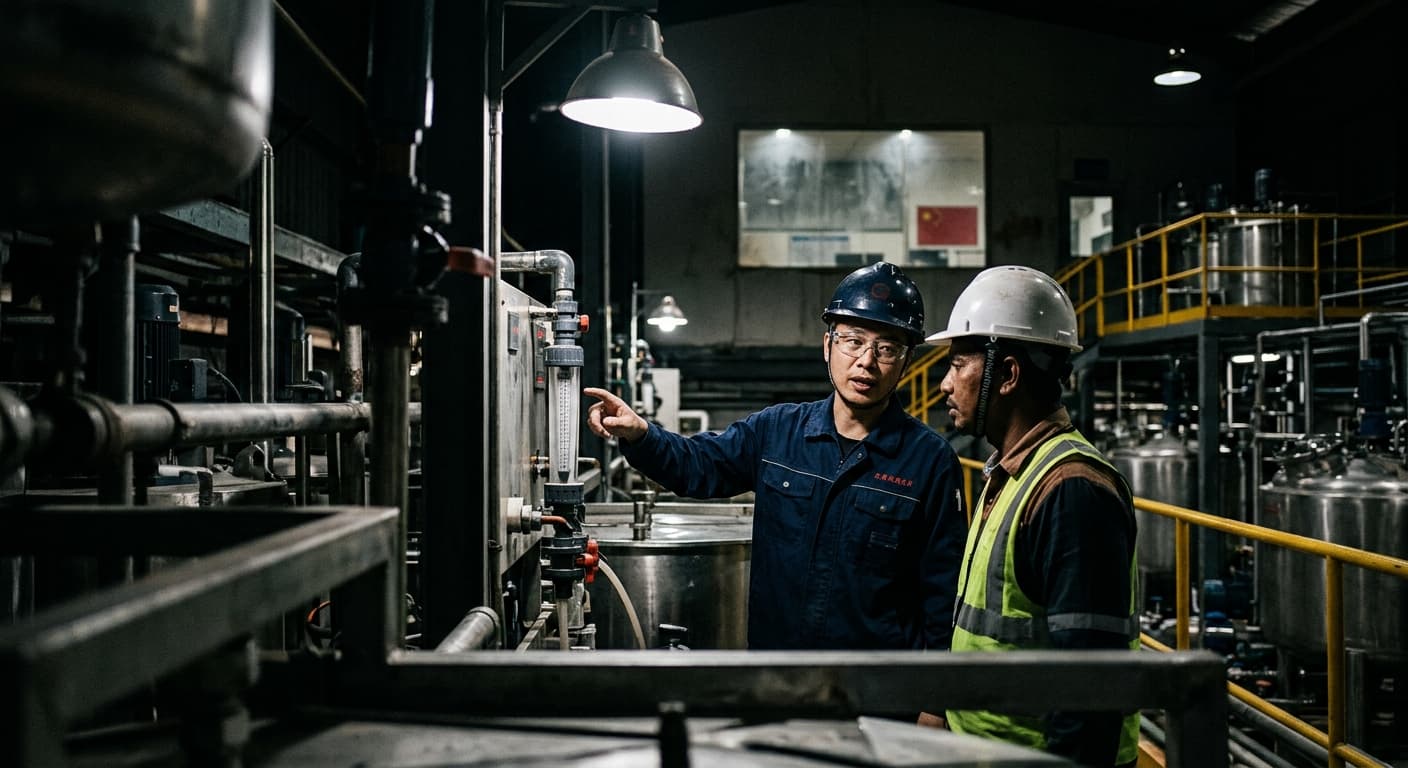
China's Rare Earth Strategy Has a New Doctrine — and Southeast Asia Is the Laboratory
Beijing no longer needs to block foreign rare earth industries. It just needs to be inside them. The playbook unfolding in Malaysia and Indonesia reveals how China plans to control global supply chains even as rivals build them.
On July 19, 2026, Jack Lifton, co-chair of the Critical Minerals Institute, published an analysis that reframes China's entire rare earth strategy. The objective, he argues, is no longer merely to dominate production at home. Beijing now aims to control the global industry by deciding which countries receive the technology, technicians, and market access required to compete. Malaysia and Indonesia — Southeast Asia's two most important emerging rare earth hubs — are the test cases for a model Beijing intends to replicate worldwide. IANS
China has held a near-monopoly on rare earth processing for more than a decade. In 2025, it produced 270,000 metric tons of rare earth oxide — roughly 69% of global mine production — but the real bottleneck is downstream. China controls approximately 91% of all rare earth oxide separation and metal refining capacity, and manufactures 94% of the world's sintered neodymium-iron-boron permanent magnets, according to a June 2026 study by the Royal United Services Institute. RUSI The Congressional Research Service confirmed the same figure: China processes about 90% of global rare earths and makes 94% of rare earth magnets.
CRS
That dominance gave Beijing a weapon. In April 2025, responding to U.S. tariffs, China imposed export licensing requirements on seven medium and heavy rare earth elements — samarium, gadolinium, terbium, dysprosium, lutetium, scandium, and yttrium — along with compounds, metals, and magnets derived from them. The controls caused immediate supply disruptions across Western defense and automotive supply chains. CSIS
But the April controls also clarified something Beijing understood better than its rivals: a blunt export ban hurts China's own downstream industry, which thrives on exporting finished magnets, not raw oxides. Chinese magnet exports rebounded within months. Oxide exports to Japan and the West, however, remained suppressed — a deliberate chokehold on the raw materials foreign magnet makers need to compete. RUSI
That asymmetry — throttle the inputs, sell the finished goods — is the old doctrine. The new doctrine is different.
Strategic Co-Option: The New Doctrine
Lifton's analysis, published in Investor News and reported by IANS, names what Beijing is doing: strategic co-option. Rather than trying to prevent rare earth industries from developing outside China — an objective Beijing recognizes it can no longer achieve — the new strategy is to insert Chinese technology, state-owned companies, technicians, and commercial relationships into whatever emerges. IANS
"China is saying, in effect, if a rare earth industry is going to develop in Malaysia, China intends to be inside it rather than standing outside and watching it become a competitor," Lifton writes.
This is a genuine strategic innovation. During the 2010 rare earth crisis, when China cut exports to Japan over a territorial dispute, the Chinese response was purely denial-based: restrict supply, watch rivals scramble. Today, the landscape is different. The U.S., Australia, Japan, and the European Union have committed tens of billions of dollars to building ex-China supply chains. Lynas Rare Earths — the Australian company that operates the world's only significant ex-China separation plant — produced commercial quantities of dysprosium oxide in Malaysia in May 2025 for the first time outside China. CSIS
China cannot stop that. So it is embedding itself inside it.
Malaysia: The Visible Front
Malaysia is where co-option is most visible. The country has made deliberate moves to position itself as a multi-aligned processing hub. In 2023, Malaysia banned exports of unprocessed rare earth material, requiring domestic value addition, while explicitly inviting both Chinese and non-Chinese investment. IANS
Since then, a complex industrial ecosystem has taken shape. Lynas — backed by a $250 million Japanese government investment through the Japan Organization for Metals and Energy Security, dating back to Japan's 2011 supply shock — operates the world's largest single rare earths processing plant in Kuantan. Carester, a French processing technology firm, and Malaco have announced plans for a separate rare earth separation operation. South Korea's JS Link is proceeding with a 3,000-tonne-per-year sintered NdFeB magnet facility near Lynas's plant. CSIS
Meanwhile, in September 2025, Malaysia's Prime Minister Anwar Ibrahim announced that Chinese leader Xi Jinping had supported Malaysia's bid for full BRICS membership and that China was willing to share rare earth processing capabilities — but only through partnerships with Malaysian state-linked firms, to protect proprietary technology. CFR Reuters reported that the same month that China and Malaysia were in talks for a joint rare earth refinery, possibly involving Malaysian sovereign wealth fund Khazanah Nasional and a Chinese state-owned enterprise.
Reuters
Lifton's framework clarifies what is happening: Beijing does not want Malaysia to become a purely Western or Japanese-sponsored competitor. It wants Malaysia to become a multi-aligned processing center in which China remains an indispensable participant. Chinese participation serves multiple objectives. It gives Chinese companies access to additional feedstocks without increasing mining pressure inside China. It positions Malaysia to serve markets — Southeast Asian, Middle Eastern, some European buyers — that increasingly require nominally non-Chinese production. And crucially, it prevents Malaysia from becoming an exclusively American-aligned rare earth platform. IANS
The U.S. has not stood still. Under President Trump, the U.S. signed a critical minerals Memorandum of Understanding with Malaysia. The U.S. government committed to purchasing rare earth oxides from Lynas at a price floor of $110 per kilogram — well above the prevailing market price of under $60 per kilogram as of mid-2025 — and Malaysia committed to refrain from imposing rare earth export bans or quotas on the United States. CSIS The 2025 U.S.-Malaysia bilateral deal was part of a broader Trump administration push that included similar agreements with Japan, Thailand, Vietnam, and Cambodia.
BBC
The outcome is a strategic tug-of-war over Malaysia's rare earth identity. China wants to be inside Malaysia's industry. The U.S. wants to own the offtake. Malaysia wants both — and both suitors are paying.
Indonesia: The Quiet Integration
Indonesia presents a different challenge, and China's approach there is quieter — but arguably more deeply embedded.
In February 2026, Indonesia announced it had identified eight prospective blocks containing rare earths and other strategic minerals, with locations in Kalimantan, Sulawesi, and Bangka Belitung. It assigned a new state-owned organization, Perminas, to oversee development and announced parallel research into processing technology. Indonesian officials have said they need to master rare earth processing and identified China, Japan, and South Korea as countries from which they can learn. IANS
On the surface, China has not yet announced a major, dedicated rare earth separation or magnet project in Indonesia. But that tells only half the story.
China already occupies an extraordinarily strong industrial position in Indonesia through nickel, stainless steel, batteries, smelting, and supporting infrastructure. Chinese companies have invested heavily in Indonesia's nickel industry — including the Pomalaa nickel sulfate facility — and operate vast industrial parks with captive coal power plants employing tens of thousands of Indonesian workers. CSIS The BBC reported in February 2026 that Indonesia had committed to facilitate U.S. firms in developing the country's rare earth infrastructure as part of a broader tariff deal, yet the deal also reinforced existing Chinese economic gravity.
BBC
Lifton's analysis points to a scenario where rare earth processing is simply attached to China's existing Indonesian industrial structure — nickel smelters, stainless steel plants, battery factories — without requiring a high-profile, stand-alone announcement. The processing chemistry for rare earths and nickel is not identical, but the infrastructure requirements — power, logistics, chemical reagents, waste management, skilled workforce — overlap considerably. If a Chinese industrial park in Sulawesi already has everything needed to separate nickel laterite ores, adding a rare earth separation circuit becomes a marginal cost decision, not a greenfield project. IANS
The Indonesian contrast is instructive. In Malaysia, co-option means partnering visibly with state-linked firms to share technology. In Indonesia, co-option may require no new deals at all — just the quiet expansion of an already-dominant Chinese industrial footprint to include rare earths as another input stream.
The Legal Weapon: Extraterritorial Export Controls
Behind the co-option strategy sits a legal framework that multiplies its power. In October 2025, China's Ministry of Commerce issued Announcement No. 61, which for the first time asserted extraterritorial jurisdiction over rare earth products manufactured outside China. White & Case
The rule is far-reaching. Any foreign company that uses Chinese-origin rare earth technology in its processing — or that manufactures products incorporating even 0.1% by value of Chinese-sourced rare earth elements — must obtain a Chinese export license. The regime extends to downstream items produced using Chinese mining, separation, or magnet-making technologies, regardless of where they are physically manufactured. Freshfields
The implications are profound. A Malaysian magnet factory built with Chinese-licensed technology — or a Western automaker using magnets that contain Chinese-origin terbium — could theoretically require Chinese government approval to export its finished products. The European Parliamentary Research Service noted in an analysis that "for the first time, the Chinese law has extraterritorial reach, with far-reaching implications for many critical supply chains." European Parliament
The European Central Bank estimated that over 80% of large European firms are no more than three intermediaries away from a Chinese rare earth producer — a measure of systemic exposure that no tariff or subsidy can unravel quickly. European Parliament
In November 2025, China suspended the second wave of export controls until November 2026 — a temporary truce. But the legal architecture remains in place, and the suspension is conditional. CFR
The Historical Parallel: Japanese FDI and the 1980s Playbook
There is a historical analogy that Lifton does not make explicit, but that the data supports. In the 1980s, as the U.S. and Europe feared Japanese domination of semiconductor manufacturing, Japanese firms did something counterintuitive: they invested in semiconductor fabs in the U.S., supplying capital and technology in exchange for market access and influence over standards. By 1990, Japanese firms had acquired significant equity stakes in American semiconductor operations, and Japanese tool makers were embedded in every major U.S. fabrication line.
China's rare earth co-option is the 2020s version of the same strategy — adapted for an era of great-power competition and supply chain weaponization. The difference is that China's legal framework gives it a veto power over ex-China operations that Japan never possessed. If Beijing can embed Chinese technology into a Malaysian or Indonesian plant, and that technology falls under the October 2025 extraterritorial controls, then China acquires a lever over that plant's output even if it owns zero equity.
The Counterplay — and Why It's Slow
The U.S. and its allies have not been inactive. The Trump administration mobilized what CSIS described as "the boldest domestic industrial policy in modern history" — billions in financing across the DOD, EXIM Bank, and Commerce Department, price floors, guaranteed government offtake, Project Vault stockpiles, and new bilateral minerals frameworks with Australia, Japan, Malaysia, Saudi Arabia, and others. CSIS
EXIM has issued letters of intent for rare earth supply chain projects totaling nearly $4 billion. MP Materials established a landmark public-private partnership with the DOD in July 2025, backed by a multi-billion-dollar package including $400 million in preferred stock, a $150 million loan, and a price floor of $110 per kilogram for neodymium-praseodymium oxide. CSIS
But mining and processing are industries defined by long lead times. As CSIS noted in its April 2026 assessment, "True resilience will be measured not by policy announcements or deployed capital, but by sustained output, diversified supply, and the ability to attract private investment." CSIS
The displacement in actual rare earth and magnet output remains modest. New magnet manufacturing capacity expected online in summer 2026 will begin to reduce reliance on China, but self-sufficiency remains years away. Al Jazeera reported in October 2025 that even with sustained policy momentum, breaking China's dominance would likely take 10 to 15 years. Al Jazeera
What To Watch
Three catalysts will determine how this contest unfolds:
-
November 10, 2026: China's suspension of the October 2025 extraterritorial export controls expires. If Beijing reinstates them — or extends them selectively to target new foreign projects — the legal environment for Malaysian and Indonesian co-investment changes overnight.
-
U.S.-Indonesia rare earth infrastructure development: The February 2026 U.S.-Indonesia tariff deal includes language committing Indonesia to facilitate U.S. firms in developing rare earth infrastructure. The first concrete project announcements will signal whether Washington can counter China's embedded industrial advantage or whether the deal remains aspirational.
-
Khazanah-China refinery deal in Malaysia: If the reported talks between Malaysia's sovereign wealth fund and a Chinese state-owned rare earth enterprise produce a signed joint venture, it will be the clearest validation yet of Lifton's co-option thesis — and a model Beijing will replicate elsewhere.
The Bottom Line
China's rare earth strategy has acquired a second track. The first track — domestic monopoly on processing, export controls on inputs — remains intact. The second track — strategic co-option of whatever processing capacity emerges outside China — is the new addition, and it changes the competitive dynamics of the entire industry. If China can insert itself into every major non-Chinese rare earth project as an indispensable technology supplier, licensor, or joint venture partner, then the Western push to diversify supply chains may succeed only in building plants that China still controls from the inside. Malaysia and Indonesia are the first two tests. The outcome will determine whether the global rare earth industry of the 2030s is genuinely diversified — or merely decentralized under a single Chinese operating system.
Discover more
US Politics
House Ethics Committee Pushes Sexual Miscond.
The House Ethics Committee has shifted responsibility for sexual harassment settlement records to the Office of Congressional Workplace Rights, complicating disclosure efforts.
India
700 Activists Accuse PM Modi of MCC Breach
Over 700 activists allege PM Modi breached election code with a televised address attacking opposition parties just before state elections.
Global Politics
Trump's Conflicting Messages on Iran War
Trump's mixed messages on Iran reflect a strategy of audience management, benefiting Tehran amid a complex geopolitical landscape.

Conflict & Security
Drone Warfare Killing Aid Workers at Unprec
Over 1,000 humanitarian workers killed in three years as cheap armed drones collapse legal protections. Gaza, Sudan, Ukraine, and DRC see deliberate targeting of aid convoys and hospitals with zero prosecutions.