China's Pacific Missile Test Boosts Australia
A diplomatic win for Australia amid China's missile launch.
Model Diplomat8 min readPacific
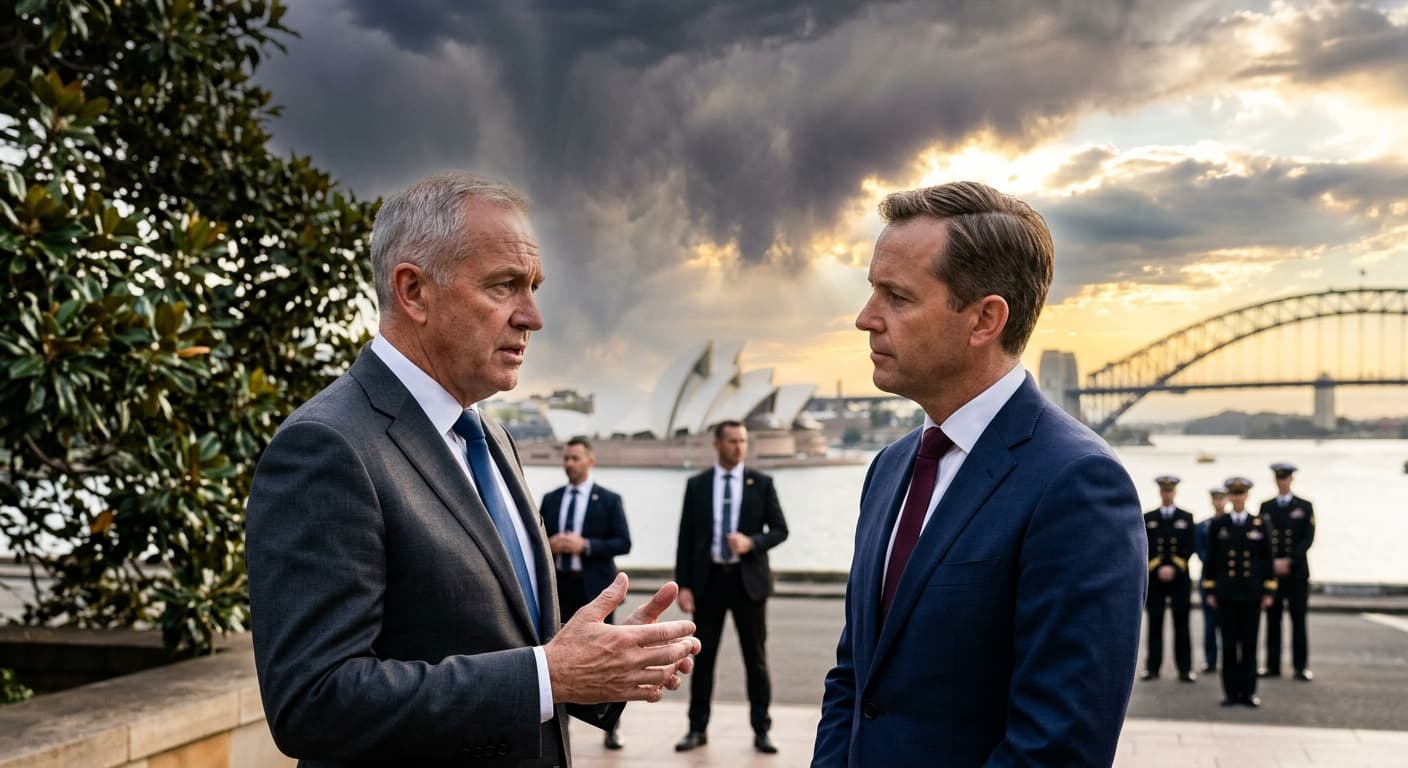
China's Pacific Missile Test Handed Australia a Diplomatic Win
China gave the US 'a few hours' warning before its July 6 SLBM launch into the South Pacific — and just handed Anthony Albanese the Fiji signing bonus of the decade.
Beijing's July 6 submarine-launched ballistic missile test into the South Pacific Nuclear Free Zone — flown roughly 7,300 kilometres from the South China Sea with only hours of warning to Washington and 90 minutes to Tokyo — will be remembered less for what it demonstrated about China's nuclear reach than for what it broke in the Pacific. The launch coincided within hours with Australia's signing of the Ocean of Peace Alliance with Fiji, and it converted a routine defence pact into the strategic pivot of Pacific security for the rest of the decade. According to a July 7 CSIS commentary by Joseph Rodgers, Bonny Lin and Leon Li, it was the first time China has ever fired a submarine-launched ballistic missile into international open waters — a strategic first that Beijing then partially squandered on a diplomatic own goal.
The analytic question is not whether the People's Liberation Army can now target the continental United States from a Type 094 boat operating out of Hainan. The Pentagon has assumed that since at least 2021. It is why Beijing chose to prove it publicly, in the same waters, on the same day that Australian Prime Minister Anthony Albanese was in Suva signing Fiji's first-ever military alliance — and why every Pacific capital that mattered got a text-message level of warning instead of the days of detail that the US and Russia trade under their 1988 launch-notification agreement.
What actually happened, in the timeline that matters
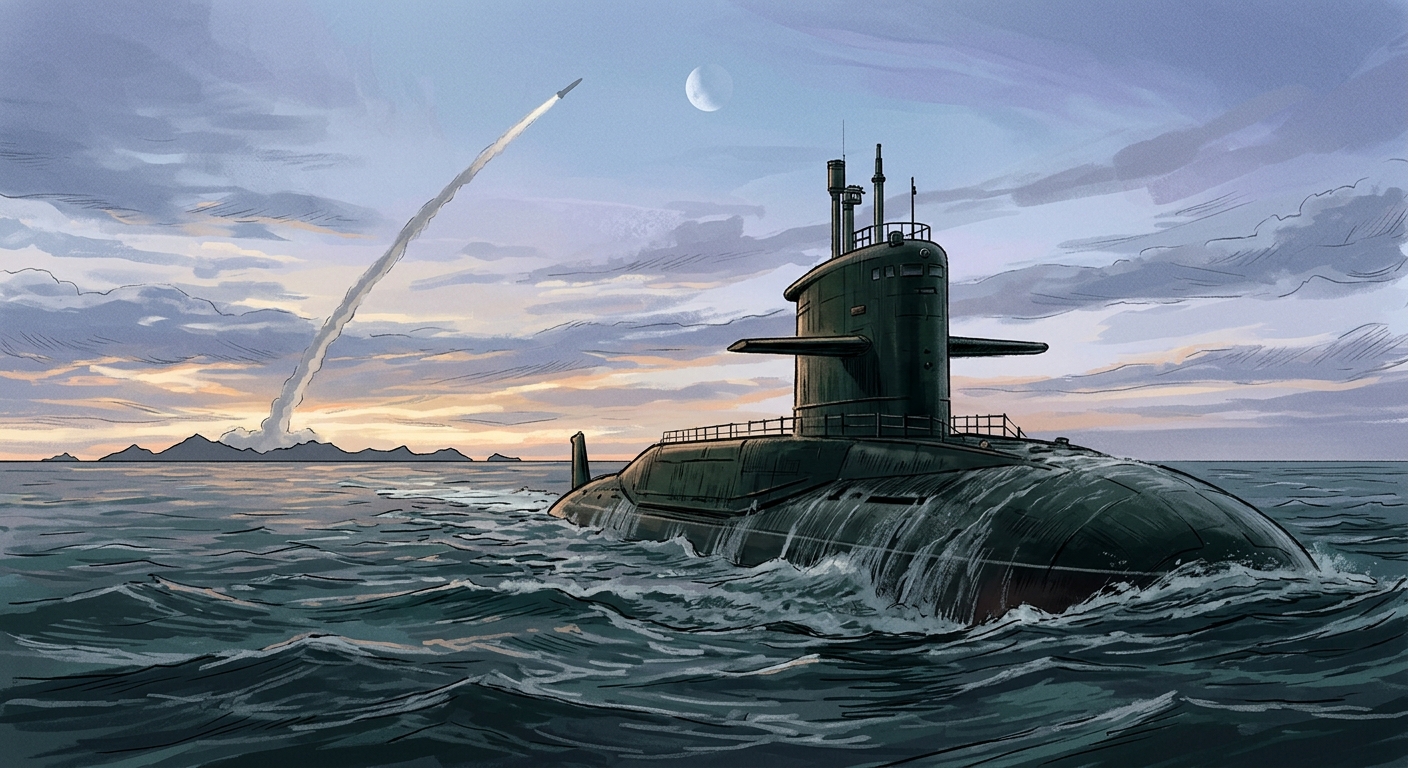
At 04:01 UTC on July 6, a PLA Navy strategic submarine fired a ballistic missile — assessed by CSIS as either a JL-2 or the longer-range JL-3 — from waters inside China's South China Sea "bastion," on a trajectory that the BBC reported likely crossed Philippine airspace before impacting a designated box in the South Pacific. Xinhua confirmed the launch and asserted that "relevant countries had been notified in advance" and the test targeted no state in particular.
The advance-notice record tells a different story. Australia's Defence Minister Richard Marles confirmed Canberra received roughly 23 hours' notice. Japan received about 90 minutes. Principal Deputy Spokesperson Tommy Pigott, in a July 8 State Department statement summarised by Reuters via HCN Times, said Washington received "a few hours" notice with insufficient detail — well below what the other four P5 nuclear-weapon states routinely provide. Pigott framed the launch as emblematic of "Beijing's rapid and opaque nuclear weapons buildup."
The scale of that buildup is the piece Western capitals cannot unsee. The Pentagon's 2024 Military and Security Developments Involving the PRC assesses that China surpassed 600 operational nuclear warheads by mid-2024 and will hold more than 1,000 by 2030.
SIPRI's 2025 yearbook documents a 100-warhead increase in a single year, from 500 in January 2024 to 600 in January 2025 — and, for the first time, an assessment that some Chinese warheads may now be mated to missiles in peacetime, breaking a decades-old Chinese policy of keeping the two separated.
Beijing's own goal in Suva
The strategic timing was too clean to be coincidence. Chinese state media framed the launch as a "routine" annual exercise. The Global Times, in an editorial cited by the Lowy Institute, called it "necessary and restrained" and told critics they would "have to accept and get used to" this level of PLA reach.
The optics were catastrophic. As Albanese sat in Suva with Fiji's Prime Minister Sitiveni Rabuka signing the Ocean of Peace Alliance — Fiji's first alliance ever, and Australia's fourth after the United States, New Zealand and Papua New Guinea — a Chinese nuclear-capable missile was landing in the South Pacific Nuclear Free Zone. That zone was established by the 1985 Treaty of Rarotonga, and China itself signed and ratified its Protocols 2 and 3 in 1988 — undertakings not to use, threaten to use, or test nuclear explosive devices in the zone. The July 6 warhead was a dummy. The delivery system was not. Lowy Institute analyst Oliver Nobetau put it plainly: "A missile test makes Pacific countries spectators in their own region, much like they were during the Second World War."
Solomon Islands Prime Minister Matthew Wale — whose 2022 security pact with Beijing was the shock that reset Australian Pacific policy — told Albanese in Honiara that the test was "not something a friend does." That sentence, from that leader, in that town, is the diplomatic quote of the year in the region.
Why Beijing pulled the trigger anyway
CSIS's Rodgers, Lin and Li identify four drivers, and the ranking matters. First, coercive signalling against Canberra's Pacific push: the Vanuatu Nakamal Agreement, the Ocean of Peace Alliance with Fiji, and the Pukpuk Treaty with Papua New Guinea — all inked or activated within an eight-day window. Second, retaliation against RIMPAC 2026, in which the Philippine Coast Guard became the first foreign coast guard to participate. Third, alignment theatre with Moscow, staged against the backdrop of the concurrent Joint Sea 2026 exercise in Qingdao. Fourth, and only fourth, a technical validation of the JL-3 or an extended-range JL-2.
The first three of those are political. That is the analytical hinge: this was not a scheduled range test that inconveniently coincided with Fiji. It was a message. And the message was aimed at the wrong audience.
Because Pacific leaders read it exactly as intended — and then rejected it. The BBC's Chinese-language service reported Australian Foreign Minister Penny Wong accusing Beijing of "destabilising" the region from Suva itself, while New Zealand Foreign Minister Winston Peters called the launch "an unwelcome and concerning development." Japan's Foreign Ministry said 90 minutes was not notice; it was choreography.
The notification gap Beijing refuses to close
The technical scandal that will outlast the news cycle is China's continued refusal to subscribe to the Hague Code of Conduct against Ballistic Missile Proliferation, which now has 143 subscribing states and requires pre-launch notifications no less than 24 hours in advance, covering trajectory, launch area, and missile class. China is the only major space-faring nuclear-weapon state entirely outside HCOC. It also walked away from the bilateral US–China nuclear arms-control talks it re-opened in late 2023 and
suspended in July 2024 in retaliation for continued US arms sales to Taiwan.
CSIS's Rodgers and Lin capture the strategic irritation: Beijing wants credit for pre-notification when it suits its diplomatic narrative — Chinese diplomats explicitly cited the 2024 DF-31 test's advance notice at the 2026 NPT Review Conference — but refuses to institutionalise the practice. This is discretionary transparency, and it is designed to be revocable. It is also cheaper than an arms-control agreement. That is the point.
What the Pacific rearrangement now looks like
The strategic map that emerged the week of July 6 is not the one Beijing wanted.
Australia has locked in four Pacific alliances — the United States, New Zealand, Papua New Guinea, and now Fiji — and every agreement of the past week embeds what Nobetau calls the "consultation clause": partner states must consult Canberra before letting a third party (read: China) into sensitive security cooperation. Vanuatu, Fiji, and Papua New Guinea have now each accepted variants of this constraint in exchange for climate migration pathways, budget support, policing capacity, or trade preferences.
The International Institute for Strategic Studies reported in February 2026 that Bohai shipyard has now produced up to nine Type 093B guided-missile attack submarines, with the first hull of a new class launched in early 2026. The JL-3, which the
Congressional Research Service assesses at 5,400 nautical miles, allows a Type 094 SSBN operating from the South China Sea bastion to hold the western continental United States at risk without leaving the East Asian marginal seas. That is the real strategic message of July 6 — and it required no diplomatic damage in Fiji to deliver.
The US Studies Centre quoted its CEO Michael Green calling the launch a "clear attempt by Beijing to intimidate Pacific island nations and Australia." That reading is now the consensus in Canberra, Wellington, and Tokyo. It is likely to become policy in Suva and Honiara.
Forward look — the catalysts to watch
- September 2026 — Pacific Islands Forum leaders' meeting, Solomon Islands. Prime Minister Wale has already floated a "regional security treaty" for Pacific states. If the missile test converts that into concrete text, it will be the most consequential Pacific security architecture since ANZUS.
- Late 2026 — Pentagon China Military Power Report. Analysts will look for the first US assessment of a demonstrated at-sea, open-ocean SLBM strike capability, and the corresponding upward revision of China's operational warhead trajectory.
- 2027 NPT Preparatory Committee. Beijing's willingness — or refusal — to formalise ballistic missile launch notification will determine whether the July 6 test is remembered as a one-off provocation or the moment China's "responsible nuclear power" narrative collapsed.
- US Senate action on the Rarotonga Protocols. The United States remains the only P5 state that has signed but not ratified Protocols 1, 2, and 3, per
the Australian Institute of International Affairs. Ratification is now the cheapest, most credible response Washington can offer Pacific partners.
Diplomat View
The July 6 launch will be misremembered in Washington think-tank circles as a nuclear escalation story. It is not. It is a Pacific diplomacy story, and the strategic winner is Anthony Albanese. Beijing had two launch options — one from the Bohai Sea, one from the South China Sea — and chose the option that guaranteed overflight of the Philippines and impact inside the Rarotonga zone on the same day Fiji joined the Australian security architecture. That is not muscle-flexing; that is unforced error, and it will accelerate exactly the Pacific realignment Beijing has spent five years trying to prevent.
The falsifiable prediction: within eighteen months, at least one additional Pacific Islands Forum member — most likely Tonga or Nauru — will sign a bilateral security consultation clause with Australia modelled on the Ocean of Peace Alliance, and the Pacific Islands Forum will adopt language explicitly critical of nuclear-capable missile tests in the zone. If instead Beijing successfully persuades any PIF member to reject or dilute the consultation-clause model before end-2027, revise the forecast: the July 6 test will have been coercively effective, and the Pacific security balance will be genuinely contested rather than tilting one way. The variable to watch is not warhead counts. It is signatures on paper in Suva, Honiara, and Port Moresby.
The Bottom Line
China proved on July 6, 2026 that it can strike the continental United States from a Hainan bastion without breaking cover — and simultaneously convinced Pacific island states that they need Canberra's alliance architecture more than Beijing's belt-and-road cheque. The hours of warning Washington received is the headline; the diplomatic gift to Australia is the story. Beijing bought a strategic first at the price of the Pacific.
Discover more

India
India-South Korea $50B Trade Expansion Plan
India and South Korea target $50 billion in bilateral trade by 2030, focusing on industrial cooperation and strategic alignment amid US pressures.

International Relations
Economist Impact Sustainability Week 2026
Economist Impact Sustainability Week 2026 spotlights the energy transition, AI in clean technology, and supply chain resilience as themes for global leaders.

India
Delhi CM Rekha Gupta Blasts Opposition's Delm
Delhi CM Rekha Gupta's remarks on women's quota defeat reveal BJP's strategy for the 2029 Lok Sabha elections, focusing on delimitation.

Economics
Fed's Amex AML order puts correspondent banking on notice
Federal Reserve's Amex AML order requires board-level controls and a 90-day plan; OCC fined the bank $350 million over enterprise-wide deficiencies.