China’s Combat Patrols Near Taiwan Explained
Beijing's military pressure tactics on Taiwan analyzed
Model Diplomat3 min readAsia
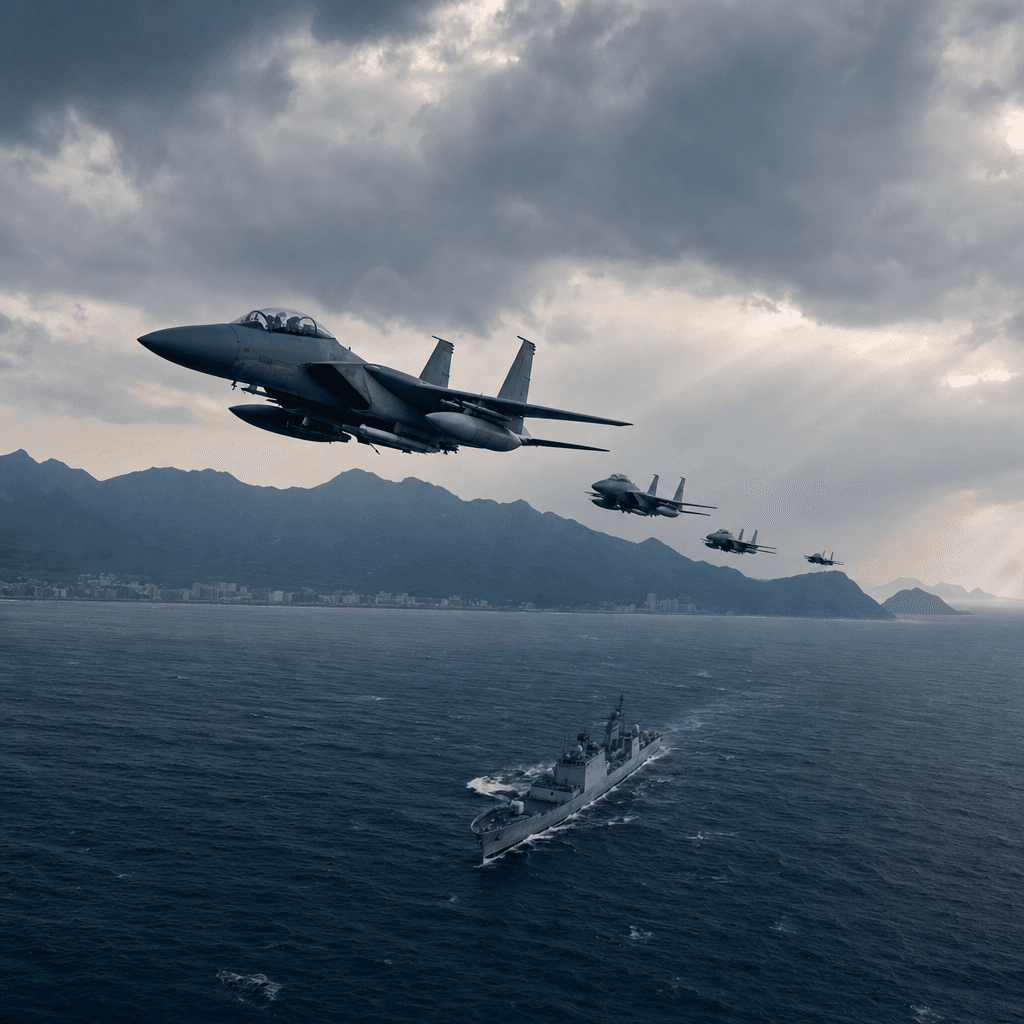
China’s Combat Patrols Near Taiwan Raise the Cost of Deterrence
Beijing is using routine-looking military pressure to keep Taiwan off balance, signal resolve after the Trump-Xi summit, and widen the gap between air defense and crisis management.
What Beijing is doing
Taiwan said Tuesday it tracked a second Chinese “joint combat readiness patrol” near the island in a week, with 29 aircraft and seven warships detected and 24 sorties crossing the median line, according to Al Jazeera. Taipei said its forces responded as normal, but the point of these patrols is not surprise; it is attrition by repetition. Each flight forces Taiwan to scramble, log, track, and brief, while Beijing demonstrates it can turn the Taiwan Strait into a near-daily operating zone.
That pattern fits the broader pressure campaign. Reuters reported this week that a Chinese coast guard ship left waters near Taiwan-controlled Pratas after a tense standoff, while Taiwan said the Chinese vessel had pressed sovereignty claims unusual for the area and stayed longer than expected (Chinese vessel leaves after tense standoff near Taiwan-controlled islands). Separately, Taiwan’s security chief said China had deployed more than 100 navy, coast guard, and other vessels across waters from the Yellow Sea to the South China Sea and the western Pacific after the Trump-Xi summit (
Taiwan security chief says China deployed ‘over 100 vessels’ in regional waters).
Why it matters
This is not just about airspace violations. Beijing is stitching together air patrols, carrier movement, coast guard pressure, and gray-zone activity around Taiwan-controlled islands to normalize Chinese presence and blur the line between peacetime coercion and crisis. Reuters, via CNA, reported that the Liaoning sailed through the Taiwan Strait in April, the first carrier transit there since late last year, while Chinese state rhetoric continues to frame the strait as sovereign Chinese waters (Chinese aircraft carrier sailed through Taiwan Strait, Taipei says).
That matters because Taiwan’s defense problem is now cumulative. The island’s military has to distinguish routine pressure from preparation for something larger, all while preserving readiness and avoiding accidental escalation. Beijing benefits from that ambiguity. Taipei loses because every new patrol raises the baseline of alert without forcing a decisive international response. Washington and Tokyo also lose flexibility: the more often China operates near Taiwan, the more any future move looks less like a shock and more like the next step in a campaign.
The timing is also politically useful for Beijing. Reuters reported that Xi Jinping warned Donald Trump at their Beijing summit that mishandling Taiwan could lead to conflict, while U.S. officials avoided any public concession on the issue (Trump touts business wins as China airs Iran, Taiwan concerns - CNA). The patrols now look like reinforcement: China is reminding Washington that Taiwan is not a side issue, but the core leverage point in the bilateral relationship.
What to watch next
The key test is whether Taiwan’s defense ministry keeps seeing this as a one-off spike or the start of a more sustained tempo. Watch the next daily MND tallies, any follow-on carrier movement from the Liaoning, and whether Beijing comments publicly on the patrol. If the pattern holds, the message is clear: China is not trying to hide pressure on Taiwan — it is trying to make it look normal.
Discover more

Global Politics
US Seizes Iranian Ship, Tensions Surge
The US seizure of the Iranian ship Touska highlights a shift in control over the Strait of Hormuz, favoring Iran's strategic position.

Conflict & Security
Drone Warfare Killing Aid Workers at Unprec
Over 1,000 humanitarian workers killed in three years as cheap armed drones collapse legal protections. Gaza, Sudan, Ukraine, and DRC see deliberate targeting of aid convoys and hospitals with zero prosecutions.

Global
World Normalises Taliban as Afghan Women Eras
UN data shows Afghan women erased from public life as Russia recognises the Taliban, EU hosts officials in Brussels, and ICC warrants for gender persecution go unenforced.
Conflict & Security
West Africa Food Crisis: Three Shocks in 2026
Conflict, climate extremes, and the Strait of Hormuz closure drive a severe food crisis in West and Central Africa, with fertilizer prices surging 80% and millions displaced.