China Reframes Border Dispute in Delhi Talks
Wang Yi prioritizes partnership over LAC tensions
Model Diplomat2 min readAsia
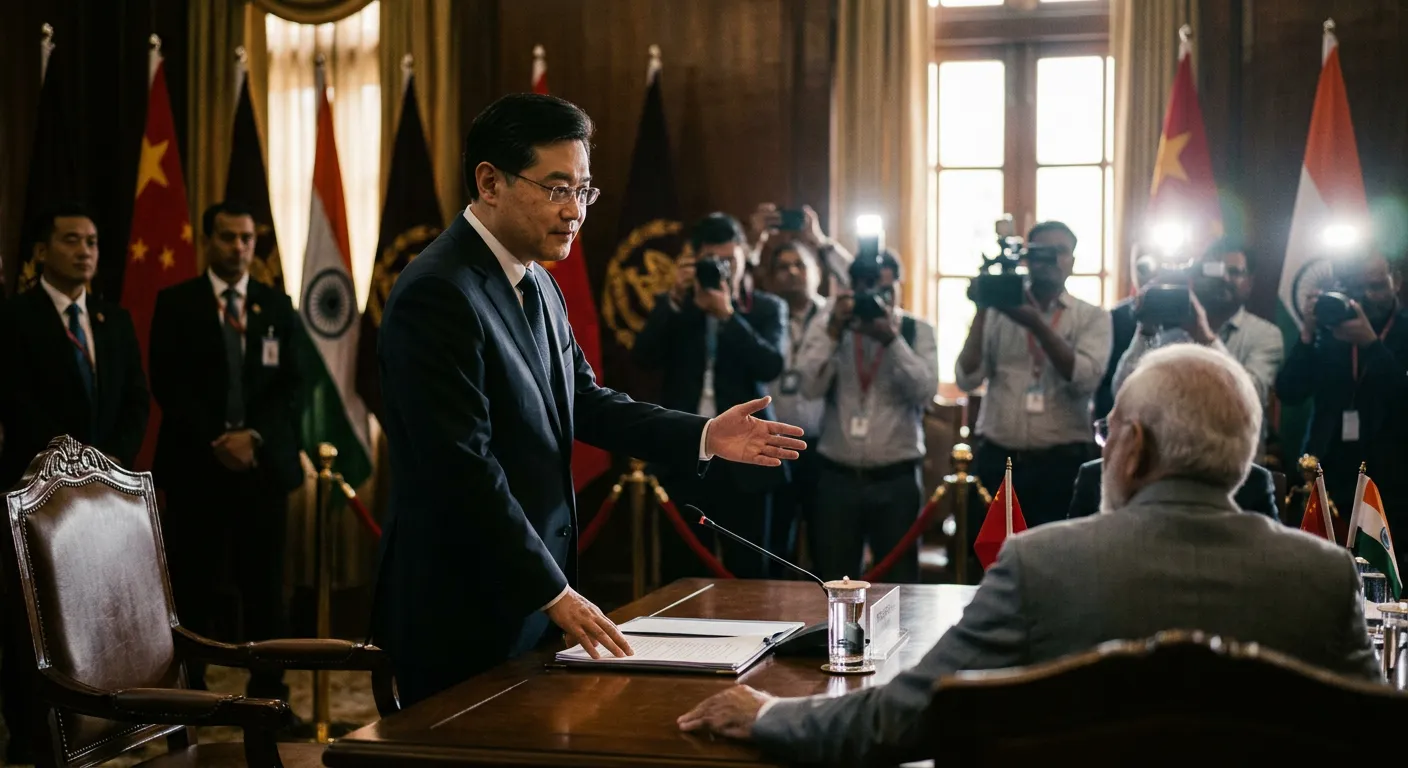
China Reframes Border Dispute as Secondary Issue in Delhi Talks
Wang Yi signals Beijing prioritizes long-term partnership over LAC tensions, testing how far India will compartmentalize the conflict.
China's Foreign Minister has shifted rhetorical weight away from resolving the border dispute, signaling in talks with India's National Security Adviser that the two nations should contain the LAC issue rather than solve it—and move forward on broader strategic alignment. In a Monday meeting in New Delhi, Wang Yi told Ajit Doval that both sides must "respect each other's core interests" and "place the China-India border issue in an appropriate position, so that it doesn't affect the overall situation of bilateral relations."
The language matters. Beijing is not calling for border resolution—it's calling for quarantine. Wang emphasized that India and China are "partners, not rivals" and should view cooperation "from a global perspective," framing the boundary dispute as subordinate to economic and diplomatic alignment on BRICS, Global South development, and regional multipolarity.
This reflects Beijing's confidence after 18 months of incremental normalization. Since the 2024 thaw—when both sides agreed to reduce military presence along parts of the LAC—China has been testing whether India will accept asymmetry on the border in exchange for restored dialogue mechanisms and trade. Wang called Tuesday for India and China to "accelerate the resumption of dialogue mechanisms" stalled since 2020, citing that nearly 50 bilateral mechanisms remain frozen—a way of signaling lost economic and institutional ground.
What China Wants
Wang's framing reveals Beijing's calculation: lock India into the Global South coalition under BRICS, where New Delhi's interests align with Beijing's on opposition to Western dominance of trade and finance. By offering "cooperation from a global perspective" and support for India's BRICS chair role (which runs through September's summit), Wang is creating political pressure for India to deprioritize the border. The Hindu reported that Chinese officials view Xi Jinping's potential attendance at the September BRICS summit as contingent on continued progress in normalization—a high-stakes lever.
Doval's response was guarded: MEA spokesperson Randhir Jaiswal said the Indian side emphasized "stable, predictable and constructive bilateral relations" and described talks as "forward-looking." India has not committed to subordinating border concerns. But the mere fact that both sides are discussing this trade-off reveals a real negotiation underway.
The next test comes when Doval travels to Beijing for the next round of Special Representatives talks on the border issue. If Xi's summit attendance hinges on further concessions—and if India prioritizes BRICS cohesion—New Delhi may accept a face-saving formula: managed competition on the border, expanded cooperation elsewhere. That outcome would represent a quiet strategic shift in how India manages its relationship with its largest rival.
Sources cited: The Indian Express,
The Hindu,
TenNews,
Asianet Newsable
Discover more

India
India-South Korea $50B Trade Expansion Plan
India and South Korea target $50 billion in bilateral trade by 2030, focusing on industrial cooperation and strategic alignment amid US pressures.
India
CPI(M) Calls to Decouple Quota from Delimita
CPI(M) advocates for a 33% women's quota in Lok Sabha by 2029, removing the need for delimitation and census linkage.

International Relations
Pakistan's Key Role in US-Israel-Iran Meddle
Pakistan is seeking to mediate the US-Israel-Iran conflict, balancing high-stakes diplomacy against severe economic pressures and steep regional challenges.

Conflict & Security
Drone Warfare Killing Aid Workers at Unprec
Over 1,000 humanitarian workers killed in three years as cheap armed drones collapse legal protections. Gaza, Sudan, Ukraine, and DRC see deliberate targeting of aid convoys and hospitals with zero prosecutions.