CENTCOM Strikes Iran: A Toll War Begins
U.S. military actions reshape Hormuz conflict dynamics.
Model Diplomat8 min readMiddle East
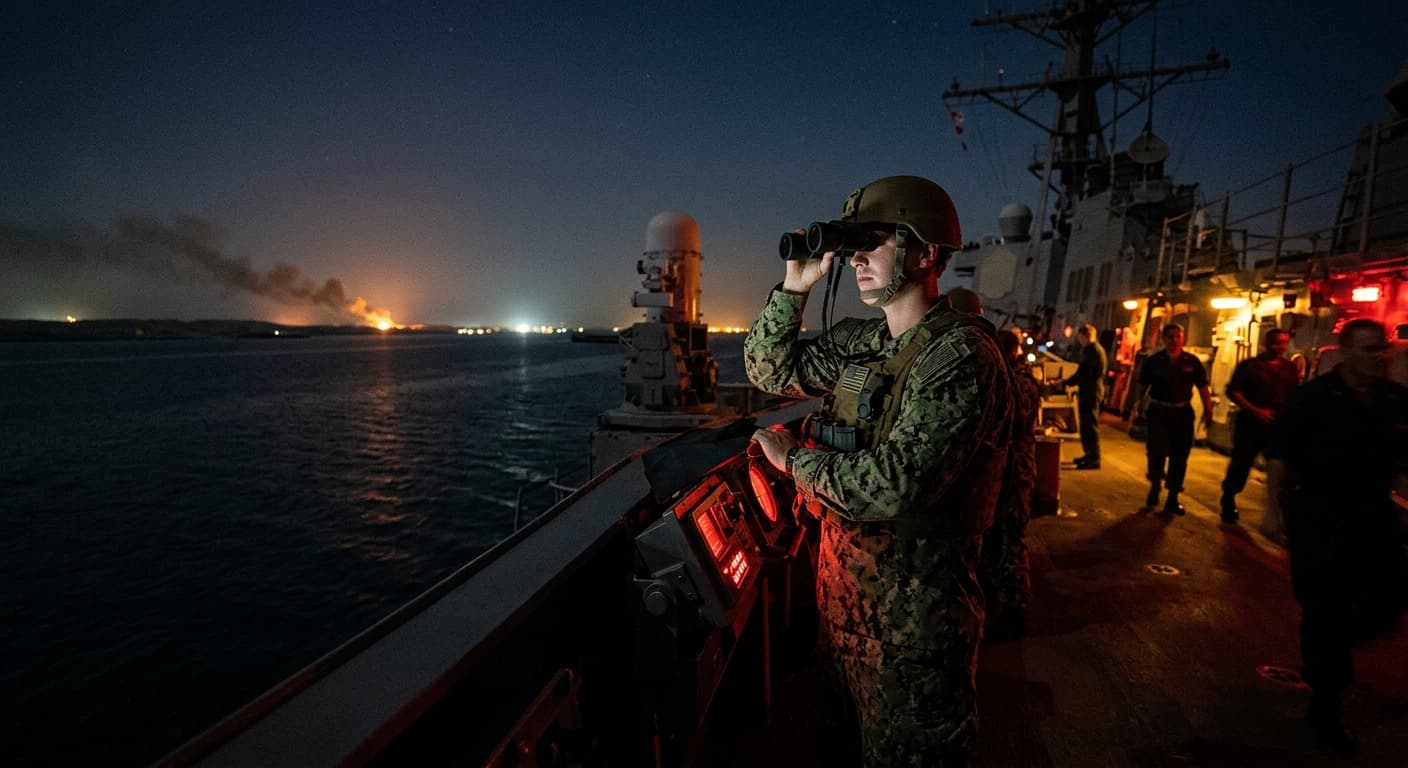
CENTCOM's second strike on Iran turns a Hormuz deal into a toll war
U.S. Central Command's July 8, 2026 strikes on Iran's southern coast collapse the Islamabad MoU and reframe the U.S.-Iran war as a fight over who taxes the Strait of Hormuz.
The U.S. military hit Iranian coastal targets in Bandar Abbas, Bushehr, Chabahar, Konarak and Aq Qala early on July 8, 2026, the second wave in 36 hours after Iranian projectiles struck three commercial tankers in the Strait of Hormuz. The strikes are not a nuclear war — they are a toll war, and the collapsing 14-point Islamabad Memorandum of Understanding was always more about who charges ships passing through Hormuz than about who enriches uranium in Natanz. That is the frame that explains why Donald Trump declared the ceasefire "over" from Ankara, why the Treasury yanked Iran's oil-export waiver 20 days after granting it, and why Brent crude jumped only 4.2% rather than the double-digit spike of April.
What CENTCOM did, in precise terms
At the direction of President Trump, U.S. Central Command said its forces "have started conducting additional strikes against Iran to further degrade their ability to threaten freedom of navigation in the Strait of Hormuz," according to the command's July 8 statement carried by Al Jazeera. The
BBC reported explosions in Sirik, Jask, Qeshm Island and Bandar Abbas; Iranian state television confirmed eight soldiers killed in the Tuesday wave alone. CENTCOM said the first wave, on July 7, hit "over 80 targets with precision munitions" — air-defence radars, coastal surveillance nodes, anti-ship cruise-missile batteries, drone launch sites and roughly 60 IRGC fast boats.
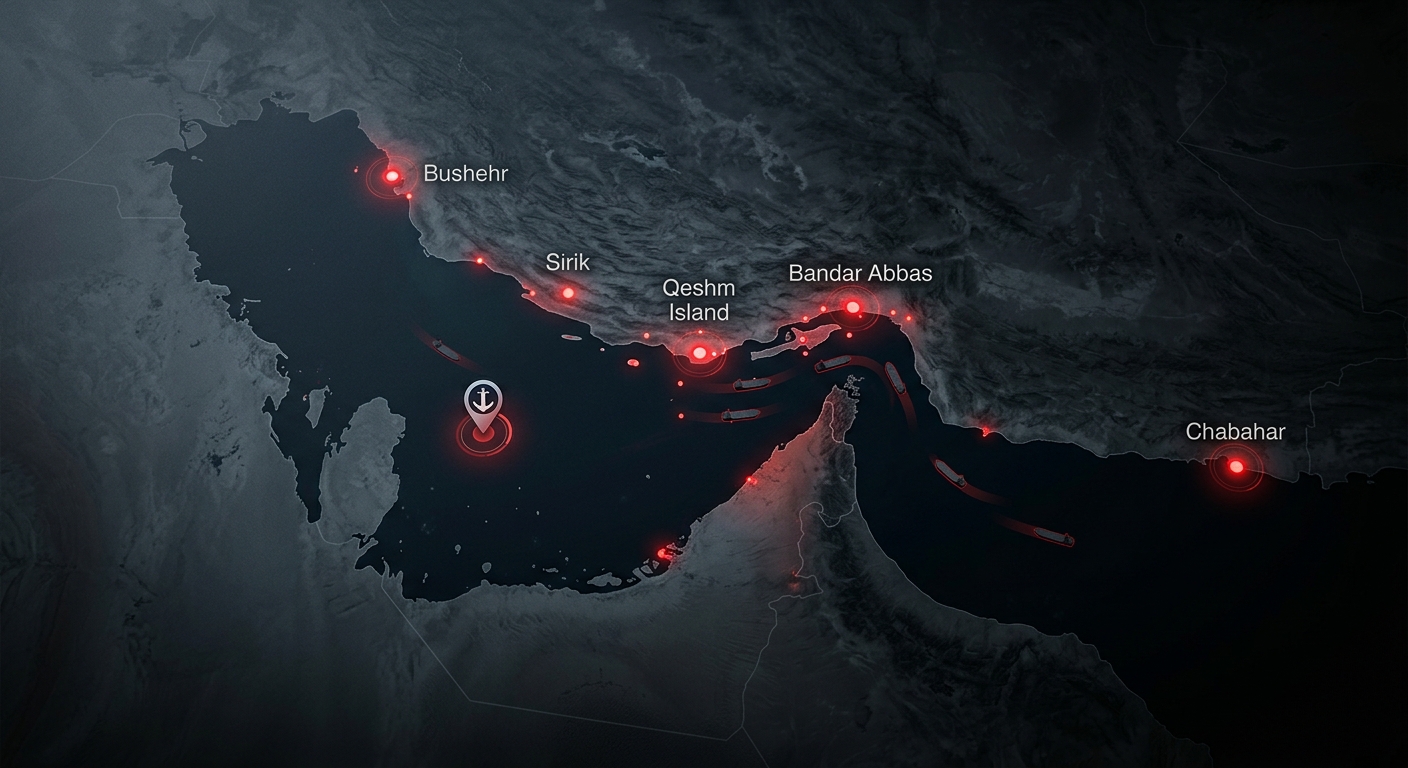
Iran responded in kind. The Islamic Revolutionary Guard Corps said it targeted 85 U.S. facilities across Bahrain and Kuwait — including a claimed strike on Bahrain's Sheikh Isa airbase — and downed a U.S. MQ-9 Reaper over southern Iran, per Al Jazeera's reporting from Tehran. Air-raid sirens sounded in Manama; Kuwait said it intercepted incoming missiles and drones. NATO Secretary-General Mark Rutte, sharing the Ankara stage with Trump, called the American action "absolutely necessary," telling reporters Iran was "basically violating the ceasefire," per the
BBC.
Trump's own language did the diplomatic work. At the summit he called Iran's leadership "scum" and "cuckoo" and said of the deal signed 21 days earlier: "I think it's over. I don't want to deal with them any more." Iranian Foreign Minister Abbas Araghchi answered on X: "We do not answer vulgarity with vulgarity, but with action: fearlessly and with great valour."
The MoU was a Hormuz deal in a nuclear costume
Read the text and the frame changes. The 14-point Islamabad MoU, signed electronically on June 17 and physically countersigned by Trump at Versailles, devotes exactly one clause to Iran's pledge not to develop nuclear weapons — but four separate provisions to reopening the Strait of Hormuz, ending the U.S. naval blockade, and defining "future administration and maritime services" in the waterway, according to the full text released by the BBC. The Council on Foreign Relations was blunt in its
July 8 assessment: the MoU "is thus best understood less as a deal that addresses Iran's nuclear ambitions or military capabilities than as a Hormuz deal."
The dispute now driving the strikes is Article 5. Iran reads its obligation to make "best efforts for the safe passage of commercial vessels, with no charge for 60 days," as recognition of Iranian sovereignty over the strait — and licence to charge tolls after August 16. Parliament speaker and chief negotiator Mohammad Bagher Ghalibaf said Wednesday the strait "will only open with 'Iranian arrangements', not American threats." Iran has already stood up a "Persian Gulf Strait Authority" issuing safe-passage permits, and its ambassador to China told Beijing new service fees would apply "despite U.S. objections," per Al Jazeera.
Secretary of State Marco Rubio, in comments cited by CFR, has rejected any tolling regime as a "dangerous precedent." The U.S. Treasury on July 7 revoked the sanctions waiver that had let Iran ship crude through August 21 — the single most tangible benefit Iran received from the MoU. Iran's chief negotiator called it a "major MoU violation." Both sides are now accusing the other of breaching the same document.
The Tanker War, updated
There is a direct historical precedent, and Washington knows it. In 1987 the Reagan administration launched Operation Earnest Will, reflagging 11 Kuwaiti tankers under U.S. registry and escorting them through the Gulf during the Iran-Iraq "Tanker War." That campaign ended with U.S. Navy attacks on Iranian oil platforms (Operations Nimble Archer and Praying Mantis) and, in July 1988, the USS Vincennes shooting down Iran Air Flight 655 — 290 civilians killed. The International Court of Justice ruling in Oil Platforms (Iran v. United States) later held that U.S. force could not be justified as self-defence under Article 51 of the UN Charter.
The 2026 fight is the same fight with more precise munitions and less ambiguity about identity. Iran attacks tankers to enforce a preferred transit corridor and extract fees; the U.S. Navy uses freedom-of-navigation logic to strike Iranian coastal assets and reopen the choke point. The International Crisis Group, in assessing the U.S. March 2026 Article 51 letter, described the underlying campaign as "a war of aggression" that close allies including the United Kingdom and Spain restricted cooperation with to avoid complicity.
Iran has already lodged the corresponding paperwork. According to state broadcaster IRIB, Ambassador Amir Saeid Iravani sent letters July 8 to the UN Secretary-General and Security Council president invoking Article 2(4) and citing Paragraph 1 of the "Islamabad MoU." That echoes an earlier June 21, 2025 letter (S/2025/404) from the same ambassador demanding an emergency Council meeting on U.S. strikes. Expect a diplomatic paper war; expect no binding resolution. The Council could not stop the February 2026 war and cannot stop this one.
Who benefits, who bleeds
Markets are pricing the escalation as bounded, not existential. Brent settled July 8 at $77.24 — up 4.2% on the day, still 39% below the $126 April wartime peak, per Al Jazeera's markets report. U.S. retail gasoline is at $3.79 per gallon versus $4.48 in May, according to AAA data cited in the same piece. Oxford Economics' Ryan Sweet called the peace agreement "the key domino" for global disinflation in the second half of 2026.
The clearest beneficiaries sit outside the Gulf. CSIS ChinaPower estimates roughly a third of Chinese crude transits Hormuz; Beijing has used the war to accelerate diversification, with Petrobras exports to China averaging 1.316 million barrels per day between January and May 2026, up from 704,000 bpd in 2025, per
Kpler data reported by Al Jazeera. Brazil is the quiet winner. India, which relies on Hormuz for roughly half of its crude and 59% of its LNG imports, is hedging — quietly striking bilateral safe-passage deals with Tehran while pivoting back to Russian barrels, per the
BBC.
The losers are Qatar and Saudi Arabia. A Qatari LNG tanker caught fire off Oman on July 6; a Saudi-flagged crude tanker was damaged the same week. Riyadh's foreign ministry held Iran "fully responsible" for the Wedyan strike; Doha called the LNG attack a violation of maritime law. Both are now dependent on U.S. naval force to keep their exports moving through waters where Iran has effective veto power over transit routes. That is a strategic downgrade for the Abraham Accords cohort, not an upgrade.
What to watch
- August 16, 2026 — the 60-day MoU negotiating window expires unless extended by mutual consent. Trump has told reporters, "I don't care" about talks; envoys Steve Witkoff and Jared Kushner still hold the file.
- Kharg Island — Trump floated at Ankara that U.S. forces "may take over" the terminal that handles roughly 90% of Iran's crude exports. That crosses from strikes to occupation and would require boots on the ground; if
Israeli daily Walla's report that CENTCOM and the IDF are updating joint plans is accurate, watch this space.
- The Joint Maritime Information Center threat rating — raised July 7 to "severe" for the first time since June 15. A downgrade would signal de-escalation; a further hardening would push war-risk insurance premiums back toward the 5% of hull value seen at April's peak.
- UN Security Council — Iran's letters are on the record. Russia and China will demand a session; the U.S. and U.K. will block substantive action. The forum matters less than the paper trail it generates for the next round of Oil Platforms-style litigation.
Diplomat View
The wire copy will call this a "collapse of the ceasefire." That misreads the design. The Islamabad MoU was engineered as a Hormuz operating agreement dressed in nuclear language — the nuclear clauses are aspirational placeholders for a 60-day negotiation, while the maritime clauses were meant to take effect immediately. Iran signed because it wanted the naval blockade lifted and a legal foothold to charge tolls. Washington signed because oil was at $126 and stockpiles were emptying. Neither side got what it needed on Hormuz: Iran wants recognised sovereignty over transit; the U.S. wants a permanently toll-free international waterway. Those positions are structurally incompatible, and the tanker attacks are how Iran renegotiates.
The forecast: expect a bounded, cyclical strike-and-pause pattern into the August 16 deadline, with Brent trading in a $75–$90 range unless Trump orders action against Kharg Island or Iranian refineries — either of which would push crude toward $110 and pull European partners toward open dissent. The forecast fails if (a) Iran mines the main navigation channels rather than merely attacking outliers, (b) the U.S. formally reimposes the naval blockade, or (c) Israel resumes independent strikes without CENTCOM coordination. Any one of those trips the wire into the next war. Absent those triggers, this is the Tanker War with better satellites — and Beijing, Brasília and New Delhi remain the quiet beneficiaries of every barrel that reroutes.
The Bottom Line
The bottom line: the July 8 strikes are not a return to full-scale war — they are Washington enforcing a Hormuz freedom-of-navigation regime that Tehran refused to concede at the negotiating table. The Islamabad MoU is functionally dead because its central ambiguity — who controls the strait — was always going to be settled by force rather than by clause. Watch Kharg Island and August 16; everything else is theatre for the UN record.
Related coverage: Conflict tracker.
Discover more
US Politics
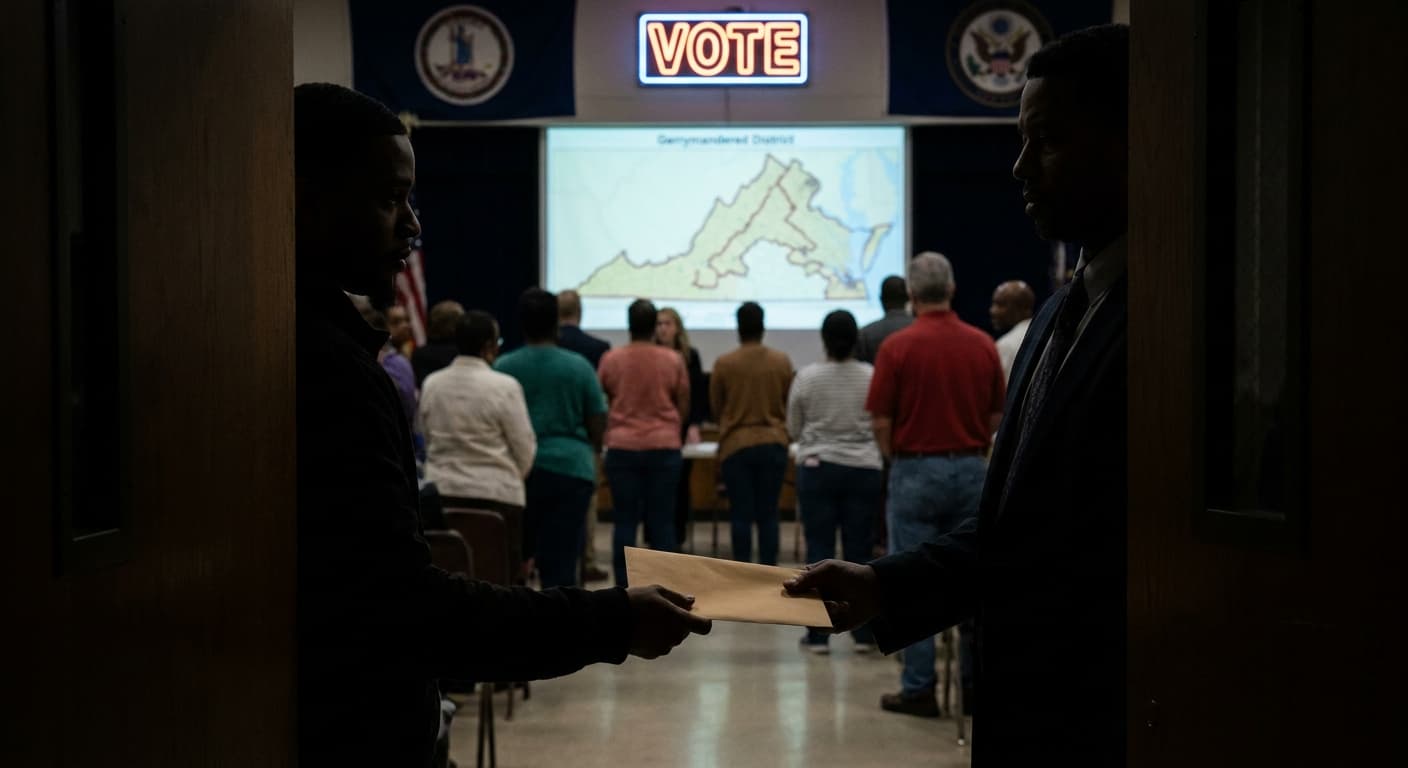
Virginia's Redistricting Referendum
Virginia's redistricting referendum is drawing a flood of dark money, shaping future elections and the fight for congressional control amid party stakes.
US Politics
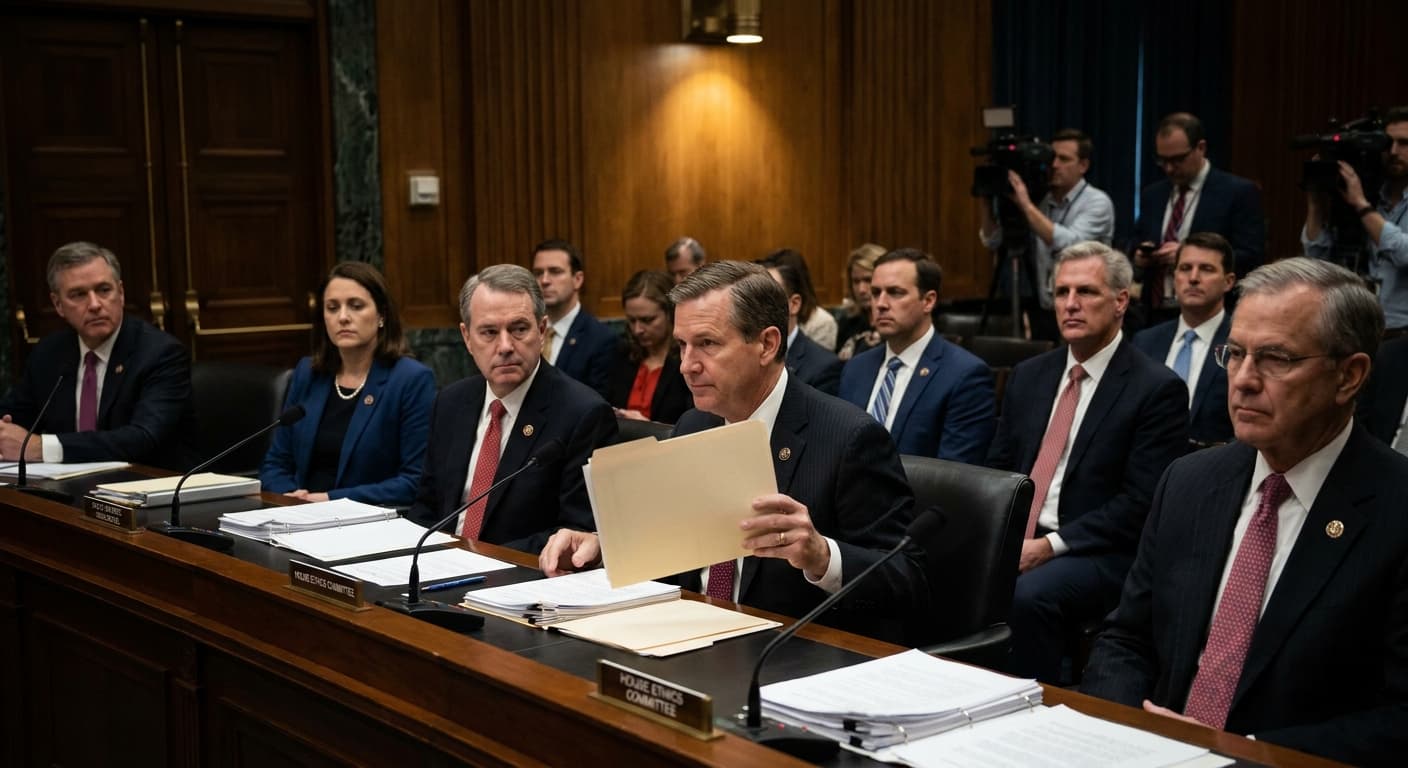
House Ethics Committee Pushes Sexual Miscond.
The House Ethics Committee has shifted responsibility for sexual harassment settlement records to the Office of Congressional Workplace Rights, complicating disclosure efforts.
India
Congress Accuses Modi of Stalling Women's Law
Congress accuses Modi of stalling women's reservation law by linking it to delimitation, revealing a deeper electoral strategy.

Economics
Fed's Amex AML order puts correspondent banking on notice
Federal Reserve's Amex AML order requires board-level controls and a 90-day plan; OCC fined the bank $350 million over enterprise-wide deficiencies.