Can a Paralympic Populist Reclaim Iowa?
Josh Turek aims to revive Democrats in rural Iowa.
Model Diplomat2 min readNorth America
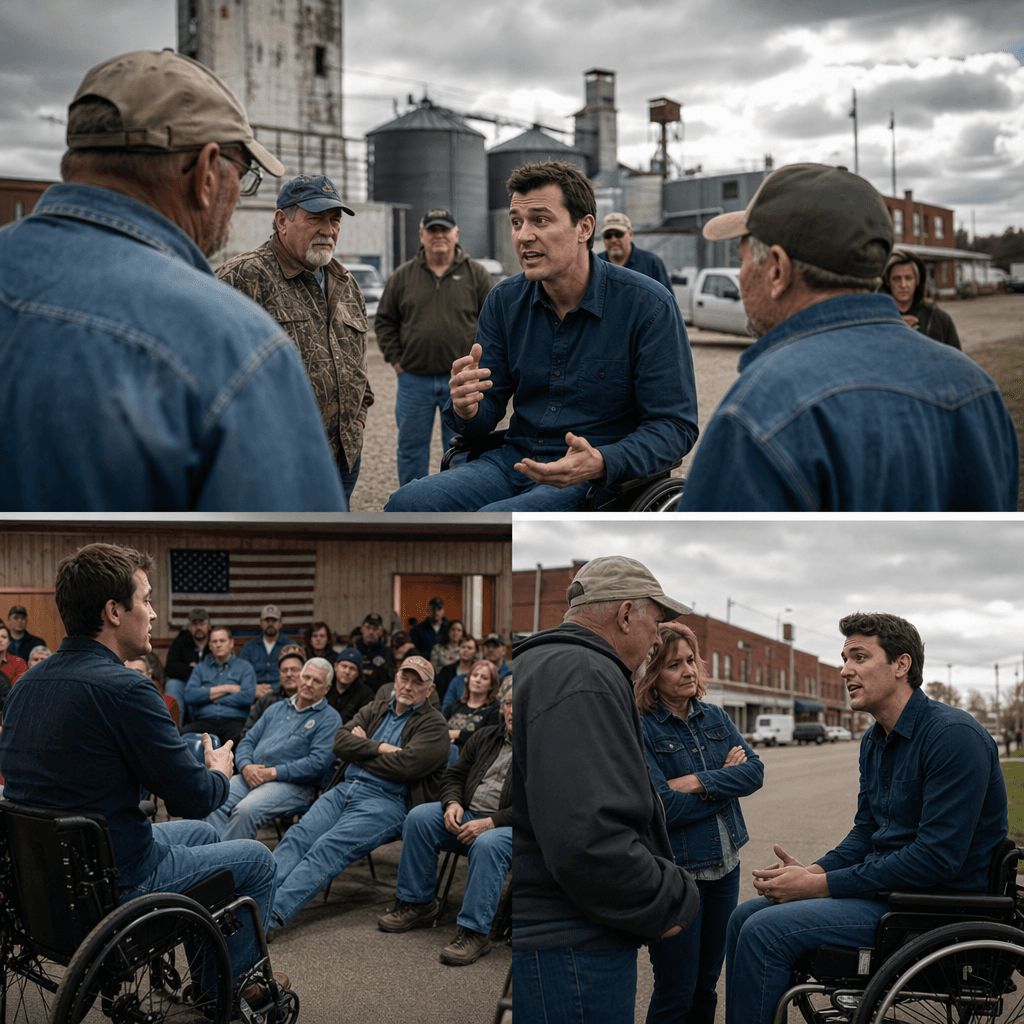
Can a Paralympic Populist Reclaim Rural Iowa for Democrats?
With an open Senate seat and agricultural anxiety gripping the Midwest, national Democrats are spending heavily on Representative Josh Turek to engineer a rural comeback.
An open seat in Iowa has suddenly turned a once-reliable Republican stronghold into a critical frontline for control of the chamber. According to CNN Politics, state representative and two-time gold-medal Paralympian Josh Turek is hoping to utilize a "prairie populist" brand to revive Democratic fortunes in rural counties during the June 2, 2026, primary. Facing off against progressive state senator Zach Wahls, Turek represents a tactical pivot for a party desperate to rebuild its blue-collar appeal in the
United States heartland and shift the broader landscape of
US Politics. National Democratic strategists view Turek's crossover appeal as their best shot to crack the Republican lock on the state, given his track record of winning in a working-class, Trump-leaning state legislative district.
The Outside Money War
However, the race has exposed deep intraparty divisions over outside interference. As reported by The Washington Post, the progressive group VoteVets has injected an unprecedented $8 million into the primary to back Turek—a move that has drawn fierce criticism from local activists because Turek is not a military veteran. This massive spending war has created a stark contrast with Wahls, who has built his campaign on grassroots donations and his high-profile advocacy for LGBTQ+ rights. The influx of national PAC money suggests that party elites are willing to bypass local party protocol to manufacture a general election nominee they think can survive in deep-red territory.
Riding Rural Grievance
The urgency behind this primary intervention stems from a rare political opening. With Republican incumbent Joni Ernst retiring, the general election matchup against presumptive Republican nominee Ashley Hinson—a former broadcaster and formidable campaigner—will be grueling, as detailed by The Guardian. Yet Democrats believe agricultural discontent has made the state newly vulnerable. Soybean growers in the state have been hit hard by retaliatory tariffs under the current administration, while rising energy costs from foreign conflicts have eroded rural incomes. According to
NPR, these compounding economic pressures have fostered a populist, anti-establishment streak among farmers that could put the open seat in play if Democrats choose the right messenger.
What to Watch Next
The defining short-term test is Tuesday’s primary. If Turek’s national financial backing carries him to victory, it will validate a top-down strategy of elevating rural-friendly moderates in swing states, likely clearing the way for a torrent of general election funding. Conversely, a Wahls victory would signal that the party's enthusiastic progressive base still dictates nominee selection, forcing Democrats to rely on raw turnout in urban college towns like Iowa City rather than persuasion in the corn belt. Watch the margin of victory in rural counties as the first indicator of whether either candidate can truly build the broad coalition needed to flip this seat in November.
Discover more
US Politics
Next Generation Republicans
A leaked survey shows 39% of Republicans under 30 do not identify as MAGA, revealing a split in the GOP's future leadership.

Economics
Fed's Amex AML order puts correspondent banking on notice
Federal Reserve's Amex AML order requires board-level controls and a 90-day plan; OCC fined the bank $350 million over enterprise-wide deficiencies.
Conflict & Security
Guatemala: El Niño 2026–27 becomes regional security test
UNICEF: 25.8M children face El Niño risks in Latin America; Guatemala maps 188 municipalities for drought and food insecurity amid regional security test.
Economics
Fed's stress-test overhaul is a capital-smoothing exercise
Federal Reserve finalized stress-test overhaul: two-year averaging for bank capital buffers and public input, expected to halve volatility.