California Chemical Leak Forces Evacuations
GKN Aerospace faces scrutiny after tank overheats.
Model Diplomat3 min readNorth America
California Chemical Leak Puts GKN Under Pressure
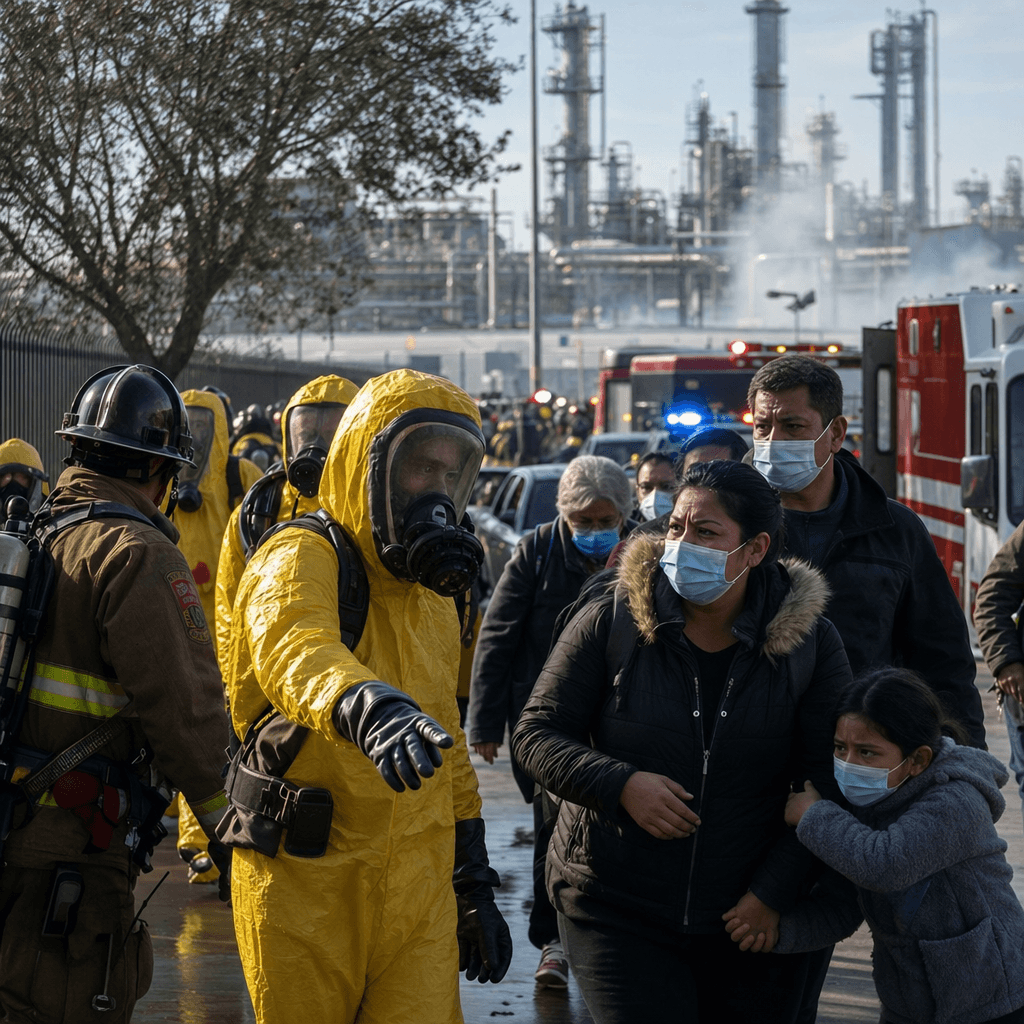
An overheated tank at GKN Aerospace has forced tens of thousands out of Orange County homes, shifting leverage to emergency crews, regulators, and angry residents.
A toxic chemical tank at GKN Aerospace in Garden Grove has turned into a live test of industrial risk management: California officials ordered about 40,000 to 50,000 people to evacuate after the tank overheated and threatened to leak or explode, while Gov. Gavin Newsom declared a state of emergency to unlock state resources, according to CNN and
CBC News reporting on the Associated Press.
Who holds the leverage
The immediate power sits with Orange County fire officials and state environmental responders, not the company. They are the ones deciding whether the tank can be cooled, whether residents can return, and whether the hazard is a controlled release or a blast risk. On Sunday, Orange County Fire Authority Capt. Wayhowe Huang said crews would keep evaluating the tank after spotting a potential crack overnight, but that it did not appear the chemical had leaked yet, CBC/AP reported.
That matters because the company’s options are constrained. Officials said the valves were broken or “gummed up,” preventing crews from removing the chemical or relieving pressure, CBC/AP reported. CNN said the tank contains a toxic chemical and that crews were trying to prevent a potentially catastrophic explosion; ABC News, citing local officials, identified it as methyl methacrylate, used in plastics manufacturing, and said the site had been hosed down for a second day to cool it,
ABC News.
Why this is bigger than one tank
This is not just a local evacuation story. It is a reminder that a single industrial failure can flip the balance of power in a dense suburban corridor. Residents around United States are not negotiating here; they are being told to leave homes, schools, and businesses while emergency managers buy time. That is expensive politically and economically. The longer the evacuation lasts, the more the costs shift from the company to families, local merchants, insurers, and county government.
The legal exposure is already arriving. CBC/AP reported that some Garden Grove residents filed a class-action lawsuit against GKN Aerospace Transparency Systems on Saturday, arguing even a slow leak would disrupt daily life and a worst-case explosion could damage thousands of properties. That is the first sign the crisis may move from emergency response into liability and regulatory scrutiny.
There is also a federal angle. CBC/AP quoted EPA chief Lee Zeldin saying the “most likely scenario” was a low-volume release that could be monitored and contained. If that assessment holds, federal and state agencies will claim the response worked. If it does not, critics will focus on why a commercial aerospace site was left with a pressurized tank that crews could not safely decompress.
What to watch next
The next decision point is simple: can officials keep the tank cool enough to avoid rupture, and can they verify the chemical is not leaking? CBC/AP reported that keeping the tank under 85 degrees Fahrenheit is key, while air monitoring around the evacuation zone has so far shown normal levels. If those two conditions hold, evacuation orders could begin to ease. If the tank temperature rises, or the crack worsens, Orange County will stay in emergency posture and the political damage will spread well beyond Garden Grove.
For policymakers, the lesson is immediate: US Politics now includes industrial hazard response, not just legislation and elections. The next update from county fire officials will determine whether this remains a contained emergency or becomes a broader inquiry into plant safety and state oversight.
Discover more

Global Politics
US Seizes Iranian Ship, Tensions Surge
The US seizure of the Iranian ship Touska highlights a shift in control over the Strait of Hormuz, favoring Iran's strategic position.
US Politics
SNAP Food Assistance Faces Legal Challenges
In 2026, SNAP faces stricter eligibility rules and mounting legal challenges, threatening food assistance for the millions of Americans who rely on the program.

Conflict & Security
Drone Warfare Killing Aid Workers at Unprec
Over 1,000 humanitarian workers killed in three years as cheap armed drones collapse legal protections. Gaza, Sudan, Ukraine, and DRC see deliberate targeting of aid convoys and hospitals with zero prosecutions.

Global
World Normalises Taliban as Afghan Women Eras
UN data shows Afghan women erased from public life as Russia recognises the Taliban, EU hosts officials in Brussels, and ICC warrants for gender persecution go unenforced.